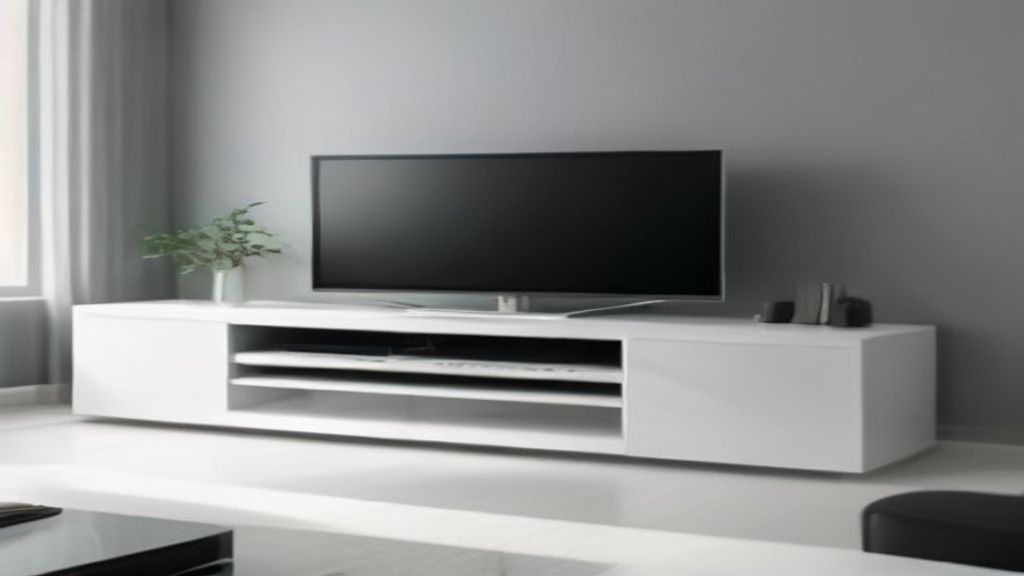
The first thing you notice is the finish. It's not the glossy white you saw in the product photos—it's more matte, and already there's a faint smudge where I grabbed it to pull the box closer. My handprint, right on the door. Two weeks later, the shelf underneath the soundbar has a thin gray line of dust because the edge isn't sealed quite flush. So yeah, white shows everything. But if you're still set on white (I was), there are three things that actually matter after the first month.
The Finish: Matte vs. Glossy vs. Lacquer
Glossy looks amazing in the showroom but you'll be wiping it every other day. Matte hides fingerprints better but it's harder to clean if you get a stubborn mark—you'll need a damp cloth and some patience. Lacquered is the middle ground: it's smooth but not mirror-shiny. I went with a white lacquer over MDF, and the finish has held up okay. Read the product specs carefully; if it says "foil" or "laminate," expect the finish to peel at the corners within a year, especially if your living room gets humid.
The Wobble Test: It's All in the Frame
You can't tell from a photo, but a white TV stand from many big-box stores is basically a hollow box. When you push down on a corner, the whole thing flexes. I learned this after my first stand—which, coincidentally, was white too—started rocking whenever my cat jumped on it. Look for stands that list solid wood or at least plywood for the frame, not just particleboard. Even if the outside is white, the internal structure is what keeps your TV from swaying.
Weight Capacity: The Real Number That Matters
Most listings say "holds up to 100 lbs" but that's often the top surface only. The shelves inside might be rated for half that. My TV is a 55-inch, about 35 lbs, but with a soundbar and a few books, I was already near the limit. You don't want the shelf to bow after a few months. Check the spec sheet for the weight per shelf, not just the total. If it says "shelf capacity 20 lbs," believe it—that's for evenly distributed, not a pile of novels stacked on one side.
Cleaning and Maintenance: The Reality
White is not low-maintenance. Dust shows within a week. My current stand is in front of a window, so there's a constant film even after I wipe it. The best thing I did was buy a cheap microfiber cloth and keep it in the drawer inside the stand. I also learned to dust with a slightly damp cloth, then dry it immediately—otherwise you get streaks. And if you have kids or pets, expect to touch up small scratches with white paint or a furniture marker. It's not terrible, but it's not something you do with a dark wood stand.
But honestly, if you want the bright look, white is worth it. Just know what you're signing up for.
If you're still on the fence, think about your room's light. Glare can be a real issue if the stand is opposite a window—the screen reflections will drive you nuts. And if you have small children who like to draw on furniture, skip white entirely. Or wait, there's more: check the back panel. Many white stands have an open back, so cables hang visible. You'll want a stand with holes or a back panel that hides the mess, otherwise your “clean” look is ruined from day one.
If you're measuring your wall first, check out Value City Furniture TV Stands: What Fit Means After You Measure the and What $200 vs $800 TV Cabinets Actually Get You. And if you're looking at smaller setups, I Bought Three Small TV Stands Before I Got One That Fits comes in handy.
Who should skip white? Anyone who hates dusting, lives with toddlers who touch everything, or has a cat that sheds white fur—yes, they'll find a way to show. Also, if your living room is already small and bright, a white stand might blend in too much, making the space feel washed out. Think about what you want the room to feel like—if it's cozy, maybe a dark wood is better.
But if you're set on white, go for a lacquer finish, check the internal frame, and keep a cloth handy. You'll be fine.