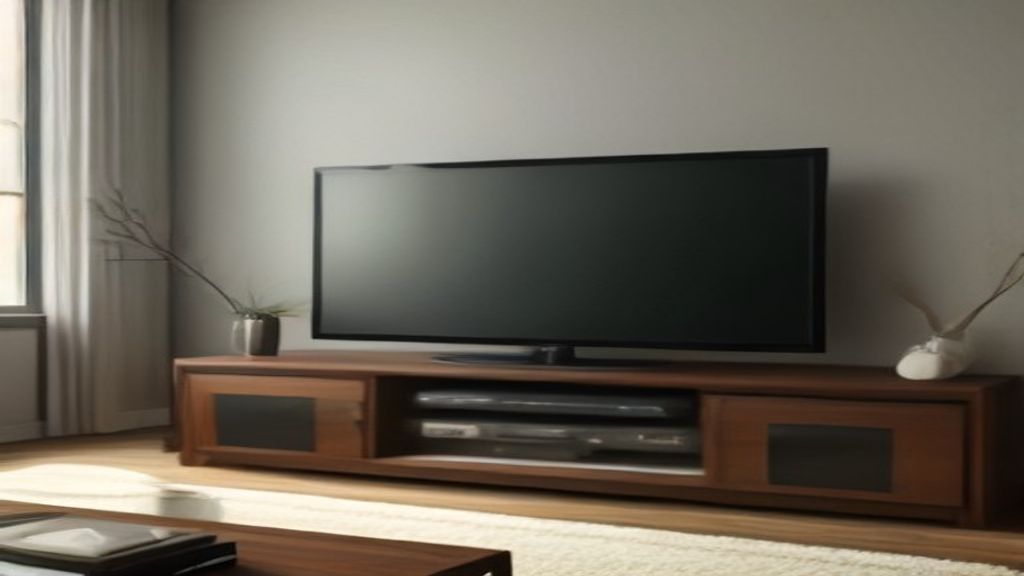
I bought a cheap 55-inch LG last year. The stand it came with was actually fine — thin metal legs, looked decent. But my cat decided to launch off the top of it during a zoom call, and the whole TV wobbled for a solid ten seconds. That’s when I started shopping for a real TV stand, not a lowboard that happened to fit.
The problem: I had a 43-inch LG before and just plopped it on any console. With the 55, I had to think about width, weight, and whether I wanted to wall mount. Here’s how I broke it down.
Measure the TV Footprint First, Not the Screen
The screen size tells you almost nothing. My LG’s legs are about 47 inches apart. If you get a stand narrower than that, the TV sits on nothing but air. I almost bought a 40-inch wide media console because it looked good in the photos. Then I checked the spec sheet. So measure the distance between the legs or the center post. Also check the TV’s weight — a 55-inch LG is usually 35-45 lbs, but older ones can be heavier. The stand’s weight rating should be at least 50% more.
Width: The Room Decides, Not the TV Size
You’d think a 55-inch TV needs a 60-inch stand. Not always. My living room has a weird wall with a radiator, so the total wall space is 55 inches. I ended up with a 50-inch stand. The TV’s legs hang off by a couple inches on each side, but the stand is rated for 110 lbs. It’s stable. If I had a bigger wall, I’d go wider for the balanced look, but in a tight space, a slightly narrow stand works.
Also, check the stand’s depth. My console is 16 inches deep. The TV’s base is about 10 inches deep, so it fits. But some stands are only 12 inches deep. Then the TV leans back or you can’t push it against the wall.
Weight Capacity: Don’t Trust the Marketing Photos
That wobbly moment with the cat? I pulled the TV forward to dust behind it and the legs bowed slightly. The stand’s particleboard top was only rated for 40 lbs. My TV is 42 lbs. That’s too close for comfort. Look for MDF or solid wood tops, and a steel frame if possible. The weight rating should be printed in the specs — if it says “holds up to 88 lbs” and your TV is 30, you’re fine. But if the rating is barely above your TV’s weight, don’t buy it.
I also check the shelf braces. A shelf that’s supposed to hold a soundbar might collapse if you put weights on it. That’s how I broke my first stand.
The Wall Mount Angle: Don’t Skip It Just Because You Bought a Stand
Here’s a mistake I made: I bought a beautiful stand, then decided to wall mount the TV later. Now I have a 65-inch LG on a wall bracket, and the stand below it is just for decor. It holds a couple of books and a plant. That’s a waste of $200. If you think you might mount the TV, buy a shallower stand (14 inches or less) and check the cable routes. Otherwise, you’ll be looking at a stand that’s too deep and sticks out.
The cable routing also matters. My stand has a hole in the back, but it’s off-center. All my cables bunch up on the right side. I used a zip tie to keep them together. If you have a lot of devices, check that the cutouts align with your TV’s inputs.
The Delivery and Assembly Reality
Most TV stands come in a flat box. The first one I ordered arrived with a cracked corner — but the stand itself was fine. The second one had missing screws. So expect that. Assembly takes about an hour with two people. The cam locks are annoying but doable. Also, if you live in a walk-up, the delivery person will leave it at the door. You’ll have to haul a 60-pound box up yourself. That’s miserable.
Who Should Skip This
If your LG TV is small (43-inch or under) and you’re on a tight budget, you can get away with a $60 stand from a big box store. Just measure the legs and don’t put anything heavy on the shelves. But if you’re spending $800 on a 55-inch OLED, don’t pair it with a 4mm tempered glass stand that wobbles. You’ll regret it the first time your dog runs past.
For more on room measurement and TV console depth, check out If Your Room Is Tight, Read This on Tv Stand Console Table. And if you’re torn between storage options, I also wrote about TV Stand with Storage Cubes: What I Learned After Buying Three. For style, the Vintage TV Stand: Why I Stopped Chasing Mid-Century and Started Measuring Width has a good story. Lots more in More guides in TV Stands.