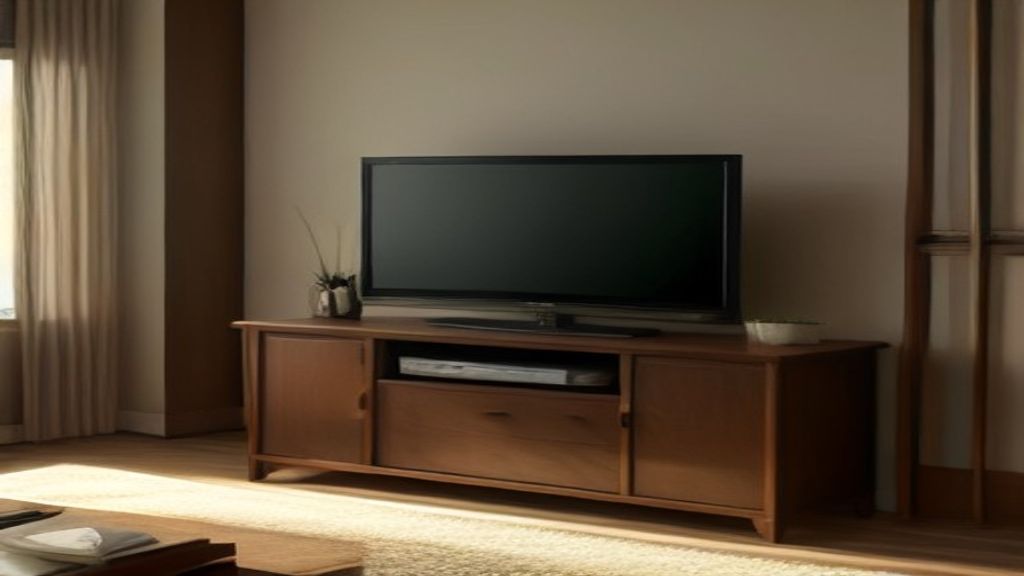
The cardboard felt lighter than the box said it would be. I know, because I lugged a 60-pound console table up two flights of stairs, then spent an hour rearranging the living room because I'd bought it for the looks and ignored the depth. The TV sat on it, but the soundbar hung off the edge, and the PlayStation was a black tumor on the floor, cables snaking everywhere like a bad nest. Don't be me.
Before you add a console to your cart, measure the TV's depth—not just the width. My LG's legs were about 10 inches deep. The table I bought was only 12 inches deep, which left almost no room for the soundbar, and the rear plugs put the TV's power cord at a weird angle. I've since swapped to a 16-inch-deep table, and it's night and day. A rule of thumb? For flat screen TVs on feet, look for at least 12–14 inches of depth; for anything with a huge tripod stand or if you wall-mount the TV, you can go shallower, maybe 10–12 inches, but then the console is more for storage than bearing the TV.
Now, depth isn't the only dimension. Height matters for eye line. The center of the TV should be at eye level when you're sitting. My couch is 18 inches tall, and I'm average h six feet, so the screen center falls around 42 inches from the floor. That means a 22-inch console works if the TV feet bring the screen up another 20 inches. I've measured cheap TV stands that are 34 inches tall—those are way high unless you're always standing or have tall bar stools. If you're torn between heights, think about kids and pets too. Low consoles look sleek but become climbing frames faster than you think. My buddy's toddler knocked a TV off a 16-inch console last year. He ended up with cable ties and a bracket to keep it from tipping. Not my problem yet, but the straps were $5. Cheap insurance.
Then there's the elephant in the room: cables. You'll never escape them. I used twelve zip ties and a power strip rated for the equipment, but the console drawers aren't cut out for the wires. So before you buy, check how you'll route three cables—HDMI, optical, and power. Some consoles have little holes in the back or a cutout in the lower shelf. If there are none, you'll be drilling or using sticky cable clips along the back wall. I've seen a 24-inch console with a cramped back panel that left zero slack—you had to unplug everything to slide it forward. That's the kind of brand you move on from.
Weight limits are another hidden spec. Nobody thinks about this until the 2005 Samsung they've kept crashes to the floor. Look for a table rated for at least 100 pounds, especially if you'll set the TV on it. But that rating often assumes the weight's centered. Place the TV off to one side for a reason, and the actual margin shrinks. I bought a cheap laminated MDF board dressed like a wood console and put the TV center. The right side was fine until I leaned on the edge—the board cracked. No weight claim on that one, and I was the sucker.
Don't get me started on wall-mounted TVs. You read that right—even if the TV hangs on the wall, you still need a console to hide the... yeah, same height logic. The cables come down the wall regardless, or they get lost in a painted channel. A 22-inch console under a wall-mounted TV is the ticket; the top is clear for speakers and plants, and the shelves hold the streamer, receiver, the stack of games you never play.
Style matters less than fit, but when the fit's right, style does its thing. A dark walnut laminate looks classic but shows dust and scratches within a week if your wields skip the coaster. I roughed up an oak console with a move last month. I started sanding and staining, but then I remembered: I bought that table out of a store—wire brushed and pre-scuffed—so a dent blends in. If you want low-stress, pick a chipped pine or a matte finish that's already lived-in. But if you're after the "will look presentable in photos" route, steel frames with glass fronts hide more than open shelving. In my last apartment I had an open-shelf console and spent way too much time dusting the cables and gaming boxes.
Why should you skip it? If you'll put a heavy projection screen on top or you insist on open cable management with zero visible cords, you won't like what you get. Also, skip the console table if you plan to mount your TV on a brick or concrete wall and just need something to catch remotes. You'd spend less on a buffet or a slim rolling cart with levels. But if your living room just needs a horizontal slab that doesn't flex, this kind of table is sturdy.
I measured once more after buying it: 22 inches deep, 20 inches tall, 56 inches wide. The screen center hits 40 inches, the remote doesn't get lost, and no one's tripped over a wire in three months. That's my floor scraping again—if it scrapes your floor the minute it arrives, you can finally take it back.