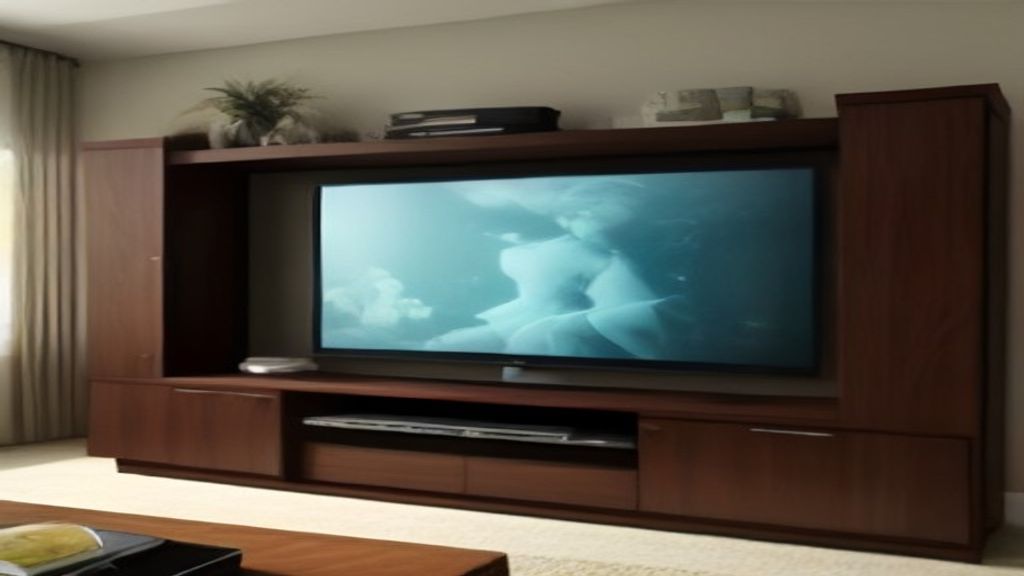
I've mounted three TVs in this apartment, and the last one almost ended with a 55-inch panel on hardwood. The culprit wasn't the TV bracket — it was the "wall mounted TV cabinet" I bought because it looked sleek in the product photo. The listing said "universal fit." Universal my ass.
Here's the one angle that matters: what you measure before you even open the box. To hell with color options and soft-close hinges. These three measurements have burned me, and they'll burn you if you skip them.
Measure the TV's VESA pattern, not the screen size
The listing said "fits up to 65 inches." That's a marketing lie. What actually fits depends on the VESA pattern — the four screw holes on the back of your TV. My old 55-inch LG had a 400x400 pattern. The cabinet's mounting plate? 200x200 max. Returned that cabinet fast.
So grab a tape measure and check the back of your TV. If you don't know, look up the manual or search "[TV model] VESA." Then find a cabinet with that spec. Sounds obvious, but too many people shop by screen size and end up with a floating shelf that holds nothing.
Measure wall studs and depth — do the math before you drill
This is where I almost lost the TV. The cabinet's bracket bolts to the wall, right. But the center of your TV isn't necessarily above the bracket. You get maybe 2-3 inches of horizontal adjustment on most brackets. If your studs land 24 inches apart and the cabinet's mounting holes are set for 16, you're in trouble.
In my case, the studs were 18 inches apart. The cabinet's bracket was 16. I had to buy a piece of plywood, screw that into the studs, then the bracket onto the plywood. Ugly, but it works. And I measured the depth: the cabinet sticks out 8 inches, plus the TV on its own mount adds another 3. If your room's clearance is tight, that combo can look clunky and block walking space.
Depth also matters for the TV's tilt. If the cabinet's too shallow, the TV sits too far back against the wall, and you can't angle it toward the couch. Took me two hours to figure out I'd bought the wrong depth.
Read the weight rating like it's a medical label
Most wall mounted TV cabinets claim to hold your TV. The key is the dynamic weight — how much the mount can handle when you're pulling the TV toward you to plug in an HDMI. My friend's cabinet said 50 lbs, but his 60-inch TV weighed 48. One hard yank on a cable and the TV would have come down. He swapped for a heavier-rated mount.
Don't trust the absolute max. Look for something rated at least 1.5 times your TV's weight. You're not going to do pull-ups on it, but the margin matters.
My mistake: assuming the bracket was adjustable
When I bought my first wall mounted TV cabinet, the bracket looked like it moved side to side. It didn't. The plate was fixed to 16-inch studs, and we had 18. That's what forced the plywood. If a product page doesn't explicitly say "adjustable bracket" or list the stud pitch, assume it's fixed.
So before you buy, write these four numbers on a sticky note and stick it on your monitor:
1. TV's VESA pattern
2. TV's weight (from the manual, not the marketing)
3. Width between your wall studs (measure center to center on at least three pairs)
4. Depth of the cabinet from wall to front edge (including any trim)
The correct first step: buy for the TV, not the look
Walk into the furniture store or scroll on your phone, but filter by VESA and weight. Decide on studs first. Only after those pass, consider the color and whether the doors hit the TV when it's tilted. I saw a guy at the store ignore all of that and pick a walnut cabinet. Three days later he was on the phone asking about studs.
I'm not saying measure everything to a fraction of an inch, but a wall mounted TV cabinet that requires a second trip for plywood is a waste of a Saturday. You'll be happier with a cabinet that actually mounts and holds.
If you're still in the planning phase, check my guide on TV Cabinet Furniture: Measure the Depth Before You Fall for the Width — depth is the one spec that bites everyone. And for the stud issue, read I Bought a Wall Hanging TV Cabinet and the Stud Finder Was Right. Both are the hard lessons I don't want you to repeat. Good luck, and don't be stubborn about the plywood.