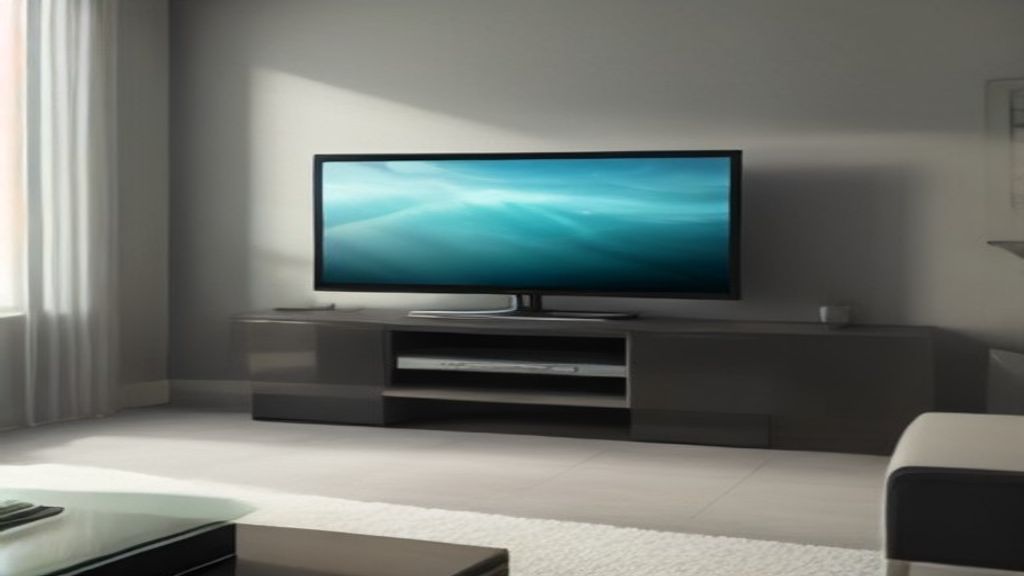
28 inches. That's the gap between the legs on my old TV stand, and it was exactly 11 inches too narrow for the soundbar I already owned. I didn't measure that space before buying — I measured the top width and called it done. Two weeks later I was returning the whole thing and starting over.
Here's the thing about glass stands: the footprint isn't what it looks like in the photos. The base legs, the center support, the glass shelf clearance — all of it matters more than the total width. If your room is tight, you'll feel it fast. (I've got a few more real-floor measurements in this piece about tight spaces if you're at the tape-measure stage.)
The Width That Matters (Hint: It's Not the Top)
The top of the stand can be 50 inches wide, but if the legs are set 34 inches apart, that's your real constraint. My living room wall is 62 inches, the TV is 48 inches wide, and the stand looked perfect on paper. Then I put the soundbar underneath, and the legs blocked every single port. I ended up with the soundbar on the floor for a month.
Before you even think about style, take three measurements:
- The gap between the legs (front and back — they're often different)
- The clearance under the lower shelf (for soundbars, cable boxes, gaming consoles)
- The depth of the top surface (glass overhangs can be deceiving)
The TVs themselves aren't the variable — the stuff you put on and under the stand is. A modern glass TV stand that fits the TV but not your hardware is just a pretty shelf taking up floor space.
How Much Glass Is Too Much?
This is the trade-off that never shows up in the product renders. Clear glass means cables are on full display. You'll see the mass of wires behind the TV from across the room. I tucked everything into a sleeve I zip-tied to the frame, but you can still see the outlet strip through the back panel — assuming there even is a back panel. A lot of these don't have one. If the thought of visible cables makes you twitch, look for a stand with a back panel or plan on installing a discreet cable channel along the wall.
Frosted or smoked glass solves some of that, but it shows dust like a magnet. In my apartment, a clear glass shelf needs wiping about once a week; frosted is about twice. You don't notice it until you do, and then you notice it every single day. If you're constantly adjusting something near the TV (like I am), the smudges will drive you insane.
Storage? Not Really
Let's be honest: most modern glass TV stands barely count as storage. Open shelves are fine for a soundbar or a console, but they're dust magnets and cable ugly-spots. I ended up buying two fabric bins just to keep the shelf from looking like a junk drawer. That said, if you need real storage, look at a TV stand with storage cubes — they're a different beast, and I've got notes after owning three TV stand with storage cubes: What I learned.
If you're set on glass, expect the space to be for display, not hiding. You have to be okay with that. I wasn't at first, then I got cleaner about what I kept out.
The Weight Game
Glass shelves have weight limits, and they're always lower than you think. The TV sits on the top, but the blu-ray player on the lower shelf can max it out if the stand is cheap. I had one where the lower shelf was rated for 15 pounds, and my soundbar alone was 13. The glass didn't shatter, but it bowed visibly after four months — and the warranty wouldn't cover it because "overload" was my problem.
If you have equipment that's more than a cable box and a streaming stick, look at the specs before you fall in love with the look. That's the part that will sink your floor time.
What I'd Do on a Second Round
I'd buy the stand I almost got in the first place — the one with smoked glass panels that weren't fully transparent. It still showed the major outlines, but the cables and dust faded into a blur. That's a compromise, but it's the honest one.
Most of all, I'd measure the gap between the legs first, and I'd bring my soundbar with me to the store. (Yeah, I haul a soundbar into IKEA now — it's worth it.) Fitting the TV isn't the challenge. Fitting everything else is. A lot of this comes down to matching the depth and cable routes, which I wrote about in Tv Stand Console Table — Measure This Before You Click Buy.
Skip this whole category if you've got a stereo receiver or a subwoofer that needs floor space and real support. A modern glass TV stand will fight you every time. It's a piece for people who keep things minimal — the TV, a soundbar, maybe one console. If that's you, and you measure the leg gap first, you'll be fine.
I've also got one other caution: check your media console before you buy. If you've already got a solid wood piece, a glass tower is a downgrade in function, no matter how good it looks. I wrote about the trade-offs in a simple comparison — it's not a TV stand article, but the measurement logic applies across the house.
Anyway, that's my season with the clear glass. I respect the look from a distance now. But I won't own another one until someone makes a glass stand with a closed-back, cable-hiding panel at a price that doesn't terrify me.
Internal link: More guides in TV Stands