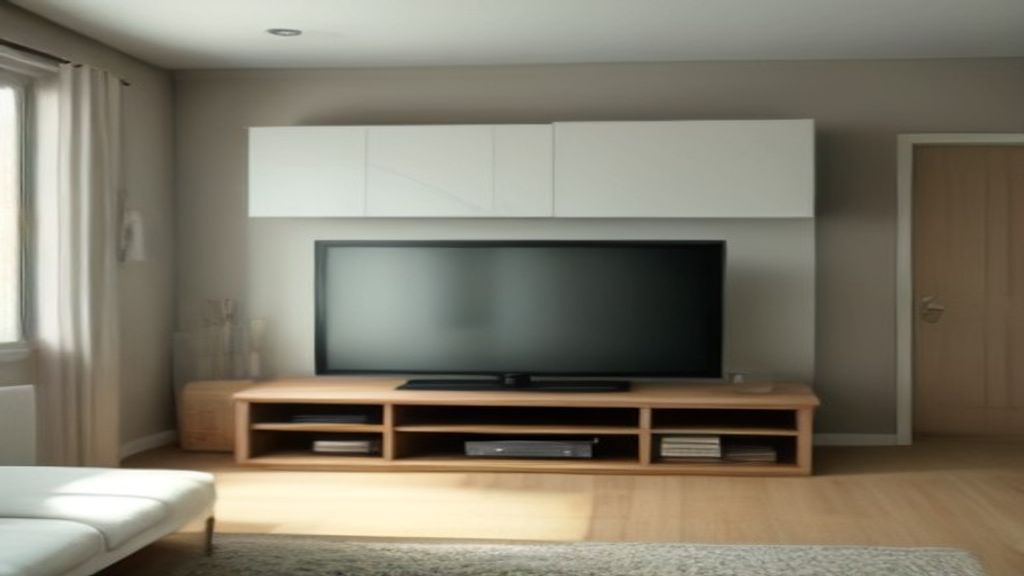
I spent $350 on a mid-century TV console that turned out to be a $60 piece of furniture with a $290 paint job. The drawers still stuck, the back panel was particleboard, and the previous owner had glued the legs on. I learned the hard way that vintage TV units aren't priced by age — they're priced by condition, and the tiers matter more than the decade.
If you're looking at vintage TV stands online or at flea markets, here's what the money actually buys.
Under $100: The Curb-Find Gamble
You'll find these at estate sales where someone just wants it gone, or on Marketplace where the seller writes "needs TLC" and means it. For $50–$100, you're buying a piece with real potential, but also real smell, a veneer that's peeling in three places, and maybe a drawer that never opens all the way.
What you gain: the bones of a genuinely old piece — solid wood sides (often oak or walnut), dovetail drawers, that patina you can't fake. What you lose: any guarantee it'll fit your TV. That console might be 42 inches wide with a 12-inch depth inside, fine for a 32-inch CRT but useless for a 50-inch flat screen unless you're okay with it sitting on top.
I bought a $60 cabinet once and spent two weekends stripping and refinishing. That's labor you're also paying for in the higher tiers. If you have time and tools, this tier is the deal. If you just want to put a TV on something and be done, don't.
$200–$500: The Restored Middle
This is where most people land. You're paying for someone else's work — sanding, new veneer, hardware replaced, legs stabilized. For $350, I expected drawers that glide and a top that doesn't buckle when I set the TV down. What I got was a piece that looked great in the listing photos and, in person, had a hairline crack in the back panel and one drawer that always catches.
What you gain: a piece that usually works for a modern TV if the seller was honest about width and depth. Look for measurements in the listing. What you lose: the peace of mind that comes with new furniture. Vintage wood shifts, joints loosen, and cheap repairs hide under fresh finish.
Here's the thing — a $400 vintage unit isn't necessarily better made than a $200 one. It's just in better shape, or the seller knows it's a brand-name piece (think Drexel, Lane, Broyhill). If you're paying for the name, fine. If you're paying for condition, ask for close-ups of the internals: the back, the drawer slides, the underside where old water damage shows.
$500+: The Collector's Tier
Above $500, you're buying rarity — a specific designer, a rare finish, a piece that's been professionally restored. These are usually from mid-century modern dealers who know the market. The furniture is often stunning: solid walnut, original finish, brass details, and the kind of joinery you won't find in anything made today.
What you gain: a statement piece that actually appreciates. What you lose: functionality, mostly. Many of these are too narrow for a modern TV, or the height forces the screen too high. Also, you're paying a premium for a name that means nothing if the piece doesn't fit your space.
I've seen a $700 Kroehler that was 38 inches wide — great for a 32-inch TV, useless for a 55-inch. The buyer either mounts the TV on the wall above and uses the cabinet for storage, or they skip it.
The One Measurement That Matters More Than Price
Before you fall in love with a vintage TV unit, measure the actual space where the TV will sit. Not the room. The space between the legs or the inside of the shelving. Most vintage pieces were built for CRT TVs — 20 inches deep, 30 inches wide, and often too short. A modern soundbar or AV receiver might not fit in those compartments, and if you have a TV with feet spread wide, they might not align with the top surface.
I've been burned twice. The second time, I measured the TV's leg span against the unit's top and found a two-inch overhang on each side. It looked wrong and felt wrong. So measure before price. A $500 unit that doesn't fit is worse than a $150 one that does.
Who Should Skip the Vintage TV Unit Altogether
If you don't have a measuring tape and a weekend to spare, and you can't handle a drawer that sticks in summer humidity — skip vintage. If your TV is over 55 inches and heavy, skip it too. Vintage cabinets weren't built to hold 50 pounds of modern hardware on a flimsy top shelf. Also, if you're the kind of person who wants everything to just work with zero quirks, get a new unit. There's nothing wrong with that. Vintage isn't for everyone, and pretending it is will only lead to a $350 mistake like mine.
For more on the practical side, check out I Bought a Vintage Entertainment Center Without Measuring—Here's What I Learned, and if you're weighing a used piece against a new TV unit, see TV Shelving Unit: What the Price Tiers Actually Get You. If you're still hunting, my guide on The 'TV Unit Shop Near Me' Search: What I Should Have Done First and I Chose a Dark Grey TV Unit by TV Size Only—Here's the Real will help you avoid the mistakes I made. And for a sanity check on your space, read IKEA Black TV Unit: Measure the Room, Then the Unit.