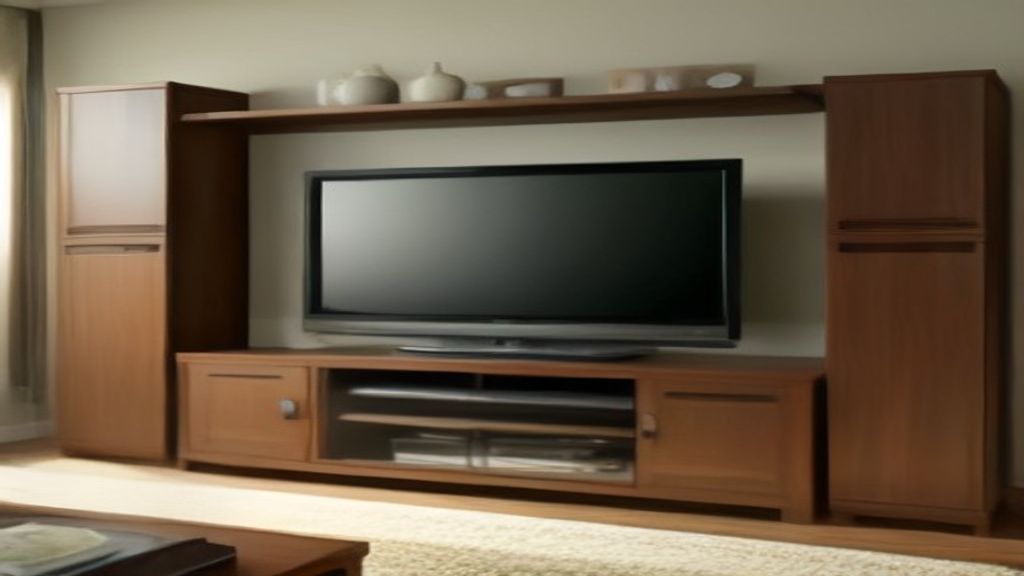
I bought a TV cabinet that was two inches too deep for the wall it was meant for. The back panel pushed into the outlet, the doors wouldn't open fully, and the whole thing stuck out past the corner of the room like a shelf someone glued on. My fault. I measured the width like a normal person, but nobody told me the depth was the number that actually mattered.
You're probably doing the same thing right now—thinking about how wide the TV stand needs to be and ignoring the space between the wall and the couch. That space is where cabinets go to die. I've made the mistake twice now, so let me walk you through what I wish someone had said before I ordered.
The Wall I Measured (Wrong)
The wall in my living room is 72 inches from the corner to the window trim. I measured that twice, felt proud, and bought a 60-inch-wide oak cabinet. Looked great on paper. But the depth—the cabinet was 18 inches deep, which I assumed was standard. The problem? The baseboard heating vent sat right under the window, and the cabinet's back panel covered it. The room got colder, the cabinet's wood started to swell at the bottom after a few months, and I had to pull the whole thing out every time the heat kicked on.
If I'd measured the depth from the wall to the front of the baseboard—which is about 6 inches out—I'd have known that an 18-inch cabinet would never clear it. Same wall, same width, completely wrong cabinet.
The Three Measurements That Actually Decide the Buy
I've learned to take three numbers before I even open a browser tab. Width first, sure, but then depth, and then height—and I measure height from the floor to the bottom of the window sill, not from the floor to the ceiling like some guides suggest.
Depth is the one everyone skips. If your TV cabinet is against a wall with a vent, a baseboard, or a door that swings that way, you need at least 4 inches of clearance in front of whatever protrudes. For most TV stands, that means you're looking at 14 inches max. I've seen 14-inch-deep cabinets online, but they're rare—most cheap ones are 16 to 18 inches. If you're in a tight room with a door that opens toward the TV wall, a 14-inch cabinet might be the only one that works, and you'll pay more for it.
Height matters more than you think. If your TV is mounted on the wall, the cabinet is just a shelf for the soundbar and console. But if the TV sits on top, the cabinet height should match your seated eye level—usually 30 to 36 inches from the floor. I once bought a 40-inch-tall stand because it had nice drawers, and the TV sat so high I had to tilt my neck. Should have measured the couch first. I Bought a Staples Desk Without Measuring My Chair—Here's What to taught me the same lesson: the furniture has to fit your body, not the other way around.
Don't forget the corner. If you're tucking a cabinet into a corner, measure the diagonal space, not just the wall. I've seen people buy a 55-inch-wide stand for a corner that only had 50 inches of wall on one side. The cabinet overhung the edge by an inch, and the door on that side couldn't open without hitting the adjacent wall.
The Size You Actually Need (Not the One That Looks Right)
I know you want a big TV stand because the TV is 65 inches. But the stand only needs to be as wide as the TV's base, not the screen. A 55-inch-wide cabinet supports a 65-inch TV just fine, as long as the base fits. And if you're mounting the TV, the stand can be even smaller—it's just a media console.
Here's a concrete example: my buddy's living room is 10 by 12 feet. He bought a 70-inch-wide TV stand for a 55-inch TV because the showroom made it look proportional. The stand ate half the room, the door couldn't open fully, and he had to rearrange the whole space. A 50-inch-wide stand would have done the same job and left a walking path.
The Vent Problem (and What I'd Do Now)
That vent situation—the baseboard heat—is the issue I keep circling back to because it's so common. If your TV wall has a baseboard heater, a floor vent, or even a big outlet that sticks out, you have two options: buy a cabinet with an open back (many budget TV stands have thin shelves, not a full back panel) or leave visible space between the cabinet and the wall.
I tried the second approach first. Looked terrible—you could see the cords and the dust bunnies. Then I found a cabinet with a cutout in the back, but it was 22 inches deep and the TV cabinet stuck out too far anyway. The right solution was a 15-inch-deep cabinet with a removable back panel so the vent airflow could pass through. I had to order it from a specialty site, and it cost 30% more, but it solved the problem without turning my living room into an icebox.
What to Check Before You Order
- Measure the depth of the space, not just the width. Include any vents, baseboards, or outlet covers that protrude.
- Check the TV base width. If the base is wider than the cabinet top, you'll see it overhang—looks cheap and can be wobbly.
- Look at the back panel. Soft-close drawers are nice, but a full back panel can block airflow. If you have a vent, find one with ventilation holes or an open back.
- Open the doors on the showroom floor. I've seen plenty of TV stands where the doors barely open 90 degrees because the hinges are cheap. If you're going to store DVDs or game consoles inside, you need unobstructed access.
The One Number That Decides Everything
After all my measuring and returning, I've decided the depth is the number that decides whether a TV cabinet works in your room. I've seen too many people—including me—obsess over width and ignore the space between the wall and the front edge. That's the number that causes the vent to be blocked, the door to pinch, the walkway to shrink. Width is easy to check; depth is the one that'll burn you.
So before you add to cart, take a tape measure to the wall and write down three numbers: width, depth from the wall to any obstruction, and height from the floor to the window sill. Do that, and you'll avoid the stack of returned boxes that ended up in my garage. I still have the 60-inch oak cabinet in the basement—couldn't even give it away because the back panel is warped. Narrow Media Cabinet: The 18-Inch Depth Trap I Keep Seeing covers this exact problem from another angle, and What $200 vs $800 TV Cabinets Actually Get You explains why cheap ones often have that weak back panel to begin with. If you're still early in the hunt, I Didn't Measure the Chaise Side First: My Tanavi Sectional Mistake is a good reminder to measure everything, not just the furniture's footprint. And if you're dead set on a low, wide cabinet for a wall with nothing tricky, IKEA TV Furniture: Setup Week and the One Decision That Actually has notes on why the depth of the cabinet changes how it sits in a room.
The depth. That's the one. Measure it, and you won't write a post like this.