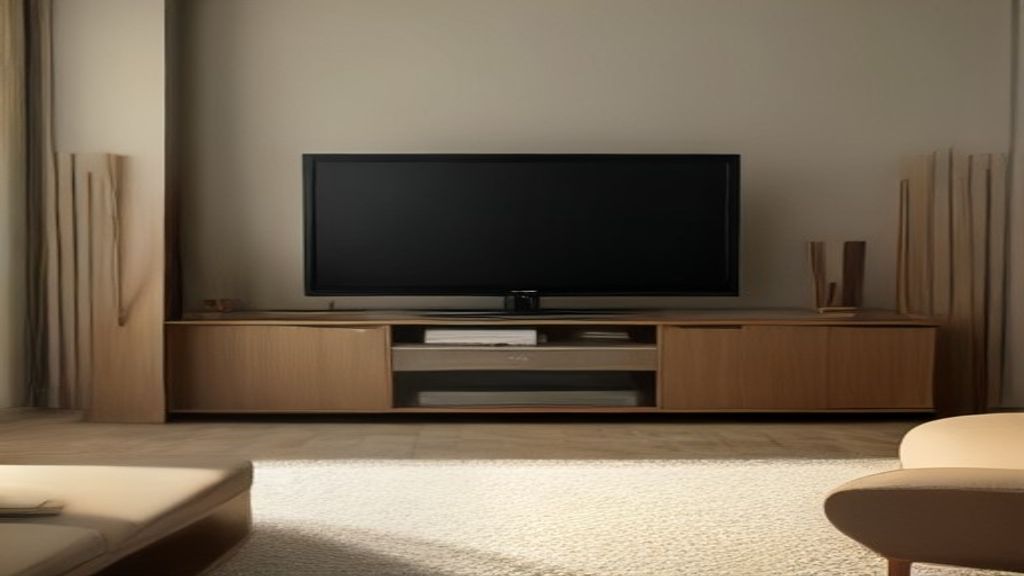
I bought an oval TV stand because it looked softer than the usual rectangle. Seven days later, I've got opinions. The shape is fine, but the width—not the curve, not the finish—is what made the difference. Let me walk you through the first week and the one measurement you should obsess over.
Why I Nearly Returned It
The first night, the oval stand made my 55-inch TV look like it was floating in a weird way. The rounded ends stick out further than you expect. I measured the top at 60 inches wide, but the actual footprint—the bottom edge—is 55 inches. That's 5 inches of visual overhang if you're using the top dimension to plan. My mistake: I measured the top, not the base. The base is what sits against the wall and what your eye catches.
The Width Rule That Matters
Before you even unbox, measure the width of the base, not the top. My stand's base is 55 inches. My wall space is 70 inches, so it fits. But if your wall is 58 inches, that 55-inch base is tight—you'll have 1.5 inches on each side. That's enough to make the room feel cramped. I learned this after a friend tried to squeeze a similar stand into a 48-inch alcove. She returned it.
Also, think about the TV size. The base should be at least as wide as your TV's feet or stand. If you have a 65-inch TV with wide feet, a 55-inch base might look unstable. I paired mine with a 55-inch TV, and it's solid. For a 65-inch, I'd step up to a 62-inch base.
Assembly: Two Hours, But Bring a Friend
Assembly took me two hours, and I had to call my wife to help with the top panel. The instructions are translated from somewhere, so the diagrams are useless. The holes lined up, but you have to slide the cam locks in a specific order. I did it wrong twice. Also, the included Allen wrench is garbage—use your own hex set. The pieces are heavy: the top panel alone is 25 lbs. You'll want a second person to avoid scratching the finish.
The Shape's Real Problem: Corners
The oval shape makes corners awkward. If you have kids or a cat, that rounded edge doesn't protect you. My cat jumped off the back and nearly knocked a cup off the corner—the curve makes it easier to knock things. I put a small felt pad there, but still. Also, if you plan to put a soundbar on top, the curved front means it might hang over the edge. My soundbar is 24 inches wide, and the oval curve is deepest in the middle, so it sits fine. But a wider soundbar? Check the center depth.
The Hidden Storage Issue
Oval stands often have fewer straight walls inside. My two drawers are shallower than they look because of the curve. I measured 5 inches deep, not the 8 I expected. So my cable box doesn't fit in the drawer—it has to sit on top. If you have a lot of gear, measure the internal depth, not just the outer width.
Who Should Skip This
If you're the type who wants to mount the TV on the wall and just need a low console for media, skip the oval. The curve adds nothing but a headache for brackets. Also, if you're on a tight budget, the shape costs more than a rectangular stand with the same storage. But if you want a soft look and have at least 10 inches of clearance on each side, the oval is worth it. Just measure the base, not the top.
For more on TV stand widths, check the Latitude Run TV Stand: The Width Rule That Stops the Regret. If you're comparing shapes, the Asymmetrical TV Stand Setup: Week One and the One Decision That has a similar story. And if you're torn between a console and a wall mount, Table Top TV Stand: Why a Low Console Beats a Wall Mount for Most lays it out.
And more in the TV Stands hub.