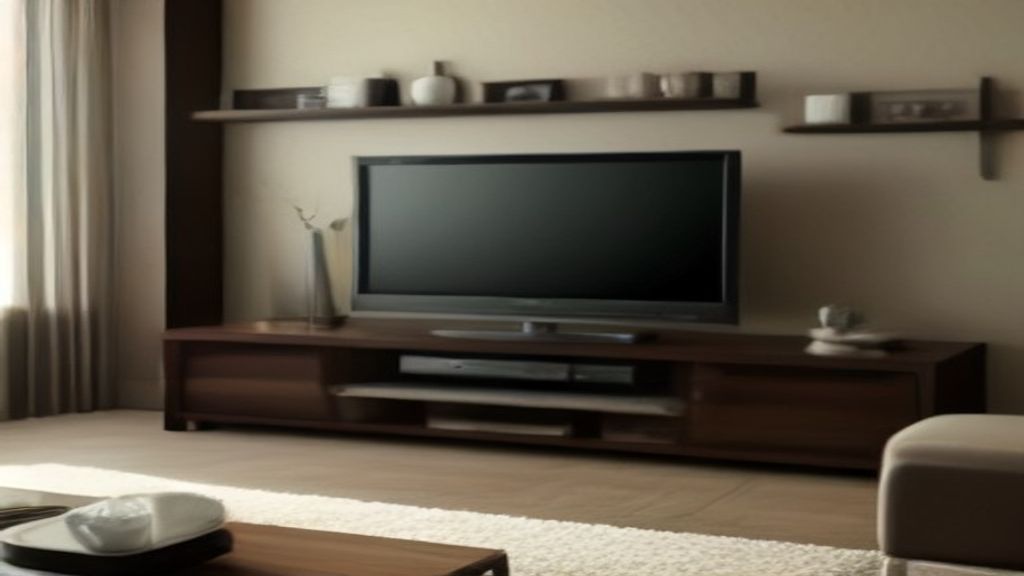
I've moved an espresso TV stand into three apartments in five years. The first one cost $180 and wobbled like a folding chair. The second, $450, still holds the TV today. The third, $800, made me realize the middle tier was the sweet spot. So here's what the money actually buys you — and what it doesn't.
The cheapest espresso stands — the ones under $250 — are usually MDF with a printed wood grain. The color is right, the finish is glossy, but the panels are thin. You'll notice it the first time you try to route cables behind the back panel. The panel flexes. The cam locks sometimes strip if you over-tighten. And after a year, the edges where the finish meets the top start to chip — especially if you live anywhere with humidity swings.
What does $400–$500 get you? Solid wood legs. A thicker top that doesn't bow when you set a 55-inch TV on it. Back panels that are actually anchored, not just floating there. And drawer boxes with dovetail joints — not just stapled particleboard. That's the range where I'd tell you to look first. I've had mine for 18 months now. No squeaks, no sagging, and the espresso color hasn't faded where the sun hits it.
Now, the $800+ stands — they're better, but not three times better. You're paying for real walnut veneer, better metal hardware, maybe soft-close drawers that don't slam. If you've got the disposable income and you stare at your TV stand every day, fine. But the jump from $180 to $450 fixed 90% of my complaints. The jump from $450 to $800 fixed the last 10%.
One more thing: the width. I measured my TV, added 6 inches on each side, and still ended up with a stand that's too narrow for my soundbar. If you have a center-channel speaker or a soundbar wider than 40 inches, buy the next size up. You can't fix that with a tape measure later — trust me, I tried.
For reference, the price differences I'm talking about are for similar sizes — 55 to 60 inch widths. A 90-inch stand is going to cost more no matter what, but the same tier logic applies.
If you're still comparing models, check out my notes on the West Elm TV Stand: What I Learned After Measuring Three Times — that thing taught me more about measured vs. actual dimensions than any spec sheet. And if you're debating low console vs. wall mount, Table Top TV Stand: Why a Low Console Beats Wall-Mounting (and the shows why a low profile is often the simpler call.
The one factor that decides the buy: the depth of your room, not the width. If you've got less than 10 feet from the wall to your seating, a 16-inch-deep stand is going to feel like it's in the way. Measure the depth first, then shop. That single number will do more for your setup than any extra $100 in the budget.