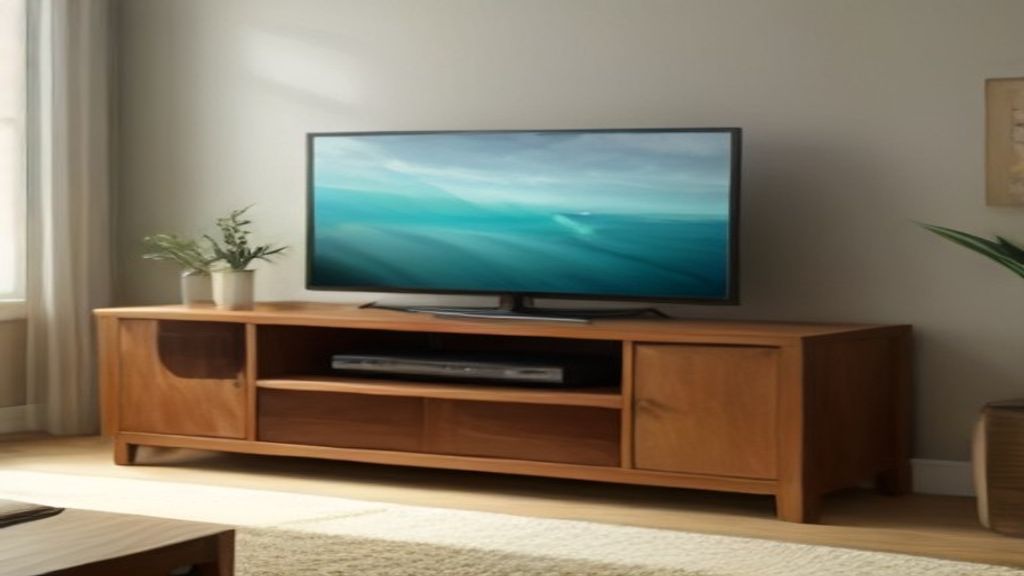
You've been staring at mango wood TV stands for three weeks. The prices swing from $250 to $900 and the product photos all look the same. Here's what actually changes when you pay more, and where the sweet spot is.
I've owned a $300 mango stand for two years and helped a friend unpack a $700 one last month. I measured, poked, and lived with both. The differences aren't in the color—they're in the wood itself, the joinery, and the finish.
What the cheap tier gets you ($250–$350)
At this price, the wood is often mango but it's the leftovers: smaller planks glued into panels, a lot of sapwood (the pale stuff), and knots that are filled with putty instead of chosen for looks. The finish is usually a thin matte lacquer that shows scratches within a month.
The back panel is likely MDF with a printed wood grain. Drawers run on basic side rails—plastic wheels. The top is 1/2 inch thick, which is fine for a 40-inch TV but you'll feel the flex if you lean on it.
One thing that annoys me: many cheap units don't have cable holes in the back, so you're drilling your own. I did, and it went poorly.
The mid tier ($400–$550): where most people should land
The wood is still mango but it's properly graded. You get more continuous grain across the top, fewer filled knots, and a durable conversion varnish that actually resists water rings.
The back panel is solid mango slats—thin, but real wood. Drawers run on soft-close metal slides, and the dovetails are machine-cut but tight. The top is 3/4 inch thick. This is the first tier that feels like real furniture.
I've moved my mid-tier stand twice. The joints haven't loosened, and no visible wear. That's what you're paying for.
The high tier ($700+): do you need it?
At this price you're getting thicker planks (1 inch top), hand-finished surfaces, and a more complex design—like a live edge or a carved front. The joinery becomes mortise-and-tenon or dovetailed drawers that will outlive your TV.
But here's the catch: if you're not buying for the design, the extra $300 buys nothing you'll notice from the couch. The mid tier already has the structural quality.
What I'd skip at any price
If the dimensions don't match your room, don't buy it. A 70-inch stand looks great online but if it eats your walkway, you'll hate it. Also skip any unit with a glass door if you have kids—fingerprints and cracks. And if the finish is glossy, skip unless you're okay with every smudge showing.
Who should skip a mango wood stand altogether
If you live in an apartment with high humidity (like near a bathroom), the wood may warp over time—even sealed. Also, if you need a pure black or white unit, don't force mango; you'll end up painting it, and that's a mess. Consider the Black and Wood TV Stand: The Width Mistake I Keep Seeing if you're mixing tones.
For most people, the $400–$550 tier is where you get real wood, real drawers, and no regrets after a year. Spend the extra on a soundbar instead.
If you're still comparing styles, check the Espresso TV Stand: The $200 Difference That Actually Matters or the West Elm TV Stand: What I Learned After Measuring Three Times. And if you're open to other woods, I Bought a Wooden Garden Table and Ignored the Wood Species—Here's What Happened taught me more than I expected about mango's durability.