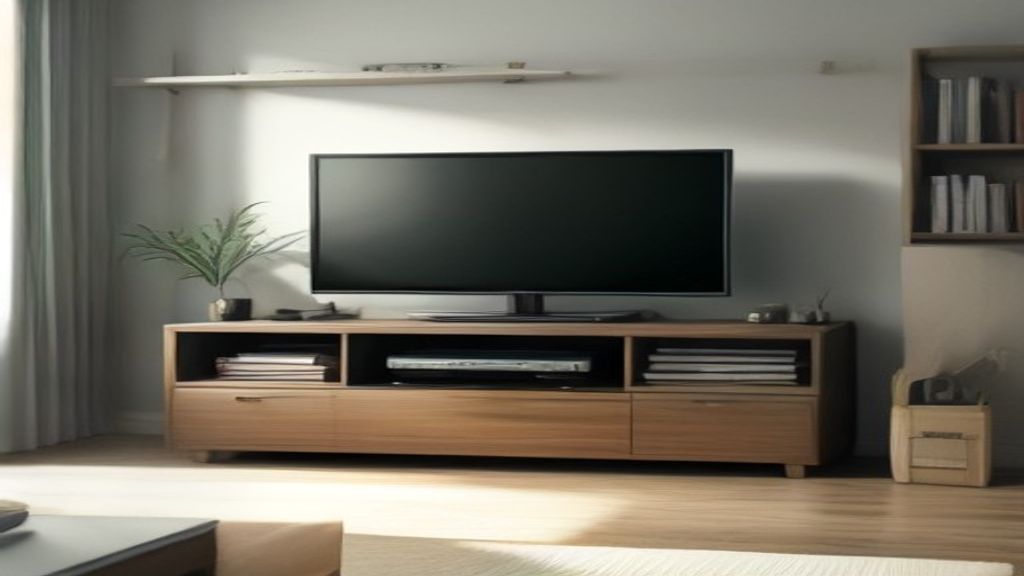
I bought a TV stand that looked perfect — open shelf, mid-century legs, enough surface for my turntable. First time I dropped the needle, the platter hit the shelf above. The shelf was exactly 5.5 inches above the plinth, and my turntable needs 6.25 for the dust cover and about 4.5 to clear the tonearm when it lifts. Half an inch. That's the difference between a working setup and a shelf that's just taking up space.
The fix isn't complicated, but it involves three measurements you actually need to write down before you click buy.
The Turntable Clearance Test
Most people measure the width. Wrong. You need to measure vertical clearance from the shelf surface to whatever sits above it — that's the real constraint. My turntable (a Pro-Ject Debut Carbon, for reference) stands about 8.5 inches tall with its dust cover closed. But the tonearm lifts to about 6.2 inches when it's playing. If your shelf is the type with a solid top, you need at least 7 inches of headroom, preferably more, so you can actually flip the dust cover without scratching the platter.
If you're looking at a TV stand with a closed media compartment — the kind with doors or a front panel — measure the inside height, not just the shelf gap. I've seen specs list "shelf height" that's actually the distance between two fixed shelves, not from the base to the underside of the top. That's how you end up with a turntable that doesn't fit.
Shelf Depth and the Center of Gravity
The second killer is depth. My stand is 15.5 inches deep. My turntable is 13.2 inches deep, but the platter is set back about 3 inches from the front edge. That means the center of gravity sits somewhere around 9 inches back. Heavier turntables — like the Audio-Technica AT-LP120 with its built-in phono stage — are heavier on the left side because of the motor. If the stand's shelf is only 12 inches deep, you'll have the rear overhang by a couple of inches. It looks sloppy and, if you have kids or a cat, it's a tipped-over turntable waiting to happen.
Measure the depth from the front edge to the back wall of the shelf. Then place your turntable on the floor and measure how far back it sits when you center it. If the cabinet's back panel is solid, that's your limit. If it's open in the back, like some open-frame stands, you get a little extra room, but don't rely on it.
Weight: The Shelf Sag Test
Turntables aren't light. The AT-LP120 is about 17 pounds. The Rega Planar 3 is 11. But the real weight problem is the combination: your turntable plus the TV (if it's on the same stand). Most particleboard shelves will handle 40-50 pounds, but those cheap metal pin supports will bow over time. I've seen photos of a shelf that bent under a turntable and a receiver, making the platter slightly tilted — which messes with the speed consistency and makes wow and flutter worse.
If your stand has glass shelves, forget it. I had a client with a glass-shelf TV stand; the turntable was fine, but the shelf flexed every time the motor turned. She heard a low hum through the speakers. So check the weight rating. If it's not listed, assume the worst and go for a solid wood or a metal-framed stand.
The TV on Top vs. Separate Unit
Now the fun part — do you put the TV directly on the stand above the turntable? If the stand is low (around 18-20 inches), you'll be craning your neck. Usually you have to raise the TV with a separate riser or wall-mount it. But if you mount the TV, you still need a stand that can hold the turntable on a lower shelf.
My current setup: a 65-inch TV, wall-mounted about 4 feet from the floor, so the stand is purely for audio gear. The turntable sits on the top shelf, because it's the easiest to access. The receiver goes on the shelf below. That works because I have enough clearance.
If you're cramming both TV and turntable on the same stand, you might be stuck with a corner layout. That's where you need to measure the corner depth — many so-called corner TV stands are really just slightly angled, and your turntable won't fit straight on.
The List of Measurements to Bring
Before you buy anything, print this list:
- Turntable width, depth, height (with dust cover closed)
- Height of the tonearm lift (usually 4-6 inches)
- Clearance above the shelf you're using (measure inside the compartment)
- Shelf depth and whether the back is open
- Weight of your turntable and any other gear on the same shelf
If the spec sheet doesn't state the shelf height or depth clearly, email the manufacturer. I've done that; sometimes they send a diagram with actual numbers. One brand told me their shelf could handle 70 pounds, but the drawer underneath was only rated for 5.
The Stand I Settled On
After my first failure, I ended up with a basic open-frame stand from a random brand. It's 24 inches wide, 15.5 deep, and 18 high. The top shelf has no top obstruction, so the turntable sits there, dust cover open, no problem. The shelf below holds a receiver and a CD player. Total weight on the top shelf is about 20 pounds. The stand itself weighs 35 pounds, so it's stable.
It wasn't glamorous, but it worked. And honestly, the stand you pick matters less than the measurements you take. You can adapt almost any piece if it has the clearance.
Before You Buy, One More Thing
If you're trying to squeeze a turntable into a stand that's not meant for it — like an enclosed media console with heat issues — skip it. Turntables in a closed cabinet overheat the motor and the phono stage, and you'll spend more time fighting feedback than listening. That's the one type of stand I wouldn't recommend for a record player setup.
For more on choosing the right stand for your room, check out the Mango Wood TV Stand: Three Price Tiers and What You Actually Get and Oval TV Stand Setup Week: The One Decision That Decides Everything. And if you're weighing a wall-mount instead, Table Top TV Stand: Why a Low Console Beats Wall-Mounting (and the covers the trade-offs.
If your turntable is way too tall for any stand you can find, don't force it. Sometimes you need a separate low shelf or a desk. That's not a failure — it's just physics.