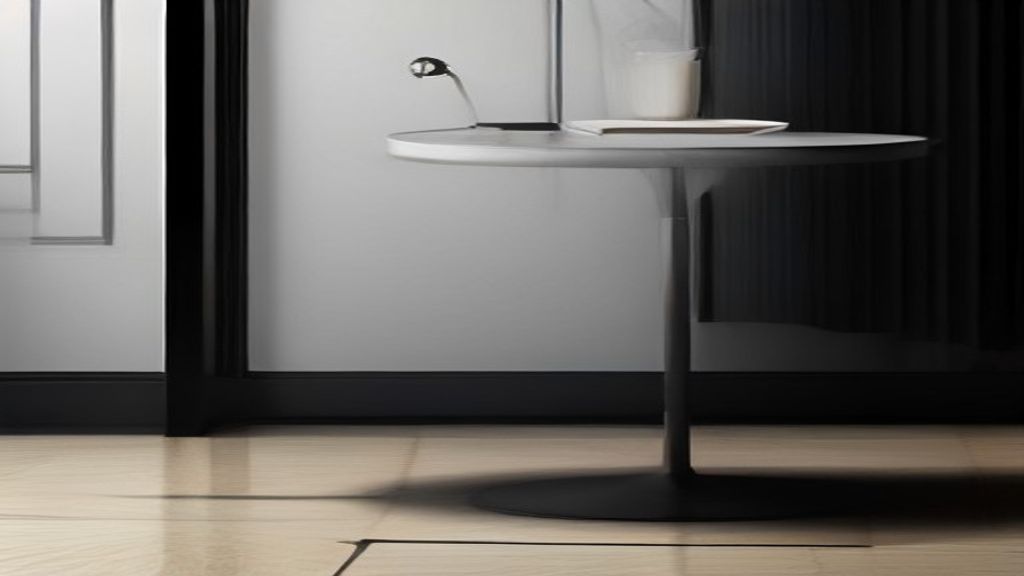
26 inches. That's the height of the cocktail side table I dragged home last month. It looked perfect in the store—sleek, round, matte black—but in the first week I learned that the base, not the top, is the decision that actually matters. Here's what I mean.
The one decision: base type before you buy
Every cocktail side table has a base, and you'll notice it about 12 hours after you unbox it. There are basically three kinds:
- Central column: a single post in the middle, often with a flat disc foot.
- Four legs: the classic, like a mini dining table.
- C-frame or U-frame: offset, so the base sits under the table but not directly centered.
I picked a central column with a small circular base. Looked fine in the photos. In my living room, it wobbles on the rug. Not a little—every time I put a drink down, the whole thing shimmies. The base is only 14 inches across, and the rug's padding makes it worse.
Had I bought a four-leg model, the weight would spread out and it'd be stable. Or a wider base, at least 18 inches. That's the one decision I wish I'd made before ordering.
Unboxing and assembly: what the first 30 minutes look like
The box arrived via freight, 38 lbs. Not heavy, but awkward. The main column came pre-attached to the base, so I only had to screw the tabletop on. Five bolts, 10 minutes, done. Tools included, which was nice.
But the instructions said "hand tighten only." I used a wrench. Slightly over-tightened, and now there's a small gap under the top plate—barely visible, but I can see it. Don't be like me. Hand tighten, check, then hand tighten again.
Also: check for scratches before assembly. The tabletop had a tiny chip on the underside. I didn't notice until week two. By then, no way to return.
Week one: the wobble test and floor damage
By day three, I noticed the wobble. Not just when I bumped it—when I placed a glass of water, the liquid sloshed. That's how I found out the base was too small.
First thing I did: put felt pads under the base. That helped the rug indentation, but not the stability. Then I moved it to a corner where the floor is solid, and it was fine. But the whole point was to have it next to the sofa.
So I bought a cheap floor protector—a clear plastic tray meant for office chairs—and put it under the base. That worked. The base didn't sink, and the wobble almost disappeared. Ugly, but functional.
That's week one: the reality that a $50 fix can save a $200 table.
What I'd do differently (and you should too)
If you're buying a cocktail side table, bring a tape measure to the store or check the specs online. Look at the base width, not just the top diameter. For a 24-inch round top, the base should be at least 60% of that, so around 15-16 inches minimum. Mine was 14 and it's not enough.
Also, think about rug type. If you have plush carpet, a central column base will sink. A four-leg base with casters or wider feet handles carpet better.
And if you're assembling, no wrench. Hand tight only. I learned that lesson the hard way.
Related reads
If you're shopping around, I've written about other tables that taught me similar lessons:
- I Bought a Round Metal Side Table Without Checking the Base—Here's — told you, happens to me all the time.
- Hay Side Table: What I Learned in My Apartment (and What You Should — same base issue, different brand.
- Side Corner Stand for TV: What $60 vs $250 Buys You in Real Apartments — compare to other options.
- Corner Table for Living Room: What $80 vs $300 Actually Buys You — if you're debating placement.
One thing to do tonight
Look at your cocktail side table (or the one you're eyeing online) and find the base width. Measure it, or search the specs. If it's under 15 inches for a round top, buy a different base type or a floor protector. Do that now, before you anchor down for movie night. Your floors and your drink will thank you.