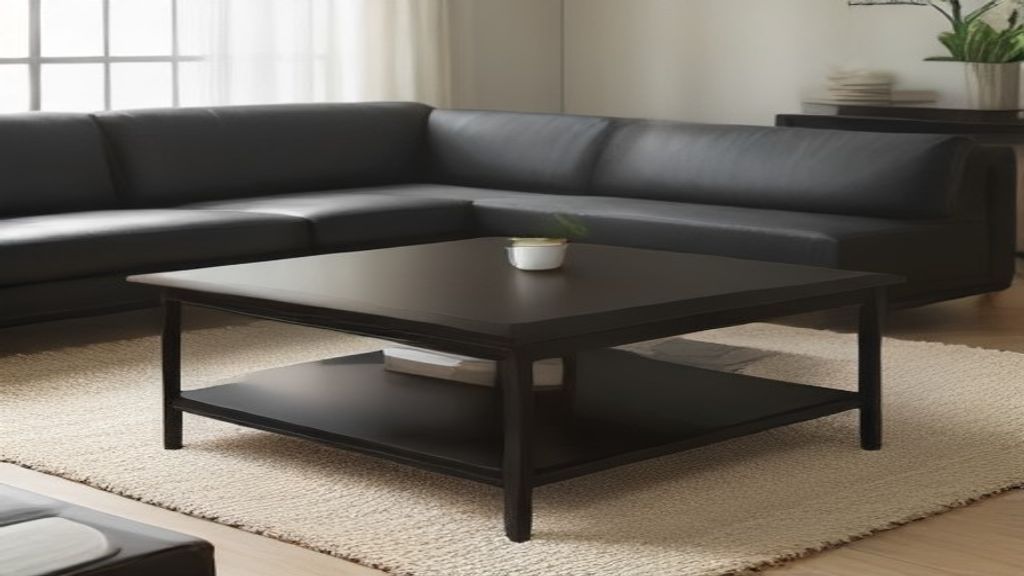
I saw a cage coffee table online—black metal, open frame, industrial vibes. Looked great in the showroom photo. I clicked buy without measuring the gap between the bottom rail and the floor. Three days later, my shins hated me.
The first mistake: I assumed the open design meant storage. It doesn't. The lower shelf is decorative, not functional. Anything smaller than a phone slides straight through the gaps. Remote, gone. Bookmark, gone. My dog thought it was a toy dispenser.
If you're set on the look, measure these before you order.
Measure Leg to Floor Gap
My cage table has a bottom rail that sits about 4 inches off the floor. Sounds fine until you realize you can't slide your feet under it. Every time I sat on the couch, my ankle hit the bar. Furniture placement matters—leave at least 6 inches if you want to tuck your legs.
Also think about cleaning. A 4-inch gap means the vacuum head doesn't fit. Dust bunnies gather under the rail. You'll be on your hands and knees with a damp cloth more often than you'd like.
Check Shelf Depth (It's Not Storage)
The cage's lower shelf is more like a display rack. My table has a 12-inch depth, but the bars are spaced 3 inches apart. Anything smaller falls through. A book, a magazine, a TV remote—all slide out. I ended up putting a tray on top, which defeated the whole industrial look.
If you actually need a place to put the remote, skip the cage. Go for a solid-top coffee table with a drawer or a lower shelf that isn't open. Something like the square block table—I wrote about Square Block Coffee Table: The First Week and What I'd Measure Before —at least keeps your stuff contained.
Weigh before You Commit
Cage tables are often heavier than they look. Mine is 38 pounds. It's not a piece you'll move casually. When I wanted to vacuum under it, I had to lift—not slide—it. The metal frame leaves scratches on wood floors if you drag it. If you have hard floors, put felt pads on the feet. Even then, don't drag it.
Also check the material. Welded frames are sturdier than bolted ones. My table came with bolts that loosened after a week. I had to retighten with an Allen wrench twice. Now it's fine, but I didn't expect that maintenance.
Look, cage coffee tables aren't bad—they're just not practical for everyone. If your living room is tight, the open frame makes the space feel bigger. That's the upside. But you'll be giving up real storage and possibly some peace of mind.
Before you click buy, measure your space, measure your sofa height, and think about how much stuff you normally keep on a coffee table. If you need more guidance, I have a plain-English look at small modern coffee tables that covers alternate shapes.
Next step: get a tape measure. Literally, measure the gap between your sofa seat and the floor. If it's under 15 inches, you'll want a table lower than your seat. And if the cage table's bottom rail is above 5 inches, your legs will hit it. That's a deal-breaker. Find a solid-top table and move on.