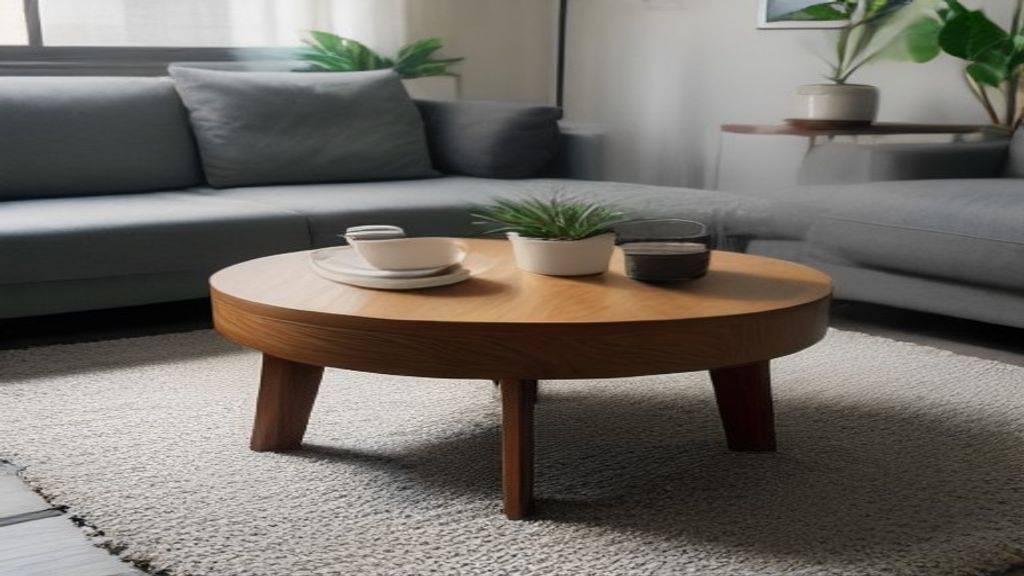
You live in a studio. The couch is on one wall, the bed is right there, and every foot of floor is doing three jobs. Then you bring home a coffee table that looked fine in the showroom, and suddenly you're shuffling sideways to get to the kitchen. Yeah, been there. This isn't about the perfect finish or the trendy shape. It's about the one measurement that matters most: the actual floor space you have left after the couch, bed, and whatever else already squats in the room.
Measure the Empty Floor, Not the Room
Everyone talks about measuring the room, but in a studio, the room isn't empty. The couch takes up a chunk. The bed takes up another. That dresser against the wall. You need to measure the rectangle of clear floor between your couch and whatever's across from it. That's your coffee table zone. If that zone is only 40 inches deep, a 36-inch table will eat your walkway. Leave yourself at least 18 inches between the table and the couch for your knees, and 24 inches on the other side to walk. That's not luxurious; that's survivable.
Think in Edges, Not Just Diameter
A coffee table has edges, and in a studio, every edge counts. That round table might look soft, but it throws a bigger footprint than a square one. A marble top that juts out with a lip will bash your shins on a Tuesday night. Measure the actual overhang – the drop from the tabletop to the base. If a corner sticks out past the base, that's a shin magnet. I returned a square oak table because the edges stuck out a couple inches past the legs. It worked in the showroom aisle, but in my studio it wore a dent in my leg.
Consider the Glass and Legs
Glass tables are tempting in a studio because they feel invisible. But glass shows every smudge, and if you're eating on the couch, you'll see it. Also, glass can be weirdly heavy for a small piece – you're moving it to vacuum anyway. Legs matter, too. Can you get your feet under it when you're on the couch? Not just your toes – your whole foot. A table with a thick lower shelf or crossbars will block you. My advice: look for a table that's either open underneath or has skinny legs that don't get in the way. You'll thank me when you're binge-watching with a plate of pasta.
The One-Angle Takeaway
You don't need the coffee table that looks best in the inspiration photo. You need one that fits the empty rectangle you actually have, won't injure you on the way to the bathroom, and lets your legs be legs. Measure the floor, measure the edges, and skim the legs. That's it. Skip the giant slab that takes over the room; your studio will breathe more. Honestly, you'll probably end up with a smaller table than you thought, and that's fine. It's better to have a little floor than a big table you hate.
If you want more measured talk on coffee tables, check out Natural Coffee Table: Measure the Room, Not the Vibe or A Plain-English Look at Asymmetrical Coffee Table. Also, I Bought a Cage Coffee Table and Regretted It—Measure These 3 Things has some good warning stories.