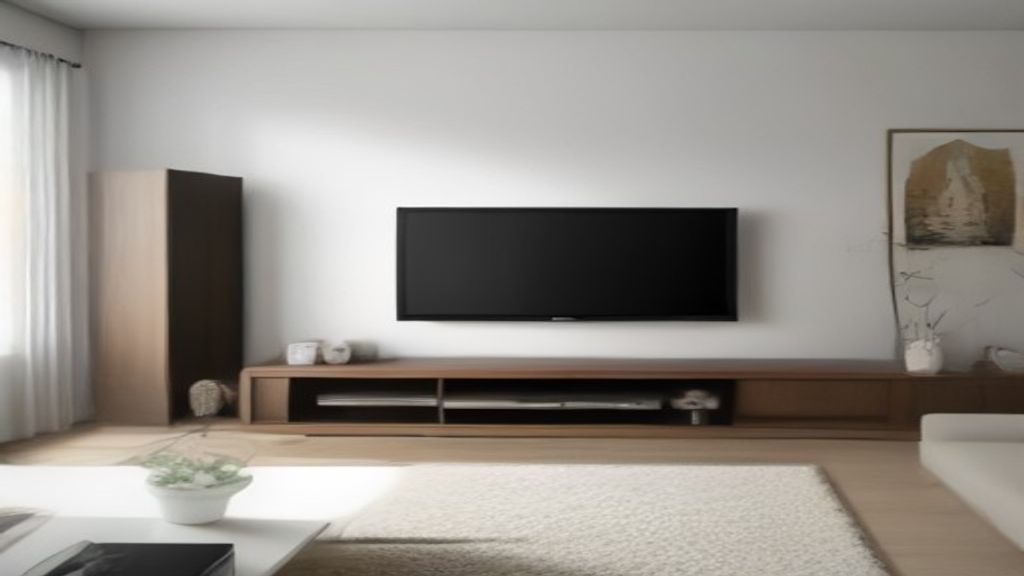
Let me save you a return trip: a tall TV stand is not a lateral move. It's a vertical one, and that changes everything. I've moved three into real apartments in the last eighteen months, and the one thing that always nearly broke the install wasn't the weight or the wobble first day — it was the height of the thing. Not the width, not the depth. The height. We'll get to specifics but first, grab a tape measure and check your viewing distance. Because a tall stand feels great until you're craning your neck or looking at a giant empty strip of wall above the TV.
The first week with a tall stand is mostly floor-time. You level it, you clear extra cable slack, you find out the top shelf is way too close to your eye line even when seated. That's normal. What matters is how far you sit from the screen — not from the stand itself. Most people jam a 65-inch TV onto something that's fine for eye height but completely wrong for the space. For me, the eye-height sweet spot was 42 inches from floor to the center of the TV panel. Stand tops ranged 26–32 inches, so the set needed to sit higher than its base. Big surprise: even the best shelf mounts add three inches. Easy fix afterwards: a pair of riser blocks — cheap, metal, you barely see them, but the difference in comfort is instant.
Second thing I learned: narrow is not always narrow. My wall between the window and door was dead-on 13 inches of stud width. Every slim unit I liked claimed it fit in that gap. Many didn't because the decorative side rails were thicker than the box specs. I measured the actual frame once it arrived — two units were listed at 11.8 and 12.2 inches, both ended up 13.9 from outer edge to edge. That killed the install until I shaved off eight millimeters of drywall. Painful. So, don't trust the “narrow” label. Measure the actual item before you unbox it, and leave at least two inches on each side for breathing room and any cable flow. For more on that exact fight, I wrote a full breakdown: Finding a Tall Narrow TV Stand That Fits a 13-Inch Gap.
Third — storage and dust. Tall stands love vertical shelves, but they also collect dust like it's a hobby. I packed one with two consoles, a soundbar, and a pile of vinyl. Six weeks later I had a smear of dust on every shelf that required dragging everything out just to wipe down. Unless you live with zero dust, plan around it: plastic bins with lids, glass fronts, or just fewer shelves. There's no winning, only managing. Also, the shelves sag if you ignore weight ratings. Middle shelf snapped on my second stand while I was trying to press the TV onto its base. That shelf had a printed 65 lb limit; the receiver, subwoofer, and board games on it looked light but totaled maybe 92 lbs. Measure the weight on paper before you put anything on it, because the printed limits are maximums, not suggestions.
Overall, though, I still switched from a low credenza to a tall stand for one reason: it freed up the floor space. My living room is 10x12, so eye-level storage is a lifesaver. I don't use the floor for media bins anymore, and the room feels more open even with all the stuff. If your setup is mostly acoustic panels hiding cables and you love a clean line, this move is probably worth it.
Who should skip a tall stand? Honestly, if you mostly watch TV lying down on a sofa lower than 18 inches off the floor, you'll spend all night looking at the cabinet top. If you have a very high ceiling and plan to mount a large screen, the stand will add clutter without solving eye-level mount issues. And if you have toddlers, the pull-and-climb risk is real — many tall units tip. Get a wall anchor, or just wait 'til they're taller. But once an empty wall makes you want a simpler solution, a tall stand might actually be your fix.
More thick setups from the field: Tall TV Stands for Flat Screens: What I Learned After Moving Three of Them and White TV Stands for Sale: What You'll Actually Notice After a Month.
It's also worth noting: height preference ties directly to your seat height and screen size. If you want a formula, don't guess. Measure your favorite seat's eye line, then subtract the TV's center-line offset. That's your target stand top. Anything else is a gamble.