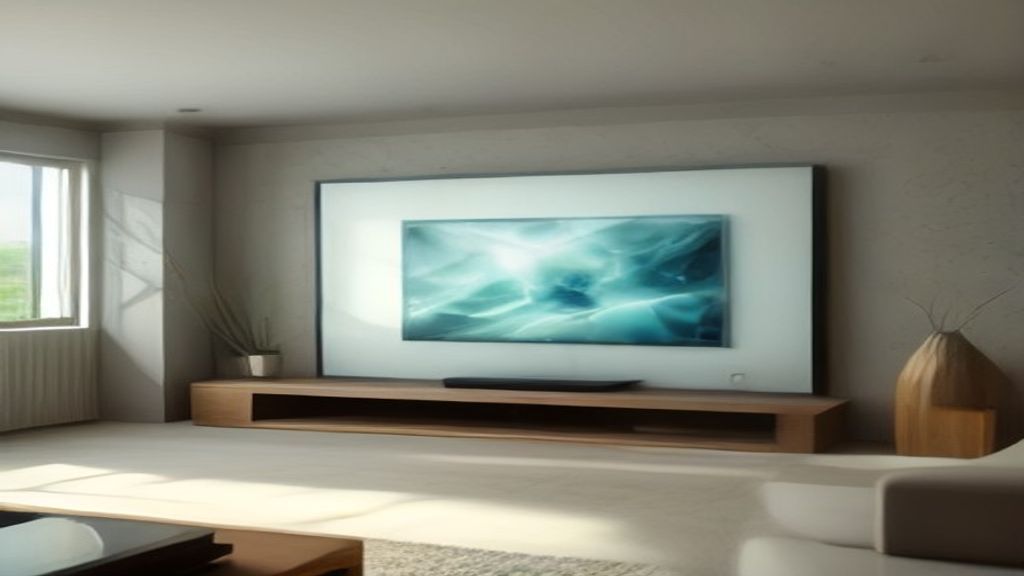
Last month I moved my 65" OLED onto a new stand I'd already assembled—only to find the legs overhung the edges by three inches on each side. My fault: I focused on width and completely ignored depth. That's when I started measuring everything. If you're shopping for an LED TV stand, here's the one number that will save you from the same headache: 22 inches. That's the minimum depth you want for a TV stand that holds a modern flat-screen with a center pedestal or wide-set legs. It gives you room for the stand to sit about four inches in front of the TV back, so the weight is centered, plus space for cables and a soundbar if you ask me. Anything narrower and you'll be pulling the TV forward or living with wobbly overhang.
Why 22 Inches? It's Physics, Not Marketing
Look at any 55" to 75" TV's manual—the distance between the left and right foot, or the pedestal base's front-to-back depth. Most run 12 to 16 inches deep. On a 20-inch-deep stand, that leaves only 2–4 inches of margin on each side. It looks fine from the front, but grab the TV's edge and push gently; you'll feel the wobble. Factory specs aren't magic—I checked the actual base dimensions of five popular TVs at a friend's house. The widest spread was 14 inches, which means a 20" stand gives you a grand total of 3 inches of safe setback. That's not "free space," that's a geometry law. So 22 inches gives you a small buffer, and 24–25 inches for larger sets or if you want to push the TV back to gain some tabletop in front of your console for a box or a plant.
The Real Pain: Depth Is What Breaks Your Setup
Here's the not-so-obvious part that the stock photo won't show: a shallow stand (18–20 inches) puts your TV closer to the wall if you mount it, or if you're using the legs, it sits near the front edge, and the stand's support lip might not catch the full weight of the TV. You end up with a constant creaking sound at 10pm when the building’s heat kicks in—minute shifts, but the joints protest. And soundbars? They're 4–6 inches front to back. On a too-shallow stand, the bottom speaker sits right at the edge, sometimes falls off if you knock it, or blocks the TV's IR receiver if you set it in front. I moved mine to a separate shelf, ugly solution. Another thing people forget: wire management. The power brick, the HDMI cables, the streaming device—if you have less than 3 inches of clearance between the back edge and the wall, you'll never get that sorted, and cords stick out. With 22 inches, the back of the stand will sit 4–5 inches from the wall, leaving a channel big enough to route all that spaghetti without pressure.
One More Thing: Measure Your TV's Feet. Not the Screen.
So when you're out looking at a stand, bring a tape measure. Check the depth in real life, because the online "actual depth" is taken at the widest point, and many cabinets have a recessed center for a soundbar and an overbuilt frame at the edges. The number on the site was 20, but the inside cavity was only 15. That killed my old stand. Also check what's below the surface depth—some drawers stick out an extra inch or two on sliding rails. So the rule is not just the total frame: it's the usable flat area you can actually set the TV legs on. I've seen friends squeeze a 65-inch TV onto an 18" stand and it bowed the board in six months. That's a warped top panel and a wobble you can't fix.
The Take-Away Value: Where to Spend and Where to Save
If money's tight, you can buy a stand that's exactly 22–24 inches deep and pay less than $300, but check the material specs—you want a particleboard with MDF core for stability, not the flimsy PVC stuff. I have a concrete corner of my basement with a two-year-old cheap-o rebuild from a certain big-box store, and honestly it's still flat, no sag. The catch is the finish and the drawer sliders, they'll feel cheap; you just deal with it if you planned for the depth. For most living rooms, a 24-inch depth is the sweet spot—it handles TVs up to 85 inches comfortably, and it gives you that extra tabletop for a soundbar. And whatever you do, once you set your TV on the stand, give it the "shake test": if it rocks more than a centimeter, fix it now—that's the first sign you chose poorly.
So, before you add any LED TV stand to your cart, grab a tape measure and mark out 22 inches on your wall, set tape on the floor where the stand will go, and place an empty cardboard box that thick in that spot. That five-minute visualization will save your thumbs the hassle of returning a 60-pound hunk of furniture. And remember: always measure the actual base of your TV, not the box, before you choose—because I skipped that once, and the rear feet overhung a delicate drawer set at 20 inches deep. Don't be me. Do the 22-inch check, then buy with confidence. Your back, and your TV's balance, will thank you.
Now go to the studio or the basement couch and measure the current setup. Then, if you’re still really deciding, look at the dimensions on the stand you like one more time. Maybe you’re fine with 20, and I hope you are—but at least you'll know exactly what flexibility you're giving up.