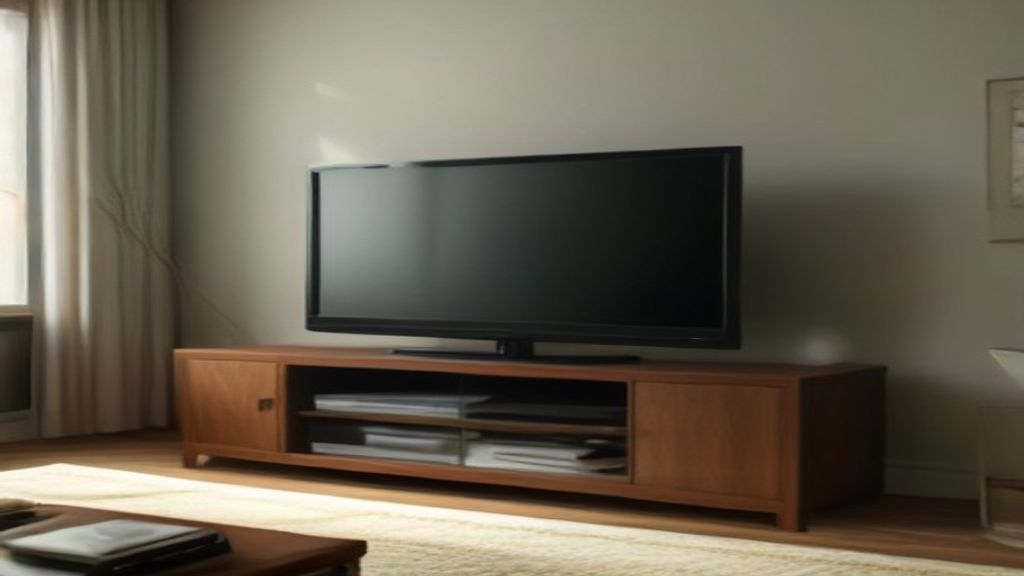
The box weighs more than you think. The cardboard corners dig into your fingers. You slide it across the floor and the bottom scratches—just a little, but you notice. That's the Coridon TV stand unboxing in three sentences. I've had mine for a week, and here's the thing: the width of your TV console is the only spec that actually matters. Not the finish, not the storage, not the cable management holes (they're fine, nothing special). Get the width wrong and the whole thing feels off, like a couch you can't stop noticing.
Why Width Is the Whole Game
Your TV is probably 55 or 65 inches. You think that decides it. It doesn't. The stand has to be wider than the TV—or at least as wide. I learned that the hard way with a previous stand. The TV hung over the edges. Looked like a kid wearing a parent's jacket. The Coridon stands I checked are mostly 50 to 70 inches wide. That's the range you're shopping in. Measure your TV's actual width, add a few inches on each side. If the stand is narrower than the TV, walk away. That's the whole rule.
The First Week and the Mistakes
First day, I put the TV on and didn't bother with the leveling feet. Bad move. The stand wobbles if the floor isn't perfect. An hour with a level and some twisting fixed it. Second day, I realized the back panel has cable cutouts but they're small. My power strip didn't fit through. I had to run cords around the side. Not pretty, but it works. Third day, I noticed the finish—matte, not glossy—doesn't show fingerprints. Good because I'm messy. The drawers slide smooth, but they're not soft-close. They're just fine.
The Width Test
Do this before you buy. Measure the space where the stand will live. Then measure your TV. Add ten inches to the TV width, just as a sanity window. If the stand you're eyeing is narrower than that, don't buy it. I ignored that rule once and ended up with a 48-inch stand under a 55-inch TV. That setup belongs in a meme. The Coridon I settled on is 60 inches. TV's 55. There's four inches of clearance on each side. Looks balanced. Feels solid.
One Thing I'd Change
I wish the back panel was easier to remove. It's held in by plastic clips that make me nervous every time I pop them. If you're the type who reroutes cables every month, prepare for some cursing. But that's the only real complaint. The stand doesn't creak. The legs don't wobble. The finish holds up to a damp cloth.
The one factor that decides whether you'll love this stand isn't the brand or the price. It's the width. Get that wrong and nothing else matters. Get it right and you'll forget the stand is even there—which is exactly what you want. If you're measuring for another stand, check out the Latitude Run TV Stand: The Width Rule That Stops the Regret. Or if you're still deciding between a console and a wall mount, read Table Top TV Stand: Why a Low Console Beats a Wall Mount for Most. For more sizing help, More guides in TV Stands.