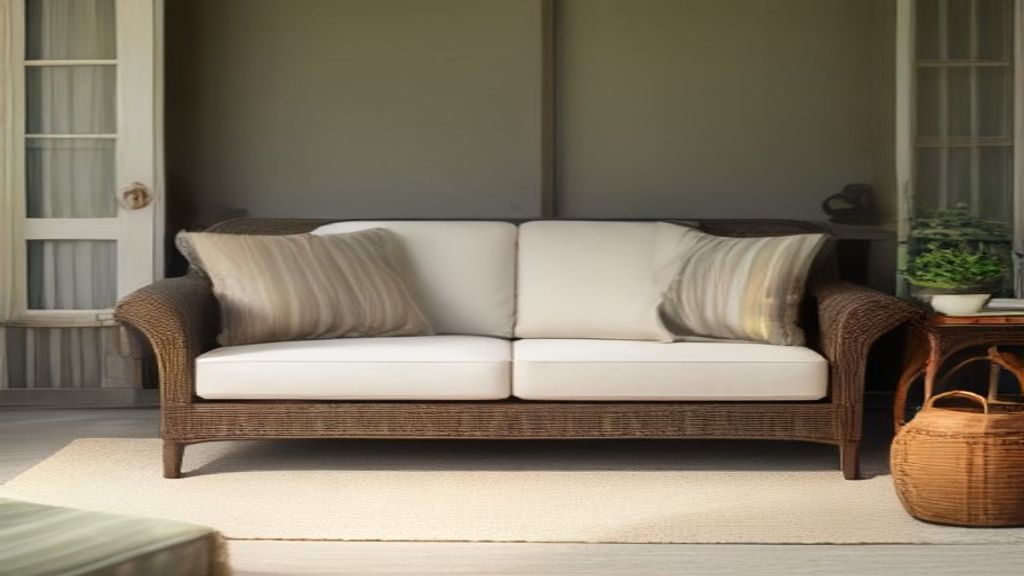
I measured my porch wrong. Thought a 54-inch loveseat would slide next to the railing with room to spare. It fit, barely, but the cushions jammed against the rail and the whole thing sat six inches too close to the door. That's the stuff marketing photos don't show. So before you buy, here's the checklist I wish I'd had.
Measure the porch, not the product page
The product page gives you overall width, depth, height. That's not enough. You need the actual footprint plus a few inches of breathing room.
- Width: Mark on the floor where the loveseat will sit. Add 4–6 inches on each side for arm clearance and for leaning in to sit. If you're putting it against a wall, add 6 inches for the throw pillows.
- Depth: It's not just about the seat depth. The backrest leans back, so the base is deeper than the seat. I've seen 36-inch total depth claims that were really 30. Look for the full depth from the back edge to the front edge of the cushions.
- Clearance to door: If you're placing it near a door, measure the swing. A loveseat that's flush to the hinge side makes you shuffle sideways past it. Leave at least 24 inches of walking space.
My porch had a step down, so I also had to check the height. A 28-inch tall loveseat with a 19-inch seat height feels like a stool next to a 30-inch table. That's not a functional problem, but it is a knee problem.
Seat height and depth: sit on it (or eyeball it)
You can't test-sit online. So look for seat height around 16–18 inches if you're average height. That's the sweet spot for standing up without a groan and for your feet flat on the floor. I measured mine: 17.5 inches. My wife, who's shorter, feels her heels lift. She now uses a small step stool as an ottoman. Not ideal.
Seat depth matters too. If the seat is 22 inches deep and you're not tall, rolling your back with a lumbar pillow. If it's 20 inches, you'll perch. Find the measurement and compare to your own leg length. I'm 5'11" and 21-inch depth is perfect. Under 20 gets my knees at 90 degrees and my feet flat, but I have no room to shift.
Resin wicker vs natural: don't believe the price tag
I bought a resin wicker loveseat five years ago, and it still looks new. My neighbor bought a natural wicker one on sale and it started shedding within a year. That's the pattern.
- Resin/PE rattan: Injection-molded, weatherproof. It's heavy, about 60 pounds for a loveseat. It won't fade much, but the cushions need to be stored indoors during rain unless they're quick-dry foam. That's on you, not the manufacturer.
- Natural wicker: Looks warmer, but it absorbs water and can crack if it's not sealed. Unless you're in a covered area that's bone dry, skip it. I learned that from my neighbor's yard.
Also check the frame. Cheaper loveseats have thin aluminum tubes that bend. Look for steel or thick aluminum, and don't trust the weight claim on the box—actually lift the thing. At the store, I found a 50-pound loveseat that felt like 35 because it was hollow.
Cushions: fabric, foam, and the care routine
Cushions are where you feel the savings. Most come in olefin or polyester. Olefin is more resistant to sun and moisture. But the foam density? That's the thing they don't tell you. I ripped a cushion open once (don't do that) to see 1.5 density foam that went flat in a month. Look for "high-resiliency foam" or "quick-dry foam" or "2.0 density" at least.
Get cushion covers that are removable and washable. The first rainstorm on my last loveseat soaked the seat cushions and they stayed damp for two days. If you have a drip edge on the roof, make sure the loveseat sits under it, or move it before storms. That's annoying but real.
Delivery and assembly: plan for Saturday, not Sunday
When it arrives, check the delivery area. The box is usually 5 feet long and 2 feet wide, about 70 pounds. I managed to wheel it onto my porch on a hand truck, but you'll need a second person to get it up steps. Assembly is usually just sliding the seat back into the base—some are one-piece. That's a 15-minute job, but you need a drill if the bolts are preinstalled.
Also, plan for the old piece. If it's a return, you'll have to break down the box into a recycling bin. Cardboard that big takes up half a car.
The one accessory that matters: a cover
Unless your loveseat comes with a waterproof, breathable cover, buy one. It's not glamorous, but it protects the wicker from UV and the cushions from mildew. Get one that fits snugly—the ones with elastic hems that pull over the top look like a wrestling match. I bought a generic cover labeled for a 50-inch loveseat and it fit my 54-inch one with a tuck at the back. Fine.
I'd also suggest a small stir stick and a can of UV protectant if you live in intense sun. I sprayed my resin wicker every spring, and it hasn't faded.
Who shouldn't buy a wicker loveseat
Skip it if you have kids who'll jump on it. The frames are sturdy enough, but the seat foam will flatten. If you have a dog that likes to lean its muddy paws, the fabric will stain despite treatments. And if your porch is wide open to the wind, a lightweight loveseat (under 40 pounds) will blow over. I had to anchor mine with sandbags in the bottom legs.
A wicker loveseat is not a forever piece. It's a three-to-five-year commitment if you treat it well. If you want something that'll last longer and can handle abuse, look for powder-coated steel frames with sling webbing. But if you want that relaxed beach-house look, wicker is fine—just measure twice, buy a cover, and don't pay extra for a name.
Still on the fence? Check The Wicker Sectional Mistake That Cost Me a Winter to see what not to scale. If you're comparing chairs to go with it, read Wicker Bistro Chairs: Wobble Test and Seat Height That Actually. For smaller storage, see Round Wicker Hamper: What the Price Tag Actually Buys You. And if you're going full wicker, White Wicker Patio Furniture: The First Rainstorm Test and How to.