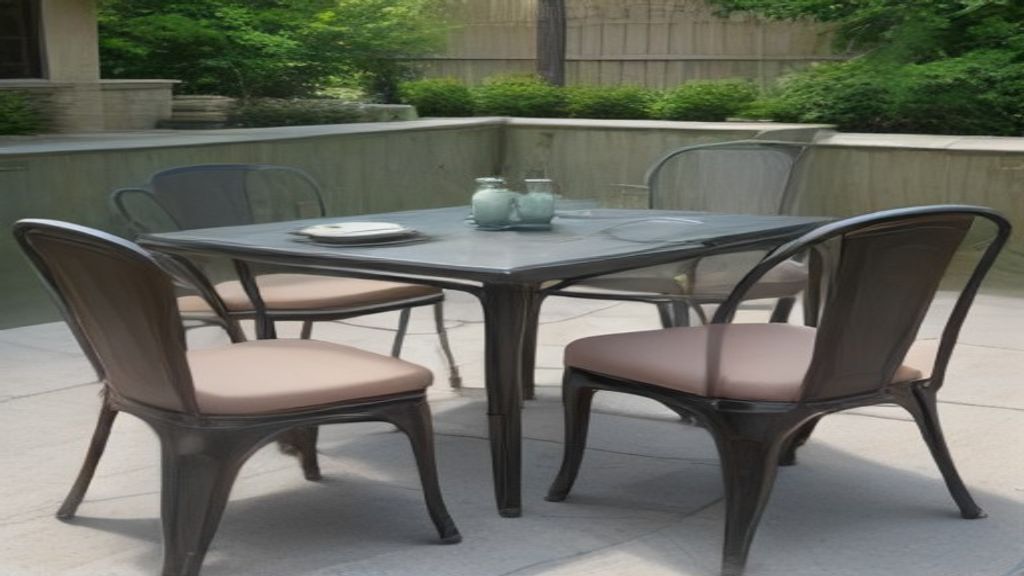
Last spring I saw a 60% off patio furniture sale at a big box store. I bought a full dining set that seemed like a steal. Ten months later I was about $900 deep and I get better use from a $40 folding chair from the hardware store.
The 60% off trap
That dining set's list price was $1,800. I paid $720. It didn't come with cushions (those were extra). It didn't come with an umbrella or base. The frame is steel but the powder coat chipped inside a month. The glass tabletop scratches if you look at it wrong.
I measured the actual seat depth: 16 inches. Impossible to sit in for more than 20 minutes without your thighs going numb.
Online photos showed a lush backyard. My patio is a concrete slab, which they don't mention.
What you actually gain at different price tiers
I've tested patio furniture across three tiers over the past three years. Here's what changes as you spend more:
Under $500: Usually aluminum or steel frames with a plastic-based wicker. Looks decent for a season or two. Cushions (if included) feel like foam wrapped in a thin polypropylene (PP) shell. I've seen the fabric fade and the frames wobble after a year. Bonus: delivery is often $50-$80 unless you pick up at the store.
$500 to $1,500: This is where you start getting actual weather durability. Frames are heavier (you'll notice when hauling the boxes). Cushions are thicker and use better fabric. One set I bought at this price still looks solid after two winters. But watch for "seasonal" discounts that were never as good as they seemed—the original list price might be inflated by 40%.
$1,500 and up: You're paying for name brand, design, and sometimes better materials like HDPE lumber or marine-grade stainless. I haven't bought at this tier, but I've helped a friend install a teak set. The first winter we forgot to cover it. It grayed out. That's normal. But the wood didn't crack.
The gain at each tier is mostly about time-to-replacement and comfort, not status.
Hidden costs that ruin the deal
I tracked every dollar with that 60% off set. Here's the breakdown:
- Set: $720
- Cushions (not included): $180
- Umbrella and base: $140
- Delivery (changed from free due to "weight"): $65
- Replacement screws and corner brackets after the frame loosened: $12
- New cushion covers after a bird got into them: $35
Total: $1,152. That's not a steal.
Shipping and delivery is the sneaky one. Stores say "free delivery" but then it's curbside only. You're carrying a 90-pound box up three steps and through a tight gate. I've done it twice. My back still remembers.
What actually holds up
From my experience, the stuff that lasts is built around a few things:
- Heavy frames: If two people can't lift the box easily, it's probably solid.
- Real wood or aluminum: Not plastic that looks like wood.
- Cushions with removable, washable covers.
I still use a $250 cast aluminum bistro set I bought during an end-of-season sale at a local shop. It feels cool to the touch in summer, weighs about 12 lbs per piece, and has seen two winters uncovered. No rust.
The expensive set? I replaced the seat slats myself after they rotted. That was $25 in teak oil and some hardware.
How to know if a sale is real
I've used price trackers and my own notes. A few things I look for now:
- Compare list price to other stores. Just because they cross out $1,200 doesn't mean it's worth $1,200.
- Check the return policy. If it says "final sale," that's a yellow flag. I once bought a daybed on final sale that had a broken slat in the box.
- Read the material specs. "All-weather wicker" can still mean plastic over steel. It's fine, but know what you're getting.
- Sit on it. That's the real test. I don't care how good the pictures look. If you can't sit at the edge and then push back without it tipping, it's not for you.
One more thing: avoid buying anything in spring. Prices are highest then. Wait until August or September. That's when stores actually clear inventory. I picked up a $700 set for $280 in September because the store wanted floor space.
The one decision that mattered
After three seasons, the only thing that stopped a sale from being a waste was knowing exactly where the furniture would live. I put a tape measure on the patio first. I checked the sun exposure and where the wind blows. That matters more than any sale tag.
My current setup is a mix: a $250 bistro set for morning coffee, a $40 folding chair for extra guests, and a $300 cantilever umbrella I got at a warehouse sale. I've stopped chasing the big discount.
If you're looking at a patio furniture sale right now, start with a tape measure and a list of what you'll actually do outside. Then, if there's a sale, good. But don't let a red tag erase common sense.
The next step is to measure your patio and make a list of what you really need, before you click anything. That'll save you more than any sale.
Related reads:
- Patio Furniture Nearby: Why Buying Local Beat the Big Boxes
- Patio Furniture That Lasts? Start With Your Feet, Not the Catalogs
- Outdoor Furniture Without Cushions: What I Learned After Three Summers
- Garden Table and Chairs Sale: First Week Setup and the One Decision That Matters