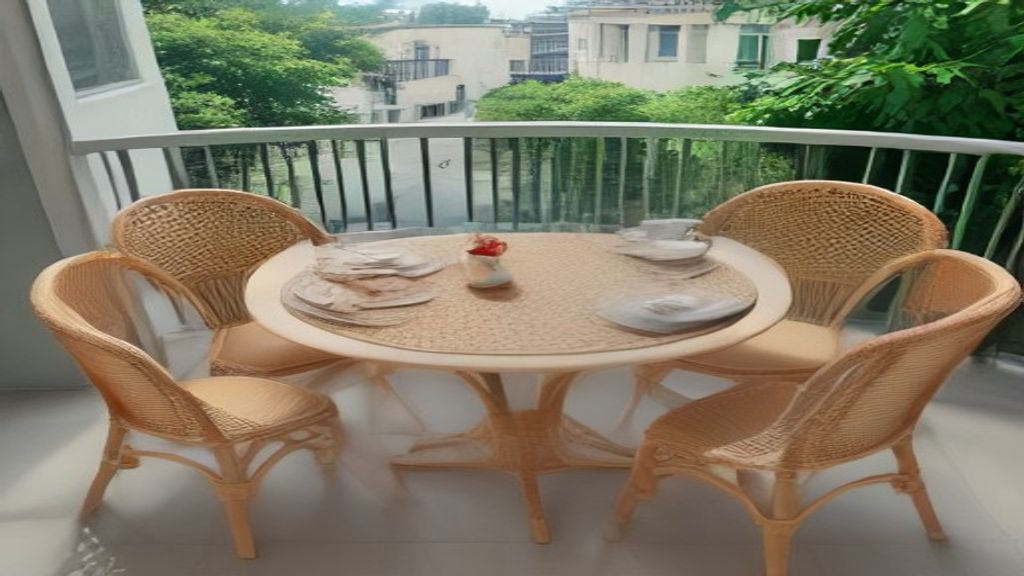
The box weighed 38 pounds, and I knew something was off. The pictures showed a sleek two-seater with curved rattan arms. What arrived was a flat pack with a faint chemical smell and a bag of bolts that didn't match the holes on the frame. That was my first clue.
I'd been eyeing a rattan bistro set for my tiny balcony for weeks. The online photos made it look like the kind of thing you'd see at a café in Lisbon. Turns out, most sets like that are built for looks, not for real weather or real sitting. Here's what I learned after a month of daily use, including two rainstorms and one particularly windy afternoon.
The Mistake: Assuming Rattan Means Durable
I figured rattan was a sturdy material that could handle sun and rain. Wrong. There's natural rattan (the vine stuff) and synthetic rattan (usually polyethylene or resin). The cheap sets you see online are usually synthetic, but the quality varies hugely. Some are UV-treated and won't fade; others turn brittle after a single summer. And the frames? Often thin steel that's painted to look like powder-coating, but it chips within weeks.
My set had a "gold" frame that looked nice in the listing. By day three, the paint was flaking near the joints. By week two, the rattan weave started to unravel on one armrest because the strands weren't properly secured. I'm not handy, but I could see it was just tucked in, not glued or clamped.
What to Check Before You Buy
Before you click 'add to cart', do these checks. They'll save you the hassle of returning a 40-pound box.
Weave and Frame Construction
Look for tight, even weaving. Run your finger along the weave—if it catches or moves easily, it's cheap. The frame should be aluminum or at least powder-coated steel, not raw metal with paint. Flip it over if you can (in the listing, look for underside photos). If they don't show the bottom, that's a red flag.
Dimensions That Actually Fit
Most bistro sets are small—that's the point. But my set's table was only 24 inches wide, which sounds fine until you put two cups and a plate on it. And the chairs had a seat depth of 16 inches. I'm 5'7" and my knees were up near my chin. And the overall width? It said 30 inches per chair, but that included the armrests. The actual seat was 18 inches, so it felt cramped. Measure your space and compare with the exact dimensions, not the top-level specs.
Also, check the height. The table was 28 inches tall, but chairs were 29 inches at the armrest—so the chairs didn't slide under the table. That meant I had to leave a gap, wasting precious balcony space. For context, a standard dining table is 30 inches tall, and chair seats are about 18 inches off the ground. This set was just off.
What Actually Worked
I'll give it credit: after I added cushions (which weren't included, by the way), the set looked great for a week. The synthetic rattan is easy to clean—just wipe with a damp cloth. And the whole thing weighed under 40 pounds, so I could drag it inside when it rained. But that's also a downside: it's light enough to tip over in a gust. I found it on its side twice.
The set eventually went back. I replaced it with a Rattan Patio Chairs: I Measured, I Tested, I Stopped Trusting Ads combo where I picked the chairs separately and built a small table from a local shop. That taught me: if you want quality, piece it together—don't trust the set.
What I'd Do Differently
If you're set on a bistro set, plan for the cushions. Most don't include them, and the cheap cushions you find on sale will flatten in a month. Also, think about storage. If you don't have a covered area, you'll need a cover or be willing to carry it inside. The UV coating on the cheap stuff doesn't hold up.
And for sizing, remember that bistro sets are meant for small spaces, but the proportions need to actually work for humans. I'd sit in a chair if you can. If you're buying online, measure your own leg length and the space where it'll go. Don't just rely on the product dimensions.
For more on fitting furniture into small spaces, check my notes on Solid Wood Kitchen Table and Chairs: First Week Setup and the One — the same principle applies: measure twice, buy once.
The One Thing to Check First
Before anything else, look at the material composition. If it says "polyethylene") and the price is under $150, it's likely to fade and crack within a year. Spend a bit more for high-density PE or look for aluminum frames. And check the warranty—if they don't offer at least 2 years, they don't trust it either.
If you already have a set and it's starting to fade, you can prolong it with a UV protectant spray. But honestly, if it's flaking or unraveling, it's not worth it. Return it if you can.
I learned my lesson. Now, I measure, I check the weave, and I plan for weather. And I'll never buy a set without seeing what the frame looks like. If you're in the market for outdoor furniture, start with the material, then the build, then the fit.
For more patio advice, check out More guides in Outdoor & Patio.