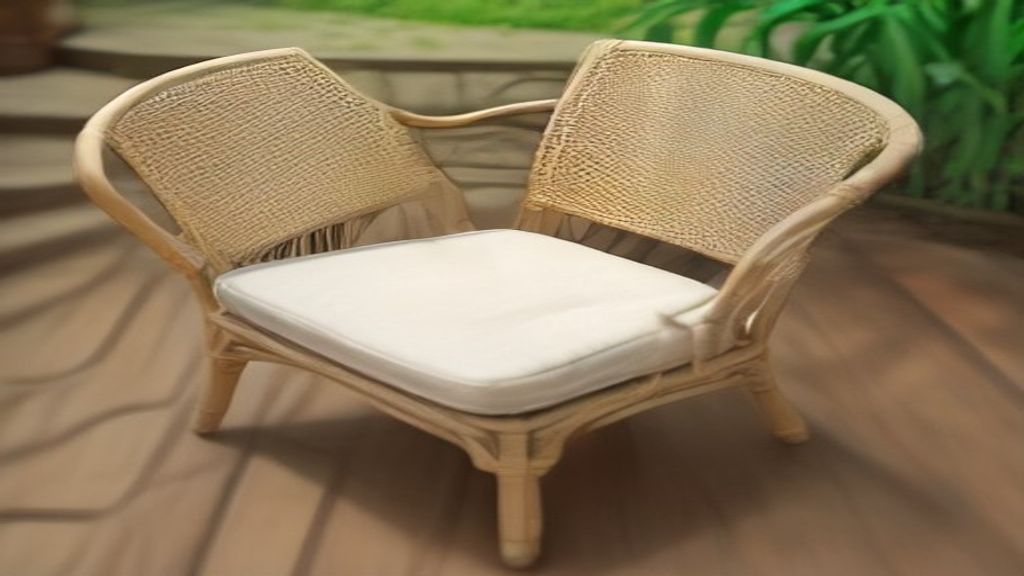
The first set of rattan patio chairs I bought looked perfect in the product photos. Weathered gray, tight weave, modernist curve. By week three the weave was already splitting where the arm met the seat, and the frame creaked like a haunted porch swing. I measured the frame cross-section with calipers: 12mm on one side, 14mm on the other. That's what you get when you trust an ad instead of a tape measure.
If you're shopping now, skip the adjectives. Look at the numbers. Here's what actually decides whether a rattan chair survives a season or becomes a splinter bin.
Frame: What the metal actually is (and how thick)
The biggest lie in rattan furniture is the word "steel." Almost all metal frames are steel, but gauges vary wildly. Cheap sets use 1.2mm wall thickness – that's flimsy enough to bend when an adult lowers themselves into it. Look for at least 1.5mm, and if the listing doesn't show wall thickness, ask. I've seen 22mm-diameter tubes that were thin enough to dent with one knock.
Another thing: welded corners vs. screw joints. Screws loosen under direct sun, and then the seat wobbles. My current chairs have full welds at every junction, and after three months of daily use, no movement.
Weave: PE rattan vs. natural – it's not a flavor choice
Natural rattan looks gorgeous and rots. Rain, morning dew, even high humidity – it's a maintenance trap. My first set was synthetic polyethylene, but cheap PE splits along the strand after UV exposure. The good stuff is UV-stabilized, and you can usually feel the difference: thicker strands (8mm+), tight pattern, no loose ends.
Check the weave near stress points: the corners where the back meets the seat, and the outer rim. That's where the strands peel first. My rule: if you can pinch the weave and see a gap, skip it.
Comfort: The angle that kills your back
Rattan chairs with a too-straight back pitch you forward. I didn't realize until after dinner that my lower back was screaming. Look for a slight recline, maybe 5-10 degrees, and enough depth (seat depth at least 18 inches). My current chairs have a 101-degree back angle measured from the seat plane – perfect for evening lounging.
Also, cushion weirdness: some sets come with pads that shift or have straps that fray. I use separate seat cushions with ties, and the chair surface is flat enough that they stay put.
Price and Replacement Reality
Bear in mind you can get a basic two-piece set for under $300, but those are the chairs that end up in a landfill by fall. Double the budget gets you better weave, thicker frame, and a warranty that's not just a return label. If I had bought once and paid $550 for 4 chairs instead of twice for $200, I'd have saved money and time.
One more thing: delivery. Three weeks, and the boxes showed up with the armrests dented. That's where the manufacturer's warranty helps – but only if you actually file a claim. I've learned to unpack immediately and take photos.
So what actually matters
Before you click buy, measure the tube gauge, check that weave density, and read the care tag. Don't let marketing be your sole source of specs. I wish I'd known that the first time – I'd still have the money I wasted on chairs that couldn't handle one summer of afternoon sun.
The one factor that decides the buy? The frame. Everything else – the weave, the cushions, the color – is cheap to fix or replace. But a chair that bends under your weight is useless, no matter how pretty the rattan looks.
If you want more real-world furniture notes, check out More guides in Outdoor & Patio. For a closer look at specific dining chairs, read Hearth and Hand Dining Chairs: What 28 Inches of Clearance Taught Me or Low Back Dining Chairs: The One Decision That Fixes Your Layout.