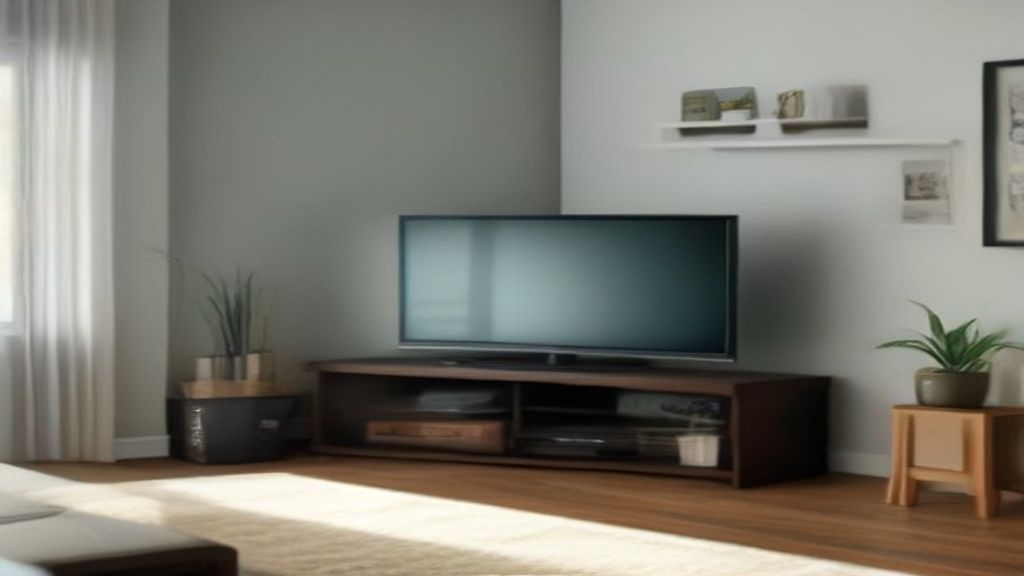
I thought I had it figured out. Measured the wall on both sides of the corner, picked a TV stand that was 48 inches wide, and had the delivery guy carry it up three flights of stairs. Then we slid it into the corner and... nope. The corners of the stand hit the walls before the back touched the corner. Classic. The diagonal across the corner is smaller than you think, especially if your walls aren't at a perfect 90 degrees (mine aren't, because old building).
Turns out, the measurement that matters isn't the wall width on each side. It's the distance across the corner from one wall to the other at the depth of your stand. If your stand is 16 inches deep, measure 16 inches out from the corner along each wall, then measure the straight line between those two points. That's your maximum corner opening. Your stand's diagonal (sqrt(width^2 + depth^2)) has to be smaller than that. I learned this after I returned the first one.
Here's what I did next time. Took a piece of cardboard, cut it to the footprint of the stand I was eyeing, and taped it on the floor in the corner. That gave me a visual. Then I measured the actual diagonal. My corner was about 60 inches across at 18 inches deep. A 50x18 stand has a diagonal of about 53 inches, so it fit with a few inches to spare. The 54x20 stand I almost bought? Diagonal of 57.5 inches — would have wedged in awkwardly, maybe not at all. So close.
Another thing: think about where the TV goes. A corner stand usually means the TV ends up on the diagonal, angled across the room. That's fine for some layouts, but it changes viewing angles. I ended up putting mine slightly off-center, with the TV on a swivel mount to pull it toward the couch. Also, the corner wall might not have a stud exactly where you need it for mounting. Check that before you commit.
Cable management is a pain in a corner, because the walls block access. I ran cables along the inside corner, but they're visible until I zip-tie them. Maybe that's the next project.
Bottom line: measure the diagonal across the corner at the depth of the stand, cut a cardboard template, and don't trust the wall measurements alone. Also, measure twice, order once. I've got a second stand returning this weekend. More guides in TV Stands — I wish I'd read those first.
If you're dealing with a specific TV size, check Picking a TV Stand for LG TV: Width, Weight, and the Wall Mount Problem — that's the one I almost skipped.
And if your walls aren't square, you're not alone. I swear, nothing in my apartment is 90 degrees.