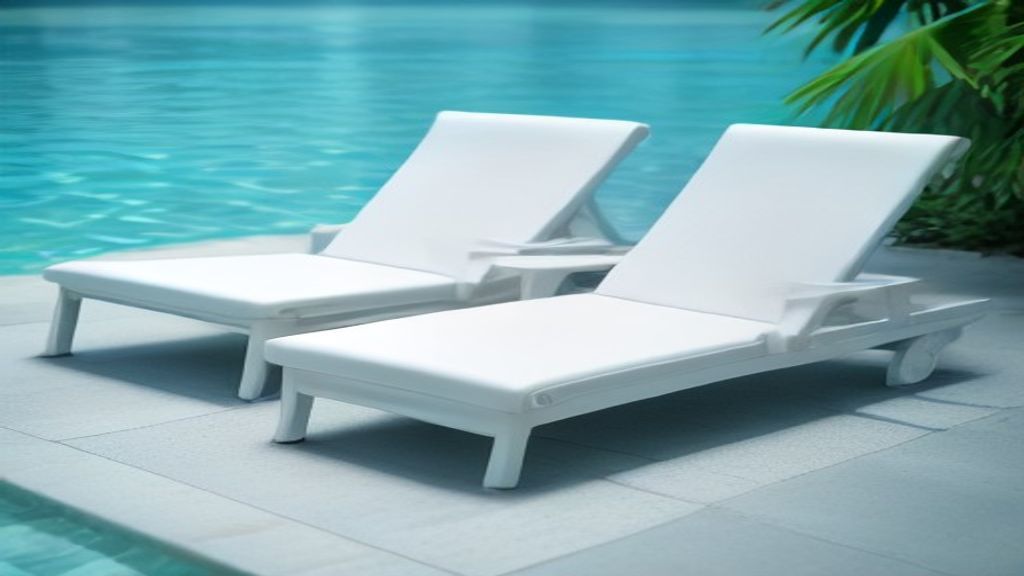
The package weighed less than the box it came in. I lifted the two straightened bundles out, snapped the arms into the side slots, and for about eleven minutes I thought I'd pulled something off. The plastic had that new-pool-toy smell — sweet, chemical, promising. By the third weekend, one of the armrests had popped out so often I started carrying the chair upside down, like a tray. The white surface showed every stain: sunscreen blotches, a grass smear, one drop of something darker that never came off. That's the thing nobody tells you about cheap plastic lounge chairs — they don't fail all at once. They just quit piece by piece, and you're the one who has to keep picking up the pieces.
The mistake: buying on photo, not on plastic
I didn't check the plastic type. I saw a picture of a chair that looked exactly like a $300 one, only it was $89 for two. The listing said "heavy-duty plastic" — which, as I learned, is a phrase that means nothing. You want polypropylene (PP) or polyethylene (HDPE). The listing didn't mention it. I didn't ask. That's the mistake.
Polypropylene is the stiff, slightly waxy plastic that shrugs off sun and saltwater. Polyethylene is softer, more flexible, often cheaper — and it's what my chairs turned out to be. It flexes in the heat, which feels nice for about a week, then it starts to bow under your weight and the stress points white out. My crossbars sagged by July. The notches that hold the back position wore down to smooth, useless ramps.
What I measured after it broke
The seller listed the seat height as 11 inches. That was the distance from the ground to the front edge when the chair sat on the floor. But if you're actually reclining, the seat of the chair tilts up — and the "seat height" you actually sit on is more like 9 inches. My knees shot up, and I had to slide my hips forward to make it work. That's not a chair, that's a yoga prop.
Measure the deck clearance too. A friend's chaise is six inches off the ground, and I can't slide a finger under it to sweep out grass clippings. You know where those clippings go? Everywhere. Also, check the width of the armrests — mine are 2.5 inches wide, which sounds fine until you try to set a drink on them. A standard can balances, but a glass tips over on any breeze.
What held up and what didn't
The plastic did hold color surprisingly well—no pink fade on the sunscreen patch, even after two months of full sun. But the rivets that held the armrests corroded within a month. Not rust, really—just a white crust that ate the plastic around them. One of the back-slot clips snapped off during a summer storm when the chair blew over. It wasn't a heavy chair, but the wind caught it like a sail.
And the noise. At 10 PM, if I shifted my weight, the plastic groaned and clicked like an old dinghy. That wouldn't bother me if I weren't sitting next to it. My neighbor's cheaper chairs don't make that sound.
What I'd buy next time
I'm not saying you need to spend $200 a chair. But I'd look for polypropylene, and I'd hold the chair before buying—twist it, flex the armrests, see if the plastic has any give. If you can't, ask the seller for the material spec. And measure the seat height from the floor to the front edge while the chair is in its lowest position. That's the number that actually matters.
I'd also buy a chair with a steel crossbar underneath, not plastic rivets, and a back that locks into at least four positions—my two-position chair is useless for reading, which is half the reason I bought it in the first place.
One more thing: don't leave the chairs stacked in the sun. The one on top spent two weeks at the bottom of a hot stack, and its legs now curve inward. It's not visible until you sit on it, and then it's, well, noticeable.
The six-week test
If you're tempted by the cheap sets, run a quick timeline: right after you assemble them, mark the date on a piece of tape under the seat. If anything looks worse by week six—cracks, sag, paint rub—send it back. Don't wait for "end of season." The seller won't care by then.
The light plastic did have one advantage: I could drag it across the patio with one finger. That's nicer than it sounds.
That afternoon I threw the busted armrest in the recycle bin and sat on the grass. The chairs are still out there—three of them, leaning against the fence. I keep meaning to buy better ones. Then I look at the price tags and put it off another week.