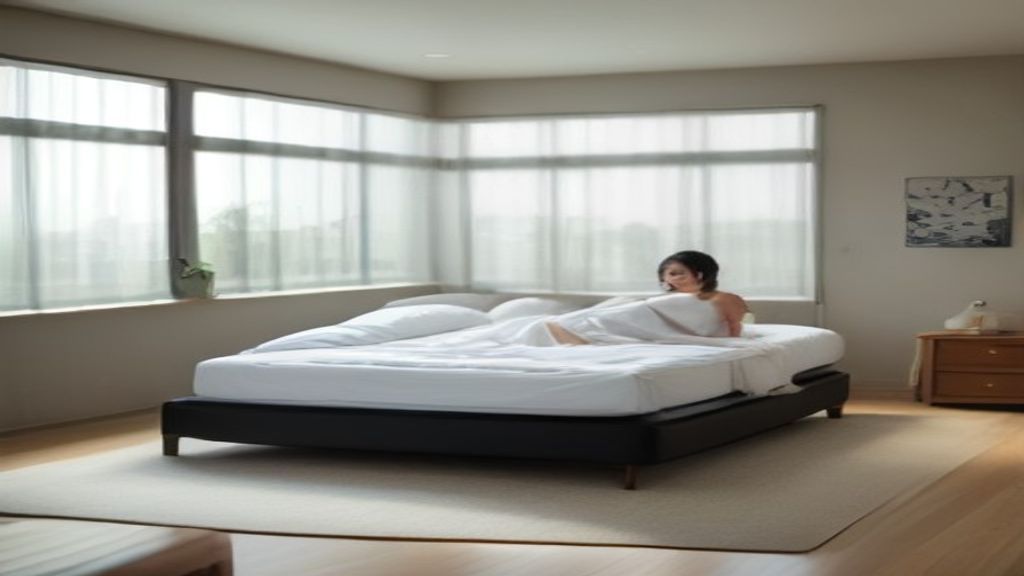
The first air mattress we bought made a noise like a dying balloon at 3am. Guest woke up on the floor, back aching, swore she slept great because she's polite. That was a $35 special from a big box store — IKEA's cheapest, actually. We've since gone through nine more, because holiday week means the in-laws arrive and the couch is not an option.
Here's what actually matters when you're picking one for guests, not for camping in a tent where you accept the hiss.
First, look at your floor situation
We have hardwood. No carpet. That changes everything. An air mattress on hardwood loses heat faster than you'd think, and the surface is unforgiving if it's underinflated. If your guest room is carpeted, you get away with a thinner model. If it's wood or tile, you need something with a built-in pillow top or at least a thicker top layer — otherwise your guest wakes up with a cold backside and stiff hips.
Also, measure your room. We have a queen-sized frame that fits, but a king would have blocked the closet and made it impossible to open the dresser drawers. Sounds dumb, but people buy without measuring. Our second mattress was 20 inches tall when inflated — that's basically a box spring height. Great for getting in and out, but the foot of the bed jutted into the hallway when we angled it. Picture a door that only swings halfway.
How much patience do you have for setup?
My wife has zero. If a mattress takes more than two minutes with the included pump, she's already pulling out the camping pad. The first ones we had used a separate pump you had to plug into the wall and then manually switch to deflate. That's fine until you're trying to put it away at 11pm while tipsy after wine.
Then there's the pump noise. Our guest room is right next to the nursery. At 10pm, a cheap internal pump sounds like a vacuum cleaner. Not great when the baby is finally asleep. We've actually resorted to inflating the mattress in the hallway, then dragging it into the room — which is easier when the mattress isn't the size of a small car.
Some models have a pump that's quieter — barely. But the built-in ones are faster and you don't have to store a separate box. We found that the built-in pump on the mid-range models we tested (around $100) does the job in about 90 seconds and isn't much louder than a hairdryer on low.
But the real question is: does it hold air all night?
We tested nine mattresses over the course of a year, using them for real guests: my mother-in-law, a college buddy, my brother and his girlfriend. Every morning we measured deflation by how much the guest complained about the floor.
Cheap ones lose 10-15% of their air, no question. That means by 5am, the mattress is a bit soft, and if the guest rolled over, they're hitting the floor with their hip. If your guest is a side sleeper, that's a disaster. The $35 IKEA one didn't even make it through the night the first time — it had a slow leak at the seam that we only found by submerging it in the bathtub.
The winner? The Tuft and Needle Mattress: My Two-Week Test After Shipping It Up a Staircase actually held its shape. That's a real mattress, not air. But the air mattress that held best was the SoundAsleep Dream Series — we bought it for $99 on sale. It lost maybe 2-3% overnight, which is negligible. And it has a built-in pump, plus a pillow top that feels like a bed, not a pool float. The one downside: it's heavy and takes up space when deflated — about the size of a sleeping bag stuffed in a duffel.
Another one that came close was the Intex Comfort Plush Elevated (about $70). It's not as plush as the SoundAsleep, and the pump is a bit louder, but it held air surprisingly well. We used it for my brother who's 6'2" and 240lbs, and he said it was fine — though he also said after a few inches of deflation, his back started to ache.
What if your guest is a kid?
The biggest test came when my nephew stayed over. Six years old, jumps on everything. On the cheap mattress, he bounced once and the seam popped — his parents had to buy a replacement in the morning. On the SoundAsleep, he could jump all he wanted and it held up. The fabric is super strong, and the seams are double-stitched. If you have kids, plastic or canvas, avoid the ones with those thin seams that look like a cheap pool toy.
But here's the thing: for a kid, you might not need a $100 mattress. A toddler could sleep on a deflated pool float and be fine. But for a teenager or an adult, the extra $30 is worth it.
How easy is deflation and storage?
That's where the cheap ones win. The $35 IKEA one deflated to the size of a pizza box. The SoundAsleep, because it has the pillow top and thicker material, folds into a thick duffel. If you have a closet with space, fine. If you're in an apartment, that's a chunk of real estate.
Also, make sure the mattress has a separate deflate mode — not just "deflate while the pump runs" — because some models require you to hold the valve open while the pump runs backwards. We had one model (a Coleman, can't remember the number) that took five minutes to deflate because the valve was weird.
What about the built-in pump vs external?
If you're buying for guests in the same room as a baby, go for external. We had a neighbor with a newborn, and the built-in pump on our SoundAsleep woke the kid up at 11pm when we inflated it for my cousin. If you're inflating at 6pm, it's fine. But if you're hosting late-arrivers, you might want to inflate earlier.
External pumps are usually quieter because they're smaller, but they're also cheaper — and you have to store them. Some come with a little bag that Velcros onto the mattress, which is handy.
What about the weird ones? (Don't buy them)
There are air mattresses that claim to be "self-inflating" (they're not), ones that look like a couch (they're mostly for camping, not sleeping), and the ones with built-in pillows that deflate into a weird lump. We didn't test those, but we know people who did and it wasn't pretty.
Also, beware of the ones that use a separate inflatable pillow — that's just an extra leak point.
The winner, for us, is the SoundAsleep Dream Series if you have the budget. If you want to save $30, the Intex Comfort Plush Elevated is fine as long as you don't expect it to be as plush and you're okay with a little more noise.
But skip the $35 models. They're fine for a single night if your guest is flexible (and not heavy). But if you're hosting more than once, pay the extra $50. Your guests will actually get good sleep, and you'll never see the floor at 3am.
Who should skip this? (You know who you are)
If you host guests more than 10 times a year, stop buying air mattresses. Get a foldable guest bed or a real futon. The air mattress will eventually wear out, and you'll spend $90 every year. I made that mistake. After testing nine in one year, we bought a foldable foam guest mattress that's been going strong for two years. It's not as compact, but it's better.
Or, if your guest is a side sleeper or has back issues, skip the air mattress entirely. The most comfortable air mattress can't compete with a real bed.
But if you're an occasional host who wants something that can go in the closet, the SoundAsleep is the one.
And if you're still wrestling with your current mattress, check out the NeoAir Mattress: What $500 vs $1,500 Actually Gets You to see if a high-end air mattress is worth the jump. For me, it's not — unless you're backpacking.
In short: measure your room, think about noise and setup, and spend at least $70. It's worth it.
One More Thing: We also learned this when testing the dining chairs for our weekly pasta night — Real Leather Dining Chairs Set of 6: I Bought Two Sets So You Don't Have To. Same lesson: cheap materials mean a sore backside.
That's the end of our air mattress saga. We're still using the SoundAsleep, four years later, for grandma and the occasional drunk cousin who can't drive home. It's held up. And I don't expect to have to buy another anytime soon.
Happy hosting.