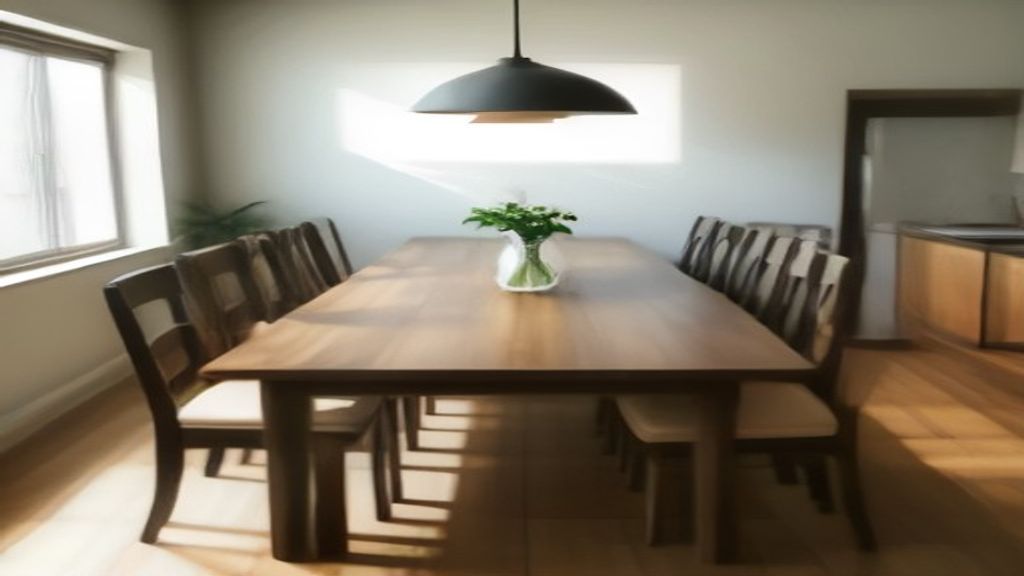
I bought a cheap wooden dining table for 6 on sale. It wobbled from the first week. The legs were screwed into MDF that pretended to be oak. After six weeks of shaky dinners, I returned it and paid nearly triple for a solid rubberwood table. That second one was also wrong — too big for the room, so the chairs hit the wall. Two failures later, I finally got one right. Here's what I wish someone had told me about price tiers before I started.
What $300–$600 Really Gets You
At this price, expect rubberwood or acacia, but check the construction. Many tables in this range use veneer over particleboard — you'll see it if you flip the table and look at the underside. The finish may be 'natural' but it's often just a thin lacquer that scratches in the first month. Legs might bolt into a metal bracket, which is fine, but the bolts can loosen. You'll need a screwdriver and a few minutes every two weeks. Delivery often comes in two boxes, and assembly runs 30–45 minutes. The wood will show wear: cup rings, small dents. That's normal. Don't panic.
If you're fine with a table that looks good from across the room and you're gentle with it, this tier is acceptable. But test the stability: press down on one end. If it lifts the other side, it's not glued properly.
What $800–$1,200 Gets You (Usually Worth It)
This is where you start getting solid wood — solid rubberwood, oak, or walnut. The difference is in the joinery: mortise and tenon, proper dowels, not just screws. The finish is more durable; a few marks still happen, but they don't penetrate the top coat as fast. You can sand out stains and scratches.
Delivery usually includes white-glove assembly, which is a relief if you've struggled with an Allen key before. Some brands even offer a warranty on the frame (10 years is common). This tier matches the 'wooden dining table 6 seater' search: a piece you can actually host Thanksgiving on. I spent $950 on an oak table and it's taken daily use, kids' homework, and a few spilled glasses of red (thankfully, the finish held).
The biggest bang for the buck is still solid wood that's not too trendy. Avoid 'live edge' unless you're into that style — you're paying for the look, not durability.
Premium Above $1,500: Paying for Grain and Brand
Once you cross $1,500, you'll see sapele, walnut, and designer names. The build is usually excellent, but you're paying for aesthetics and status. If you need a wood table that'll get waxed and kept for decades, this could be worth it. But check the wood hardness: walnut is soft for a hardwood — it dents easily despite the price. If you have kids or pets, consider oak or rubberwood.
At this price, returns are harder: many brands charge 15–20% restocking fees, and you pay for return shipping. That's why I always measure twice and order samples of the finish.
Why My First Two Tables Failed (and the Fix)
My cheap table wobbled because the aprons were minimal and the screws stripped. The mid-range one for $800 was too deep — 42 inches — and killed the clearance behind the chairs. I needed at least 36 inches from the table edge to the wall for people to push chairs back and walk. For a 6-seater, that's a room at least 11 feet long if you have chairs on both ends.
Look at how the table is built: if x-bases or pedestal, they take up less leg room, but beware of twisting. A trestle base is sturdy, but it can make third-chair seating awkward. Also, not all 6-seaters are the same: some are 70 inches long, others 80. Comfortable seating needs at least 24 inches per person, so 72 inches is tight but workable; 80 inches is better.
What Did I Ultimately Buy?
After the returns, I bought a solid acacia table — 78 inches by 36 inches — with an apron that's rebated and doweled. Total cost: $980. It's been six months and it still doesn't wobble, even after my brother-in-law leaning on it during tonight's argument. Delivery crew set it up in 20 minutes. I replaced the stock chairs (they were flimsy in the seat) — I got a Deck Dining Set: Set Up the Table Before You Set Up the Chairs experience that taught me to test the chairs too, especially the clearance under the table.
The wood dents if I drop a butter knife just right, but that's part of a natural look. I paid $980, not $1500, and I'd pay that again.
Who Should Skip This?
If you're renting a tiny apartment or your dining room is a pass-through, save your $1000. A smaller 4-seater or a foldable table might make more sense until you have space. A round dining table for 8 is overkill for most couples — even a 4-seater what I learned from three returns might be smarter. And if you don't host meals, a counter-height table or a built-in banquette can work better. The real cost of a wooden dining table for 6 isn't the sticker — it's the delivery, the assembly, and the floor space you sacrifice. Don't pay for solid oak if you only eat at the table for weekend breakfasts. You'll be happier with a cheaper table and a rug.
If you're still in the market, read my notes on what $300 vs $800 gets you on eBay before you order — used tables can be a deal, but only if you check the joinery in person.
Good luck.