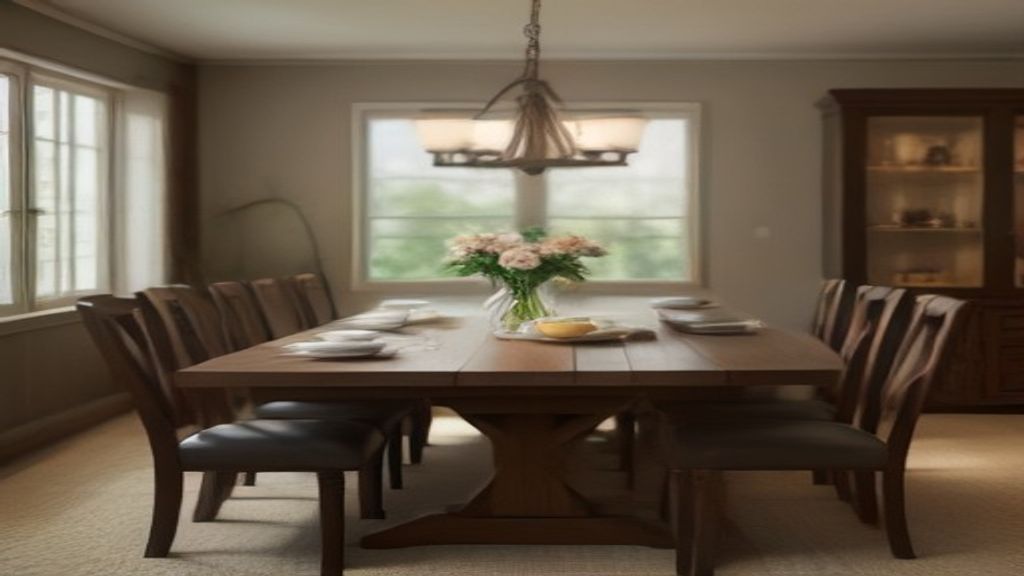
I spent $1,742 on a Pottery Barn dining table last fall. That's not the top of their line, not the bottom either. After six months of dinners, homework, and one spilled glass of red wine that I'm still ashamed of, here's what I know.
The short version: you're paying for design and a finish that holds up. The wood itself? Thinner than I'd like, and the solid wood claim has fine print.
What the price tier actually gets you
At the $1,500–$2,000 range, you're mostly buying a poplar frame with a veneer top. Poplar is soft. The veneer is real wood, but it's a thin slice over MDF or plywood. I've seen cheaper tables with solid acacia tops in the $800 range. The difference isn't the material—it's the shaping, the finish, and the way it fits a certain aesthetic.
Step up to $3,000–$4,000 and you get solid oak or walnut. That's where the price makes more sense. You can't fake the weight. I lifted the corner of a solid oak model in the store—it felt like a different piece of furniture entirely.
But for most of us, the middle tier is the sweet spot if you're honest about how you live. My veneer table has zero scratches after six months. A solid oak table would have dents and character marks by now, and that's fine if you want that look. I just didn't want to cry over a dropped fork.
Where they cut corners (I measured)
The legs are solid wood, but they're not as thick as they look. I measured the profile: 2.5 inches at the top, tapering to 1.5 inches at the floor. The store photos make them look beefier. Not a dealbreaker, but know that the visual weight is partly styling.
The extension leaf gap is about an eighth of an inch when fully closed. You can feel it with your hand, but plates sit flat. I wouldn't have noticed if I wasn't checking.
The finish is where they didn't cut. After red wine sat on it for two hours (I was distracted), it wiped off completely. No stain. That's the polyurethane coat, and it's a good one.
What breaks, what doesn't
The chairs, surprisingly, are the weak point. The joints on the crossbars started creaking after three months. I tightened the bolts twice, and it's fine, but I've seen cheaper chairs with worse builds. The table itself hasn't moved.
The tabletop is stable—no wobble even on my uneven 100-year-old floor. I put a level across it: flat to 1/16th of an inch. Good enough.
Before you click buy
Measure your room. I'm not being cute—the depth of a 42-inch table eats more space than you expect. I had to return a rug because it looked too small under the table after the chairs were pulled out.
Check the delivery process. The table comes in three boxes—the top weighs 80 pounds, and the legs are surprisingly heavy. Two strong people are needed. My delivery driver helped me get it inside, but I had to assemble the legs myself. It took 20 minutes with a Phillips head screwdriver. Not hard, but the instructions are vague about which screw goes where.
For the same money, consider a local woodworker. You'd get solid wood, made to your spec, but you'd wait 6–8 weeks. If you need a table next week, Pottery Barn works.
Who should skip this? If you're on a budget and think you're getting a solid wood table for under $1,500—you're not. Save up or buy used. If you want a table that looks great and handles daily life for five years, this is it. If you want a family heirloom, go custom. The Pottery Barn table is a well-made piece of furniture, just not the investment its price tag hints at.
For more on what to look for in a dining table, check out More guides in Dining Tables. I also wrote about Dining Table with Hidden Chairs: First Week Setup and the One and Drop Leaf Dining Table Set: The First Week Setup and the One Decision. If you're considering a round table, Natural Wood Round Dining Table: Measure the Circle Before You Fall is worth a read.