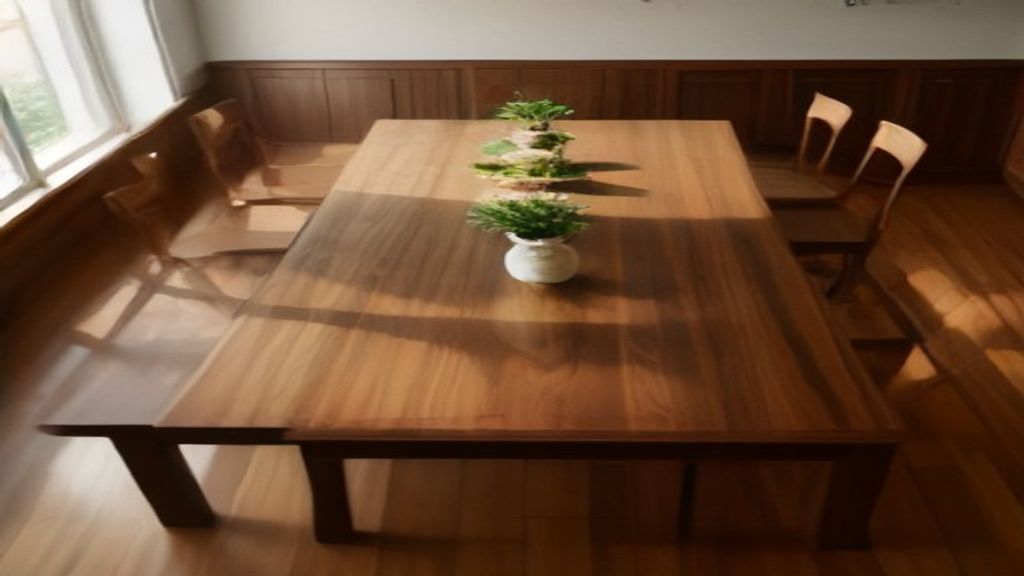
The Teak That Wasn't
First I bought a "solid teak" table for $900. Looked fine in the listing—warm honey planks, clean lines. Two months in, the finish started rubbing off, and the wood under it was pale and open-pored, my nail left a dent like it was pine. I sent it back. Shipping alone cost me $120. That's when I learned to test the grain before I hand over any money.
Run a Water Bead Across the Top
I measure teak with a drop of water. Real teak is oily and dense. A drop sits on a tight, uniform grain like a dome. If it spreads out in seconds, you're looking at stuff that's been soaked in stain or just cheap wood. The one I kept—a 6-foot plank table from a local maker—held the bead for almost a minute.
Look at the End Grain, Not the Top
Most listings show you the polished top, never the cut ends. Ask for a photo of the underside or the legs where they're not finished. Real teak has a slightly rippled, interlocking grain at the end, not straight like a comb. The rubberwood fake had end grain that looked like a cheap cutting board.
Compare Weight—Real Teak Is Heavy
My 6-footer with two thick legs weighs in around 110 lbs. The $900 fake? 65 lbs. That's not subtle. If a "teak" table feels light, it's not teak. Teak's density is what makes it resist warping and bugs, which is why it's used on boats. Light wood is a red flag.
The One Factor That Decides
Honestly, if the grain doesn't look like teak—dense, interlocked, slightly wavy—then it's not teak. No price tag or brand blurb can change that. I still have that cheap one's scar on my credit card as a reminder.
If you're still comparing wood types, the Pottery Barn Dining Table: I Measured the Price vs. the Wood review showed me how much markup hides behind names. And before you commit to any round teak, check my Natural Wood Round Dining Table: Measure the Circle Before You Fall piece—measuring circle diameter is just as easy to get wrong. For more on what to watch out for overall, browse More guides in Dining Tables.