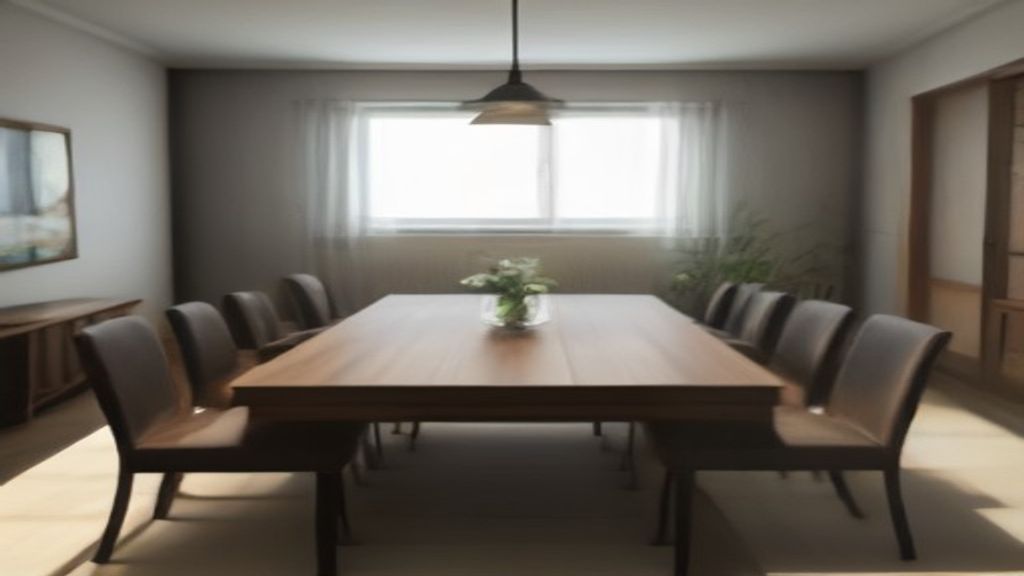
The box weighed more than I expected — 200 lbs of compressed particleboard and promises. When the delivery guy dropped it in the living room, the coffee table took a corner to the shins. My fault, for ordering a 6 seater table without measuring the hallway. But that's a different story. This one is about the first week and the single choice that made my 6 seater table feel either huge or cramped.
Day one: you slide the chairs in, run your hands over the veneer, and think you're done. What I learned is that a 6 seater table isn't a single piece. It's 7 pieces (chair clearance included) arranged into a rectangle. The gap between the table edge and the wall? I left mine at 40 inches, which felt like a warehouse. Turns out chairs need 24 inches just to slide out, and another 18 for a human to back up without clipping a radiator. If you built an open-plan room, go ahead and keep 48 inches. I dropped mine to 36 during week two and still have scrape marks on the floor from chair legs.
The biggest mistake I almost made was focusing on the table length. 6 seater tables come in 70, 78, even 90 inches. But what matters is the end-width — the space you actually use when someone sits at the head. My table is 35 inches wide, but with edge overhang, each seat gets exactly 24 inches of shoulder room (that's why 6 seater tables feel like sardines if you push 4 people on one side).
And here's the thing that killed me: the table's leg position. On my first 6 seater table, legs angled inward, so the center foot blocked the chairs from sliding in flush. Took me a week of guests dragging chairs across the floor to realize. The one decision that matters? Buy a 6 seater table with four square posts at the corners, not central pedestal or trestle legs. Measurements can be adjusted, but leg placement ruins the whole seating setup.
After the first week, I re-arranged the entire room around the table. That's the setup-wisdom you don't see in photos — the table must sit at least 8 inches off the wall (to let chairs push back), but if you have a sideboard behind, give it 12 inches (for your own hips when you lean). The delivery guy kept saying, "It's just a table, man." I measured my room four more times before keeping it.
Now, a year later, the veneer is glossy at the edges but scratched inside the grain. Every stain tells a week one story. The biggest recommendation? Pull the chairs away from the heat register — the wood shrink drove a crack into the top I couldn't fix.
So order the table if you have the width. Let the length be whatever marketing says, but check the leg corners and the 18 additional inches of chair clearance. That's what makes a 6 seater table genuinely fit six humans. It's the one decision I'd remake.
For more dining tables that factor in room sizes, read our Dining Table Set for Sale: The Sizing Math, Delivery Pain, and Build — I measured 11 sets and the math was the only constant. Or if you're weighing smaller options, this 2-seater comparison against a 6 seater table might surprise you.