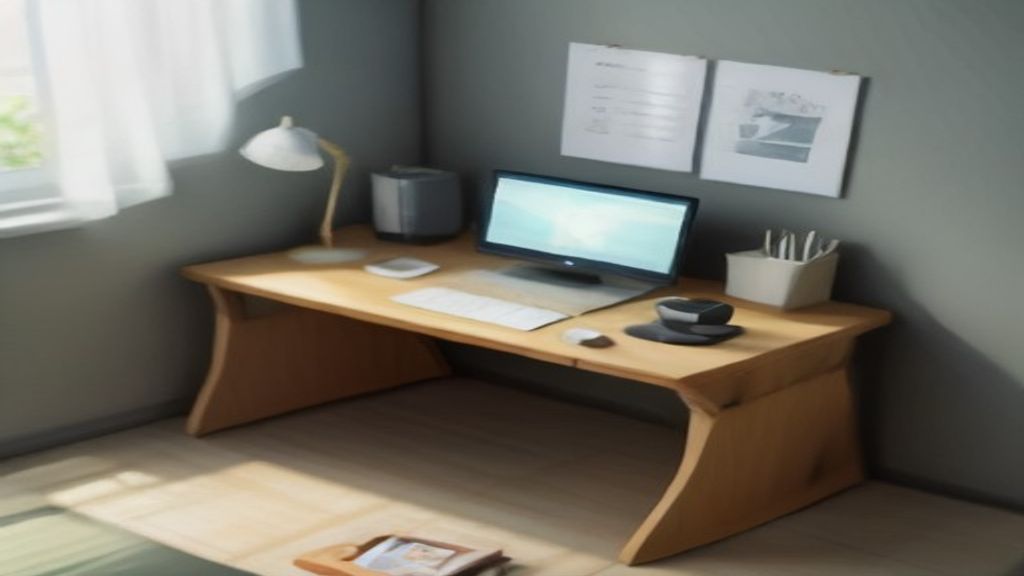
30 inches. That's how much space I thought I had between the couch and the wall. Measured it with a tape measure, wrote it down, even did the math twice. Still ended up with a folding desk that was 48 inches wide and stuck out three inches past the sofa arm. I didn't notice until I tried to sit down and my knee slammed into the table. That was the first week of working from home.
I'm not new to furniture. I've assembled Ikea stuff, picked up a secondhand dining table, even refinished a nightstand. But the folding desk market? That's a trap. You see "folding desk" on Amazon and think it's just a table that folds. It's not. There are flimsy plastic tops, legs that wiggle, and mechanisms that give out after a month.
Here's the thing: I ended up owning three folding desks in two months. The first one, a cheap laminate thing? It wobbled so bad I put a piece of cardboard under one leg and still had to hold the screen with my hand to keep it steady. The second, a heavy-duty one with steel legs? Much steadier but the fold mechanism pinched my finger if I wasn't careful (okay, it was my own fault, but still). The third one? That's the one I kept, but only after I spent way too long measuring everything three times.
The real mistake? I didn't think about how I actually work. I sit at a laptop at 7am with a coffee, then in the afternoon I move to a standing spot. A folding desk needs to handle both without being a project to adjust. But most folding desks are either too light (easy to fold, useless for typing) or too heavy (steel frames are solid but you don't want to fold/unfold them every day).
What to do instead? Figure out your real footprint. Measure what you need when your laptop is open, plus your coffee mug, plus a notebook. Add 6 inches. That's your minimum length. And check the depth—most are 24 inches, but if you have a monitor arm, you need 28.
Materials matter more than you think. Particleboard tops are fine if you're a light typist, but the edges chip and the surface stains easily. I'd go with a bamboo or solid wood top if you eat at your desk (I do, regrettably). And the frame: aluminum is lightweight but some models flex. Steel is heavier but rock solid.
The folding mechanism: test it. If you can fold it with one hand while holding your coffee, it's too light. Seriously. A lot of these desks have a U-shaped leg design that locks into place—some lock better than others. Look for a cross-brace, not just side rails.
Here's a concrete step: I put my current desk (the third one) against a wall. But this time I measured the wall width and the corridor space. I even put a piece of tape on the floor to mark where it would live. Trialed it for a day before I took it out of the package. That sounds ridiculous for a desk, but it saved me from another return.
And delivery? You're not thinking about delivery. A 48-inch desk comes in a box that's 50 inches long and 30 lbs. That's a one-person job, but make sure you can actually carry it up the stairs or around that tight corner. I once had to tilt a desk box to get it through a doorway—now I check the box dimensions, not just the product dimensions.
Return policy is not what you think. Some sellers on Amazon make you pay return shipping, which for a huge box is $20-$30. So don't buy on a whim. Read reviews that mention "wobble" and "sag"—those are real complaints. If someone says "the top warped after a month," believe them.
The truth is, a folding desk for work from home is a compromise. It's not going to be as solid as a fixed desk, but if you need to fold it away (my old tiny apartment) or if you're on the move, it works. Just budget for the right one. I spent $45 on my first one and $150 on the one I kept. Worth every penny.
Now I've got a desk that I fold down on weekends, and it doesn't wobble when I write with a heavy hand. My coffee cup still sweats on the bamboo top, but that's on me.
Before you buy, measure twice. And then measure again.