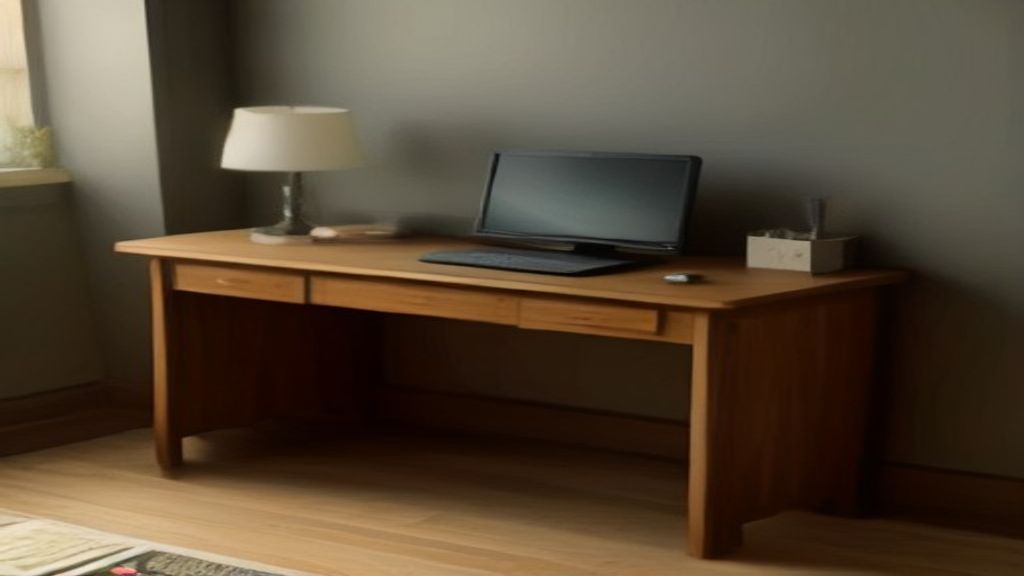
The third desk came with a 327-page assembly manual printed on paper so thin it stuck to my fingers. I'd been so focused on the top surface—getting the right length, the right finish—that I forgot to check the weight capacity of the legs. The whole thing wobbled when I typed. My keyboard would slide towards the edge like it was making a break for it.
That was the moment I realized I'd been going about this all wrong. It's not about the top. It's about the whole system: the footing, the clearance, the way it fits your actual room.
The mistake I kept making
I kept buying desks based on looks and price. I'd see a sleek walnut top, click buy, and ignore the dimensions. Three desks later, I had one that was too tall for my chair, one too shallow for my monitor, and one that bowing in the middle after two months.
The lesson: Start with measurements, not aesthetics.
What to measure before you even look
Length and depth. You need depth more than you think. A 24-inch deep desk will leave your face about 16 inches from the screen—closer than you want. Go for 30 inches deep if you have the floor space. And length? At least 55 inches if you want a monitor plus notebook plus coffee without stacking.
Leg clearance. Sound obvious, but I had a drawer unit that butted up against the crossing brace. Your knees need a 28-inch vertical stretch, and that means no rails or supports where your legs go.
Weight capacity. Not just the desk's rated max, but where the weight sits. A 40-pound monitor in the middle is different from a printer on the corner. Check the under-desk bracing—is it a single bar across the back, or does it run edge to edge?
The delivery problem nobody mentions
My second desk arrived in a crate that barely fit through the door. I had to unbox it in the hallway. The top was 70 lbs and had a chip in the corner from the hand truck. If you live above the first floor, measure the hallway and stairwell—especially if the desk comes in one crate.
Return policy matters. My first desk had a 30-day return with a $50 restocking fee and pickup. That's about a dollar a day of trying it out. My second had no free return—I paid $120 to ship it back. That ate half the savings of the bargain price.
The parts that wear out first
Grommets loosen. Cable trays drop. Edge banding peels. After two years, I've seen more desks fail at the connections than the surfaces. Look for how the top attaches to the legs—metal brackets beat screws into particleboard.
And if you're considering shelves, read our Writing Desk with Shelves: What I Learned After Three Failed Attempts. Because a desk with shelves adds useful height, but it can also put weight too far from the frame.
The right approach, finally
Last desk I bought, I wrote down three numbers first: length, depth, and under-desk clearance. I measured my hallway. Read the return policy twice. And I didn't buy until I knew the actual assembly time—not the advertising claim.
The desk I have now? The assembly took 45 minutes, the legs are metal with threaded inserts, and the top is solid oak veneer—not MDF. It's survived a year of daily use without a wobble.
Could I have saved myself three failed purchases if I'd measured first? Yeah. But that's how I learned.
If you're starting from scratch, maybe check the Cheap Writing Desk: Three Things That Actually Matter When You're Broke before you buy anything. And if you're worried about size, I Bought a 60 Inch Writing Desk and It Was Too Big for the Room is worth a read.
Now, if only the next one comes with a coffee cup holder.