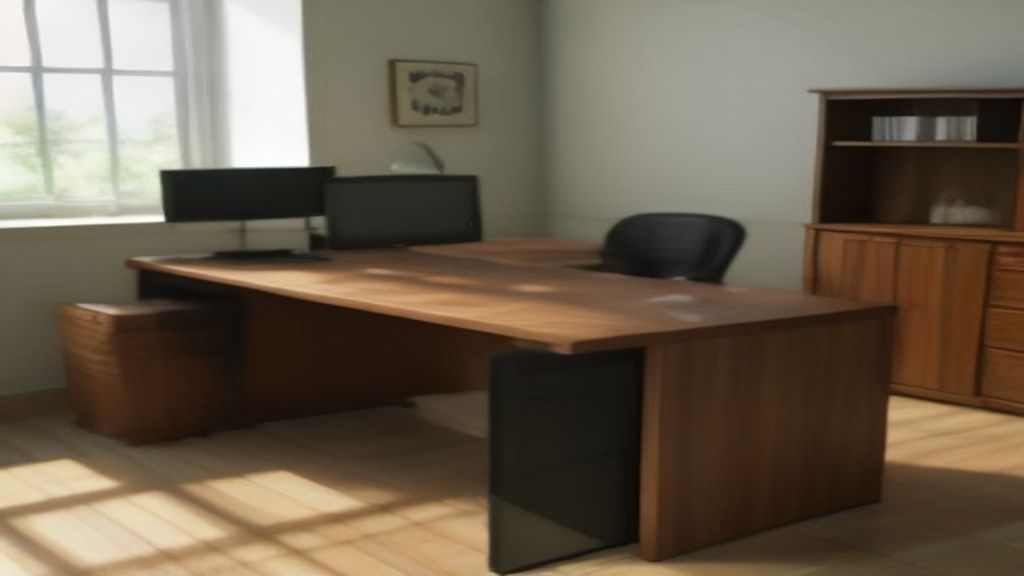
Our two-person desk was supposed to solve everything. We ordered a 65-inch dual office desk, sat down side by side, and within a week I felt like a sardine in a tin. The problem wasn't the desk's width—it was the depth and the fact that we'd never measured our chairs. The back of my chair hit the wall, and my partner's elbows kept knocking my keyboard tray. We returned it and started over, this time with a tape measure and a ruler.
The first thing we measured was our chairs. We both use the same white leather office chair (White Leather Desk Chair: What I Learned in the First Week), which has armrests that stick out about three inches. That meant we needed a desk at least 30 inches deep—our old one was 24. So the first rule: measure the width of both chairs at elbow height, add a few inches for breathing room, and you've got your minimum width.
Then we looked at the wall. If you've got baseboards or want the desk flush, measure the space from floor to where the desk will sit, and account for chair kickback. We actually pulled the desk two feet from the wall and mounted our monitors on arms—that opened up floor space and let us push the desk deeper if we needed.
Now, about hidden constraints: cable management. Dual setups generate a forest of cables. If your desk has only a small grommet hole, you'll be fighting cable orbs. We chose a desk with a full-length tray underneath—no more tangles, and it also gave us a place to tuck a surge protector.
Height matters too. My partner is 6'2", and standard desk heights are 29–30 inches. For him, that's too low; for me, it's fine. Look for a desk with adjustable legs or at least a keyboard tray that brings you to a natural angle. I have a Best Home Office Desk for Multiple Monitors: The First-Week Setup that saved me from neck pain—after adjusting, I stopped hunching.
We also factored in future additions: a scanner, a lamp, and a desktop speaker. I'd recommend a dual desk that's at least 60 inches wide if you're sharing daily. We settled on a 70-inch model with a corner hutch—the hutch gave us vertical storage without eating floor space.
When we finally placed the order, we measured the hallway dims for delivery. Two boxes, each 63 inches long; our stairwell could barely handle them. That's a detail they don't put in the product photos. If you live in an apartment, check the route from the door to your office.
The one factor that decides the buy is your chair space. Don't buy a dual desk without knowing every dimension of that chair, how you'll angle it, and whether there's room to push away from the desk. That's what finally made our setup work—we didn't just buy a bigger desk, we bought one that left room for us to sit properly.
Related reads: Antique Office Desk: Don't Make My First Auction Mistake and I Bought a Staples Desk Without Measuring My Chair—Here's What to Check. If you're still fantasizing about a corner desk, read Sleek Office Desk: The 28-Inch Rule That Fixed My Wobbly Setup for a reality check on workstations that pretend to be sleek. More desk guides here.