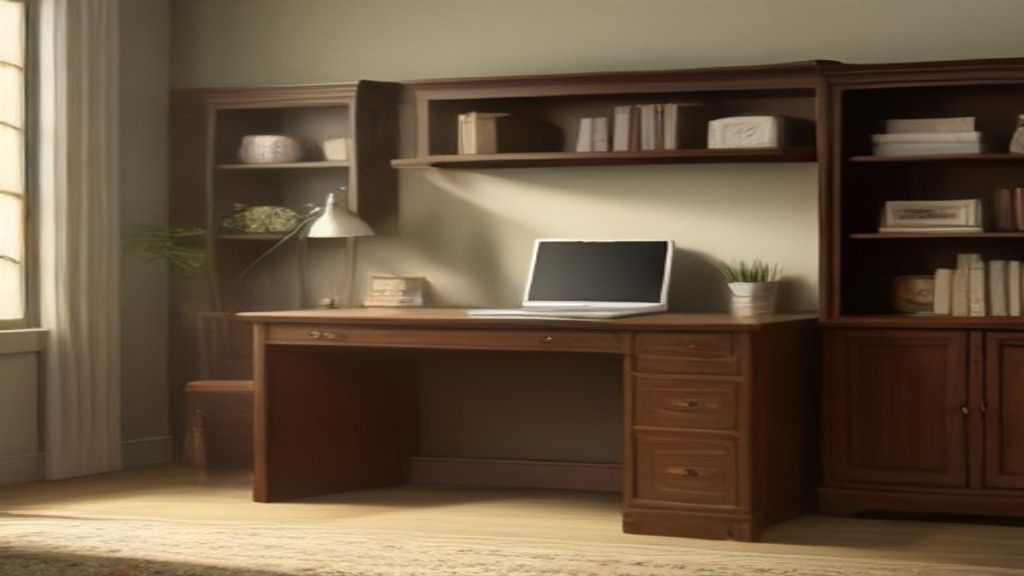
I've bought three writing desks with shelves in the last five years. The first one wobbled so bad my monitor did a slow dance every time I typed. The second had shelves too close together—my notebooks didn't fit, and they ended up on the floor. The third? I finally got it right, but only because I stopped shopping and started measuring.
Here's the one thing most people forget: it's not the width that matters most, it's the depth of the desktop and the shelf spacing. I'm 5'10", and I need 24 inches of depth just to get my monitor an arm's length away. My first desk was only 20 inches deep. I spent three weeks hunched forward like a vulture before I gave it to a neighbor.
Measure the Shelf Spacing Before You Get Attached
When you're looking at photos online, shelves look like a fine idea. Then you bring the desk home and discover your printer needs 11 inches of height but the shelf only has 8. I've got a desk now with a hutch-style shelf above the work surface. The lower shelf is 8 inches from the desktop—just right for my keyboard when I'm not typing, but too low for a monitor. The upper shelf is 12 inches, which fits books and my speaker.
Before you click buy, grab a tape measure and figure out what you actually need to store. A common failure mode: people buy a desk with shelves to hold books, then find the shelves are too shallow for hardcovers. Standard shelves are 12 inches deep, but some are 10. Hardcovers are usually 9-10 inches wide, so 12 is the bare minimum. I'd go with 14 if you can find it.
The Weight Rating Nobody Tells You About
Shelves look sturdy in the showroom, but they're often just particleboard with a thin veneer. I had a shelf collapse on my second desk—it was rated for 20 pounds, and I loaded it with about 15 pounds of binders. The cam locks stripped out because the board density was trash. Now I check the weight capacity per shelf, not just the desk total. If the spec sheet says "10 kg per shelf," that's about 22 pounds. Don't push it. I keep my desk shelf to 10 pounds max now, and I use wire mesh baskets to distribute the load.
If you need heavy storage, skip the shelves and get a desk with a hutch that's bolted into the frame, or pair your desk with a separate rolling cart. Shelves are fine for lightweight stuff—paper, pens, a plant—but not for dictionaries.
Assembly: Look for the Metal Brackets
I've assembled more furniture than I'd like, and the biggest red flag is the C-shaped plastic cam locks. They twist and the shelf starts leaning after a month. My current desk uses metal L-brackets screwed into the side panels, plus shelf pins that go into holes—like you'd find on a bookcase. That's what you want. You'll pay maybe $30 more for that desk, but you won't be re-tightening screws every other week.
Also, check how the top attaches to the legs. If it's just wooden dowels and glue, you're asking for a wobble. Look for steel corner braces that are visible, or at least mention in the reviews. My first desk had dowels—big mistake.
Think About the Work Surface Depth First
I mentioned depth earlier, but it's worth repeating: a writing desk isn't just a place for a laptop. You need room for a monitor, a keyboard, and maybe a notebook. I use a 24-inch-deep desk now, and it feels luxurious. My third desk is 60 inches wide, 24 deep, with bookshelves on the left side—not attached to the top, but as a separate pedestal that sits under the desk. That separate piece gives me more flexibility because I can move it if I rearrange the room.
If you're short on space, look for a desk with a lower shelf—a platform near the floor—rather than upper shelves. That keeps the surface clear and the clutter off the floor. My friend has a desk with a lower shelf that holds a printer and a paper shredder, but he had to check the depth because the shelf is only 18 inches—most printers are 16-20 inches deep, so it's tight.
The Factor That Decides the Buy
After all my trials, the single thing that decides whether a writing desk with shelves works is the height spacing between shelves versus your actual stuff. I can adjust to a little less width or a little less depth, but if I can't fit my monitor or my books or whatever goes on the shelf, the desk is useless. Everything else—the weight rating, the assembly hardware—is secondary if that one number is wrong.
So grab that tape measure, write down the heights and depths of everything you plan to put on the shelves, and compare sizes before you even look at a product photo. That one step will save you more headaches than any review I've ever written.
Want more desk talk? Check out my Buying Large Writing Desk Without Wasting a Weekend if you're going bigger, or Best Desk Chairs 2022: The Only Number That Matters Is the Seat Depth if you need the right chair to go with it. And if you're considering a desk from IKEA, read 36 Inch Desk IKEA: The Size I Got Wrong Before I Measured Right first.
More guides in Desks.