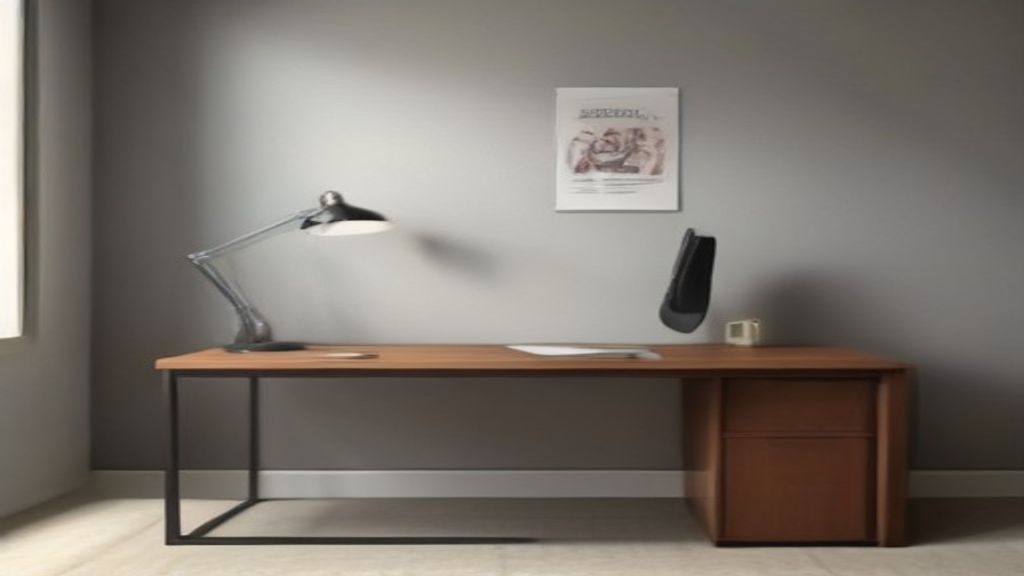
If you buy a study table before measuring the wall, you're asking for a problem. I've done it. Twice. The first one stuck out 30 inches into a 9-foot room and made the spot feel like a closet. The second didn't fit the printer next to the monitor. So here's the blunt version: the buy is decided by the wall, not the catalog photo.
First, the obvious constraint: the wall length. Get a tape measure and mark the actual floor space you're willing to give up. A 55-inch desk looks compact in a showroom, but in a 10x10 room it eats the whole wall. I ended up with a 47-inch top because the wall had a door swing on one side and a radiator on the other. That 8 inches of difference meant the chair could finally slide out without scraping the baseboard.
Now the depth. Most home center tables run 24 to 30 inches deep. My first mistake was going with 24. My monitor arm needed 10 inches of clamp, and the keyboard tray took another 12. The mouse pad was hanging off the edge. With two monitors, you need at least 28. If you're just a laptop and a notebook, 24 works, but measure your actual gear before you decide. I laid my keyboard, mouse, and a legal pad on the floor to see what footprint wasn't a joke.
Material matters more than you think. The flat-pack stuff with the paper-covered particleboard top warps if you rest a coffee mug on it for a month. I had one where the edge peeled off where my forearms sat. Oak or a decent laminate top holds up. Also check the frame: steel legs with an X-brace hold steady when you type fast; the cheap four-straight-legs version wobbles at 30 words per minute.
Another thing people ignore: the cable mess. If the desk has no grommet or under-desk tray, you'll be zip-tying to the frame at midnight. Look for a cutout or a built-in raceway. I drilled a 2-inch hole in the back edge of mine because there wasn't one. That was an afternoon I didn't want.
A word on the chair clearance. If the desk has a modesty panel at the back, you lose 4 inches of knee room. I'm 5'11" and my knees hit the panel on a cheap model. Skip that style, or measure sit height and leg length first.
And don't overthink the aesthetic. A dark walnut top with black legs looks fine in a light room. The matte finish hides fingerprints and glare. Glossy tops show every smudge and reflect the window light into your eyes — don't.
If you're comparing options, more guides in Desks can help. But the one factor that decides it for me was the wall length. Get that wrong and no amount of drawer dividers fixes it. Measure first, buy second.
Related: Lift Up Coffee Table IKEA: What I Learned After Measuring My Couch Gap — same measuring discipline, different room.
And if you're shopping for other surfaces, A Plain-English Look at Asymmetrical Coffee Table is worth a glance.
For the full picture on space planning, If Your Room Is Tight, Read This on Tv Stand Console Table covers depth and cable routing in a different furniture class.