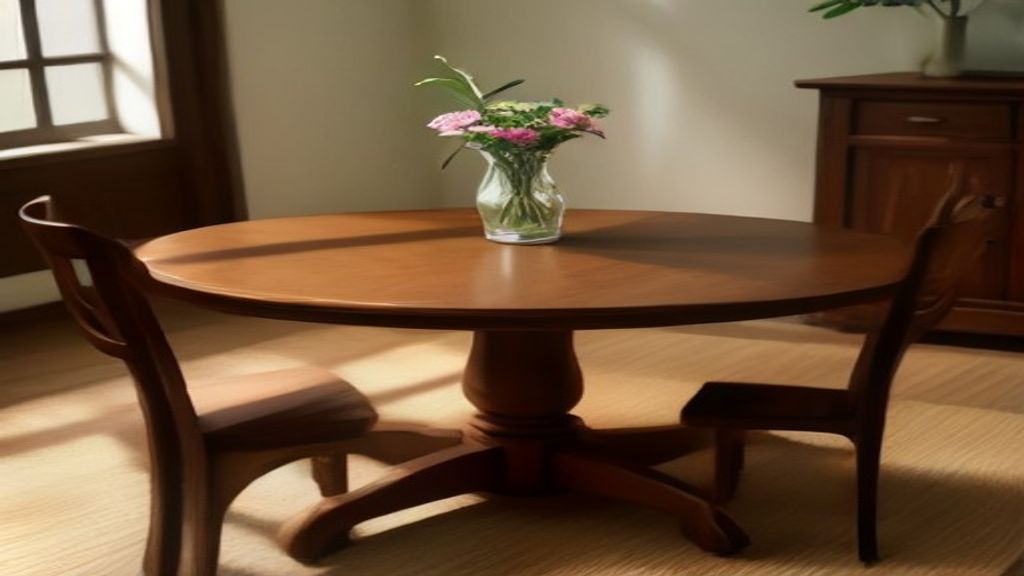
The box landed with a thud on my doorstep at 7pm, and by 9 I was already sliding the plastic off. The smell of fresh MDF and the faint squeak of the carton against the floor—that’s when it hit me. I hadn’t measured the living room since I moved in, and the light from the hallway cast a long shadow across the spot where I planned to put it. So I did what any sensible person does at 10pm: I dragged the old coffee table into the hallway and stared at the floor for twenty minutes, trying to remember if my couch was even four feet from the TV stand.
The rule I ended up using is simple, but it took me two failed arrangements (and one bruised knee) to learn it: you need at least 18 inches of clearance between the table edge and every piece of furniture you’ll actually walk past. That’s not a suggestion from a design blog—it’s the gap I measured with a dollar bill after stubbing my toe on the corner of a square table that I donated faster than I bought it. For a round center table, the circle changes everything, because the widest point is the middle, and you’ll swing wide if you’re not careful.
My living room is the kind of boxy rectangle that forces a sofa against one wall, a TV stand against the opposite, and exactly one narrow path between them—the kind of room where you shuffle sideways between the couch and the bookshelf when you’re carrying laundry. I measured the distance between my sofa arm and the wall where the TV stands: 32 inches. Shave off the 18-inch clearance on each side of the table, and that leaves zero room for the table itself. So my first choice—a 30-inch round—would have been a disaster.
Here’s what I actually fit, after a lot of scribbling on graph paper: a 24-inch diameter table with a 12-inch pedestal base (not four legs, which kick out and add phantom inches). That gave me 14 inches between the sofa and the table edge, and 12 inches on the TV side. Tight, but it works because the coffee table is round—you don’t have corners jabbing your shins, and you can slide past without smacking a leg. But the 18-inch rule isn’t just about walking past; it’s about how you sit. If I lean forward from the couch to grab a mug, I want to clear the rim without spilling. With 14 inches, I can, but barely.
Now, the next constraint: my sofa is a 3-seater that’s pushed against one wall, and the TV stand is on the opposite wall with a fireplace in between. That fireplace is the reason why I couldn’t just shove the table to one side—it juts out unevenly, so the clearance changes dramatically depending on where you stand. I ended up moving the table 6 inches toward the window side to keep a straight path from the hallway to the kitchen, and that meant re-centering it visually. Round tables don’t announce their off-center-ness as much as squares, but you still notice when it’s not oriented to the room’s longest sightline.
The body constraint is real, too: I’m 6-foot-3, and when I sprawl on the couch, my knees extend straight forward. A table that’s too tall (over 18 inches) forces me to angle my legs sideways, which gets old. My table is 16 inches high, and that lets me stretch out without my knees chewing the wood. For shorter folks, or kids, lower is easier—but then it’s harder to set a drink down without leaning over. It’s a tradeoff.
The schedule side of this is stupidly practical: I did the measuring at 11pm because I work late, and the tape measure hummed under the led on the couch. If you’re buying online, you only get one chance to measure before it arrives. My advice: use blue painter’s tape to outline the full diameter on the floor, then live with the tape for a week. Walk around it, sit on the couch, reach for a remote. You’ll discover whether it’s a nuisance or right.
When it came to picking the actual table, I had two finalists: a solid acacia wood top with a matching pedestal, and a glass-top with a metal base. The glass one looked great in the photo, but the aluminum base had four wide-set feet that expanded the footprint to 28 inches even though the top was only 24. The tape outline gave that away instantly—the footprint is what counts, not just the top diameter. I returned the glass one before the box even hit my recycling bin.
What I ended up with is a plain birch round table, 24 inches, a single central post, and a matte finish that hides coffee rings. It’s not glamorous, but it’s stable: no wobble when I put my elbows on it to type, and the wood has a few scratches already that don’t show. I’ve had it six weeks, and the only complaint is that the pedestal makes it annoyingly top-heavy if you lean too hard on one edge—but that’s rare.
The clearance that actually saved me: I checked whether I could open my dishwasher and pantry door without hitting the table. In my apartment, the kitchen opens directly to the living room, and the pantry door used to bump the corner of my old table. With the round one centered, I’ve got 3 inches of swing clearance—tight, but the door clears. That’s something you only realize in real life, not from a spec sheet.
Miss this part and you’ll end up returning: if your room is a tight rectangle or has any high-traffic path (like a hallway leading to a bedroom), a round center table probably won’t work unless you can get 16–18 inches on at least one side. Not everyone should buy one—if you’ve got kids who stair-step onto the sofa, or you’re the type who piles board games and papers on top, the round surface gives you no corner to stack against. And if your room is narrower than the table’s footprint plus two feet of walking room, you’ll trip. I nearly kept my square table because of that, and honestly, if my sofa weren’t on the skinny side, I’d still have it.
The good news is, once you do the measurement dance, a round table can make a small living room feel bigger—because there are no sharp corners to buffet into. But the only way to know for sure is to tape the circle out and live with it a couple of days. I did, and I caught my mistake before I’d even clicked buy.
If you’re looking for more on measuring circles in your space, I’ve got a Natural Wood Round Dining Table: Measure the Circle Before You Fall guide, and for chairs that might interact with a table like this, Grey Round Table and Chairs: First Week Setup and the One Decision has a useful trick for sightlines. Also, my We Bought a 30 Round Dining Table and It's Smaller Than You Think piece covers how easy it is to misjudge a circle’s footprint. And if you’re considering a full set, I Bought a Pub Table Set for 2 and It Was Too Big for the Room is a cautionary tale. More general stuff lives in the Coffee Tables index.