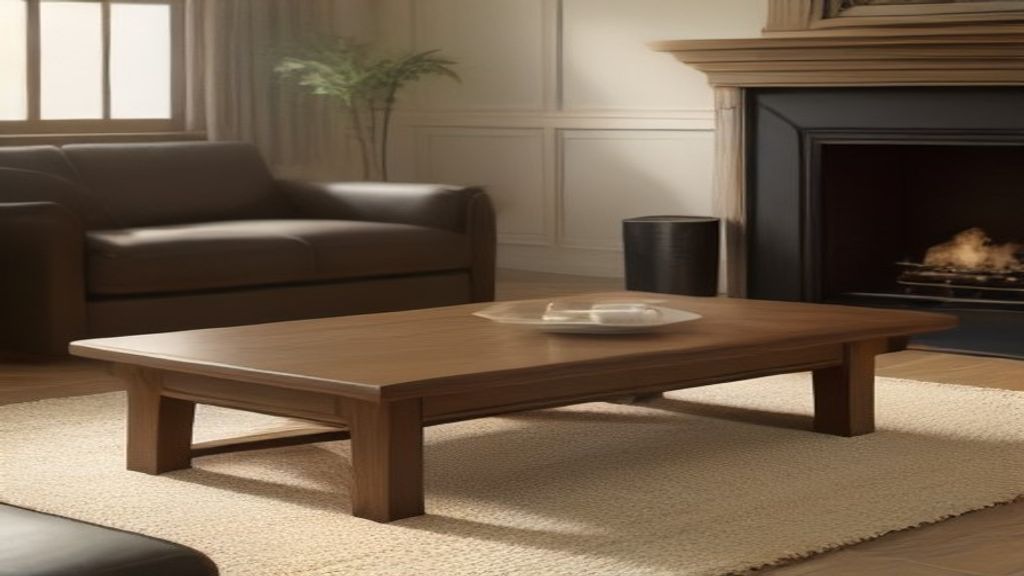
I ordered a traditional coffee table from a reputable maker, waited three weeks, and then spent an hour on my knees with a tape measure before I even unboxed it. I'd made the mistake before: bought first, measured second. This time I measured the living room, the hallway, and the distance from the couch to the TV stand. The table sat on the delivery pallet until I was sure it wouldn't look like a boat in a bathtub.
The table itself was fine. The decision that mattered wasn't the wood species or the finish — it was the height. Most traditional coffee tables run 18 to 20 inches high. My couch seats sit at 19 inches, so a 20-inch table was almost level with the cushions. That's a problem if you actually put your feet up. You want a table that's 2 to 3 inches lower than the seat height for comfortable reach. Sold -- I got the 18-inch version, and it feels right.
Before the table arrived, I cleared the path. My hallway is 36 inches wide, and the table box was 32 inches at its narrowest. It fit, but just barely. I had to take the base off before moving it into the room. If you're in an apartment, measure your doorway and hallway before ordering, or you'll be reassembling in the corridor. That's not dramatic — it's just Thursday.
Assembly took 40 minutes. The legs bolted on with an Allen key, and the top sat in place with brackets. No glue, no drilling. But the instructions wanted me to tighten the bolts with an Allen key, and after two days I realized one leg had a slight wobble. I had to re-tighten all four bolts with a socket wrench to get it solid. That's the one thing I'd tell anyone: don't trust the hand-tight step. Use a real wrench, and tighten in a cross pattern, or you'll be redoing it later.
The traditional look means the top is a single piece of wood, often oak or walnut. Mine is solid oak, and I've already learned that it scratches easily. A coaster protects the surface, but if you slide a stack of magazines across it, you'll leave a mark. That's not a complaint — it's just the nature of the material. If you want a table that handles abuse, get glass or a laminate. If you want something that looks good and ages gracefully, you accept the scratches.
The one decision that mattered was the shape. I bought a rectangular table; the room is 12 feet long and the couch is 8 feet wide. The table is 48 inches long, and it leaves 18 inches of walking space on each side. That's tight but manageable. If I had chosen a square table, even at the same area, it would have made the room feel cramped. The rectangle visually follows the couch's line.
Within a week, I learned a few things. The table is stable — no wobble once I tightened everything. The finish is two coats of shellac, which means water rings if you set a glass down without a coaster. I bought a few cork trivets and it's fine. The delivery was the worst part: the table arrived on a pallet, and the driver wouldn't take the packaging away, so I had a pile of cardboard and styrofoam for days. But that's not the table's fault.
If you're thinking about a traditional coffee table, skip it if you have small kids or you eat on the couch every night. The wood will show every juice spill and cracker crumb. I love mine, but I'm cautious around it. For a living room meant for reading and conversation, it's perfect.
More specifically, if your room is tight, read this on If Your Room Is Tight, Read This on All Modern Coffee Table. And if you're dealing with a big space, Big Coffee Table: What Almost Nobody Measures Before They Order has the numbers I wish I'd known.