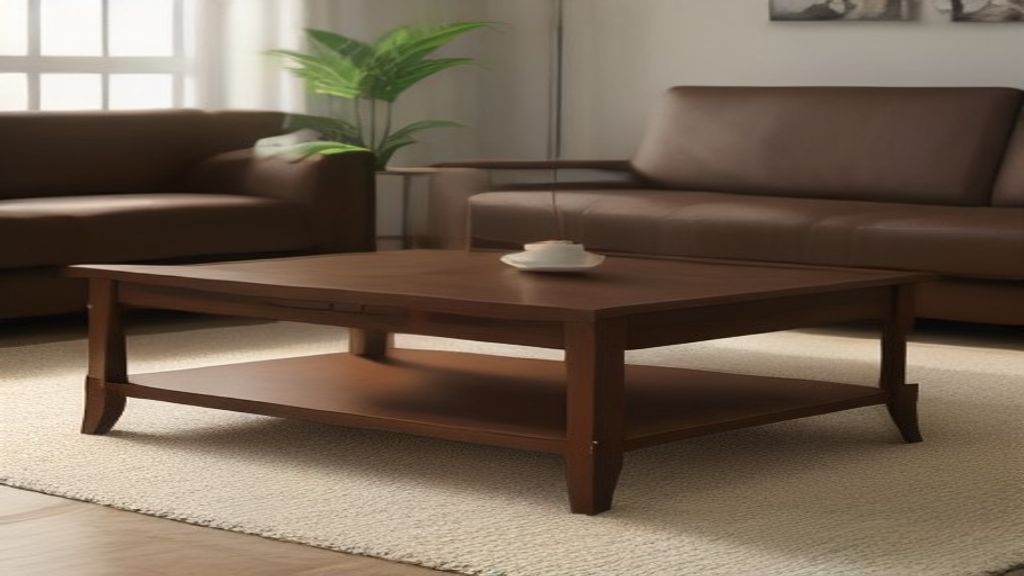
Let me start with a blunt take: an extendable top coffee table sounds like the best idea until you assemble one, set it up, and realize the gimmick is only as good as the mechanism underneath the wood. I've owned one for a month now, and I measured everything with a tape rule before I even unboxed. Here's what I learned.
The First Week Setup: Why the Extendable Top Is a Trap
Most people see a sliding-leaf coffee table and think "extra surface for board games" or "movie snacks." That's fine. But the real question isn't the size—it's the slides. Those metal rails or plastic glides decide everything. If they're misaligned by a quarter inch, the table will wobble, scratch, or catch every time you pull.
I read the manual like a recipe, laid out the bolts and screws in lines on the floor, and I still had to re-adjust the left rail because it sat 3mm off. Maybe I got a dud. But the point is this: don't skip the alignment check. A friend of mine got the same table from a different brand and the inner edge of the top scrapes the frame when it's pushed back—he never loosened the carriage bolts just to see if it'd square up.
The first week is also test week. Never trust the manufacturer's photos of a minimalist living room. Put a heavy vase in the middle of the extended top. See if the leaf sags. I did, and mine dipped about a quarter of an inch. Not enough for a crisis, but now I keep heavy stuff off the center seam.
The One Decision That Matters: Wood Type and the Finish
I'm convinced this is where the marketing gets you. The mechanism is a mechanical detail you can inspect, adjust, or return. The wood type is irreversible. Most "extendable" tables in the mid-range use engineered wood with a veneer, and the veneer on the slide edges wears thin fast. I see it already on my table's center split where the leaves meet—it's rubbing every time I open and close.
The decision: save up for solid wood or buy a mixed-material frame with a solid-wood top (like oak or walnut) even if the legs are MDF. The slides might still wear, but the top will survive a decade of sliding. I spent a long weekend looking at finishes, and the polyurethane seal matters more than the stain. If the vendor says "sealed" but the edges are raw, walk away. You'll be sanding and resealing in two years—and that ruins the whole point of an extendable table.
The second thing nobody tells you is the interior sides. When the table is closed, the leaves are tucked inside the frame, and the interior edges rub against each other. Cheap veneer flaked off my interior edge and left a white line. I measured the gap before and after: it was 1/8th of an inch too tight. So don't just check the top surface—slide it in and out twenty times with a flashlight and feel for catches.
What to Measure Before You Even Unbox
Two things matter: the extended depth and the clearance behind the table. My table's top extends from 46 inches to 64 inches lengthwise, but I forgot to measure the sofa-to-wall gap. When the leaves are out, the back edge hits a low bookshelf 18 inches away. I had to rearrange the room so the table sits closer to the TV console. Measure the fully extended width against your available length or you'll be doing the same shuffle.
Also measure the height of your couch cushions. Extendable tables often sit a few inches taller than standard because the mechanism adds thickness. Mine is 20 inches high, which is fine for my 16-inch couch, but my coffee cup is closer to my knees than I'd like. If you're putting this in a low-seating setup, you might need to drop to a smaller frame or eliminate the mechanism entirely.
The First Week Setup That Actually Works
After fighting the rails and the wood, I finally set it up the right way. I used a level and put shims under the frame before tightening anything. I attached the slides to the leaves first, then the frame—the manual said to do it the other way, but the leaves had slightly different thicknesses (solid oak vs. laminate) that threw the alignment off. Test the opening and closing sequence before you tighten the final screws. And use a soft wax on the sliding surfaces—I read that tip in a woodworking forum and it cut the noise by half at 10pm when I'm watching TV and reach for a drink.
The biggest thing: don't extend the top until you've let the house settle. After a week, the humidity swelled the leaf in my living room and it jammed. I had to wait two days and pull with more force than I was comfortable with. That's normal for wood, but if it's laminate you're fine.
Who Should Skip the Extendable Table
If you live in a tiny apartment with a sofa pushed against one wall, the extendable top will feel like a party trick that never gets used. The mechanism eats into the storage space below—most of these have no shelf, just the frame and the rails—and the extra height is a pain if your coffee table is mostly decor. Also, if you're the kind of person who hates adjusting a wobbly table leg, this is not for you. The mechanism adds two more points of failure, and in my first week I had to re-tighten a hex bolt twice. But if you regularly host four or five people and need the surface for laptops or plates only sometimes, an extendable coffee table can work. Just don't buy it for “more space” — buy it for those few occasions.
I've gathered some lessons from other tables I've tried: a Wayfair Small Coffee Table: First Week Setup and the One Decision that taught me about size mistakes, and I think the same logic applies here—buying bigger doesn't fix poor layout. Also, if you're considering glass instead, don't ignore the seam on a 3 Piece Glass Coffee Table Set: Clear Glass Fails, But Only If You. And for a similar regret story, check the I Bought a Circular Glass Coffee Table and It Taught Me a Lesson.