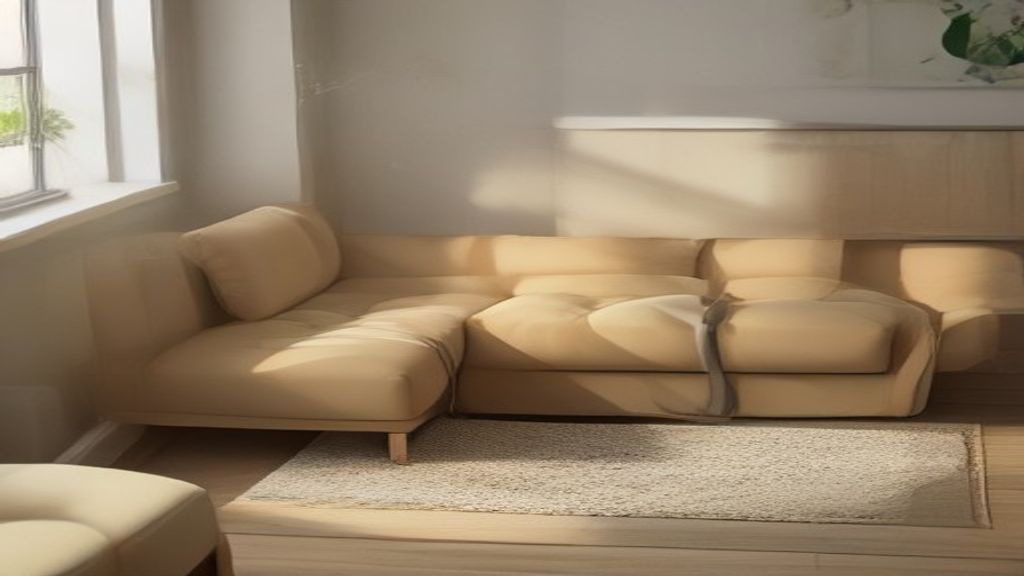
First modular sofa I bought, I measured the wall. That was the mistake. Thought 110 inches of wall space meant a 110-inch sofa. Got the thing delivered, set up the first three modules, and then it hit me: the corner. I hadn't accounted for the corner in my apartment. The chaise stuck out into the walkway, blocking the hallway. So I returned it. Cost me $80 in return shipping and a full Saturday of my life.
Second time, I measured the room shape, not just the wall. Drew a tiny floor plan on graph paper. Still got it wrong. Because I measured the floor but not the stairwell to my apartment. Neither of these sofas could even get up the stairs. Reassembly every time. I've done way too much IKEA-style cam lock work for one year.
First, Measure the Path, Then the Room
Before you look at any listing, measure your doorway, your hallway, and your stairwell — if you have a turn at the top of the stairs, that's where it fails most. I have an 89-degree bend in my staircase, and anything longer than 32 inches won't make it. That killed half the modular sofas I liked. Also, look at the delivery people: they usually just bring it in pieces, but some parts are going to be one big unit, often the base of a corner module. That's the one that gets stuck.
The dimensions in the product listing are final assembled, but they don't tell you module sizes. I emailed customer service once and asked for the box dimensions of each module. That was the only useful move I made.
The Corner Problem – Oh, the Corner
Most modular sofas have a chaise module that turns a sofa into an L-shape. But the L-shape's depth isn't always the same as the seat depth. Some brands make corner modules with a diagonal back, others use a squared-off corner that eats up 12 extra inches. That changes your walkway. I didn't know a deep corner could block a door. My hallway just ended.
Also, you don't have to keep the corner in the corner. Some modulars allow you to flip the chaise to the other side or place a corner in the middle to make a U-shape. But then you need extra connectors. Figure out which side the lounge goes before you assemble. That's another reason I returned my first one. Once the upholstery attaches, repositioning feels like flipping a mattress: possible, but you break a sweat.
Why Modular in the First Place?
I still think modular is a good call for renters and for people who move. A modular that fits through the door in pieces saves you from the curb-sit, return-the-whole-sofa disaster. But you have to double-check the connection type. Some brands use metal hooks, others use plastic guides. The perfect fit for the doorframe means nothing if the connectors snap during a disassembly.
Speaking of return policies, read them twice. Most places charge restocking. I paid $200 once because the crate was dinged. Not the manufacturer's fault. But I could see the frame through the tear, so I refused it. That messed up the whole week.
The Stuff You Can't See
One modular I tested had a frame that squeaked. Another had a seat depth that varied by two inches between modules — noticeable when your leg hits different edges. And the fabric? I chose a light boucle that pilled within a month. That's real life.
Before you order, find out if the cushions are flipped. Modular sofas often have zippered covers and can be reupholstered in theory, but in practice, the fabric wrap is fixed. If you want a fabric you can clean, you'll have to check the product details or ask. The sales photo won't tell you.
So What Do I Do Differently Now?
Measure everything, all paths, all modules, all connectors. Then measure the assembled shape twice: length, depth, height, and the 45-degree diagonal from the corner seat back to the farthest armrest — that's what they'll ask about stairs. I also check the base clearance. A modular with legs is easier to move slightly; one with a plinth base sits on floor and won't flex.
My latest setup is a 5-seat modular with a reversible chaise. It came in boxes small enough for a 30-inch doorway with 2 inches to spare. That worked because I made the delivery crew hold the box near my front door before they even lifted it out. They saw it wouldn't pass, and we pivoted, went through the back entrance. No return.
If you're still planning to buy, read a few other reviews first, specifically the ones that mention 'assembly' and 'fit' — those are usually written by people like me. My advice: take the week to plot it out. The walkthrough is everything.
If you're unsure about a brand, check how customers describe modular sofa fit and whether the dimensions they quote are the actual ones. And if your budget says get whatever's cheapest, measure before you click on cheap sofa beds. You'll save your time and your lower back.