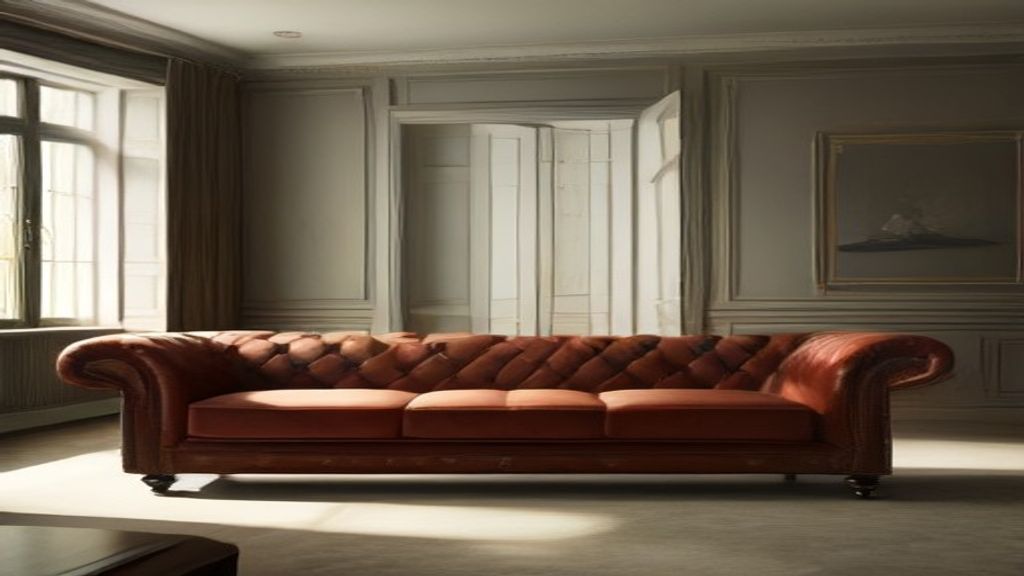
First, I bought a cheap velvet chesterfield online. The photos showed deep tufting, rich color, and a sturdy frame. What arrived was a saggy mess with buttons that popped off in two weeks. The velvet was synthetic and slick, and the seat cushions flattened within a month. I returned it, lost shipping costs, and started measuring things myself.
Here's what I learned the hard way, so you don't have to.
The Tufting: More Than Looks
Deep button tufting looks great, but it affects comfort. On my first sofa, the buttons pulled the fabric so tight that sitting felt like leaning on a grid. After a few weeks, the tufting loosened, but by then the damage was done — the seat had permanent dips.
Before you buy, ask the seller for the tuft depth. If it's more than 2 inches, you'll feel those buttons in your back. Also, check if the buttons are individually hand-tied or just glued on. Hand-tied stays put; glued pops off — I've seen both.
Velvet Fabric: Not All Velvet Is Equal
The word "velvet" covers a lot. On my first sofa, it was 100% polyester — shiny, slippery, and hot in summer. I later visited a showroom and felt a cotton-blend velvet: softer, more matte, and it didn't make my arms sweat.
Look for cotton or viscose blends. They feel better and age more gracefully. And check the rub count — anything under 30,000 means the fabric won't survive a few years with kids or pets. My current sofa has a 50,000 rub count, and after 8 months, it still looks good.
The Frame: Don't Trust the Spec Sheet
Every listing says "hardwood frame." That's meaningless. I once bought a "kiln-dried hardwood" frame that squeaked from day one and had a corner joint crack in the first year.
Ask what type of wood and how the joints are joined. Plywood with dowels and screws is better than particleboard with staples. And check the weight — a solid frame should feel heavy. My current sofa weighs 180 lbs; the cheap one was 90 lbs. That difference tells you everything.
Delivery: The Hidden Surprise
Chesty sofas are heavy and bulky. My first delivery took three hours, and they couldn't get it up the stairs. I had to pay extra for a different crew. Measure your doorways, stairwells, and hallways before ordering. Many companies won't remove packaging or move the sofa into place unless you pay an "in-home delivery" fee. Get that in writing before you pay.
Also, inspect the sofa upon delivery — don't sign until you've checked every tuft and seam. I found a stain on the back cushion on my current one; the driver claimed it was "pre-existing" and I had to fight to get a replacement.
The One Test: Sit on It
If you can, visit a store that has one. Sit for at least 10 minutes, lean back, and put your feet up. Check if the seat depth matches your leg length. On my current sofa, the seat is 22 inches deep, which is perfect for me, but my 5'2" friend finds it too deep. Also, sit forward and see if the back cushion supports your lower back — many chesterfields have loose back cushions that shift.
If you can't test, ask the seller for the seat dimensions, not just overall. And read reviews for the exact cushion feel. My cheap one said "firm" but was marshmallow-soft; the good one says "supportive" and it is.
What I'd Do Differently
I'd skip the sales, ignore the "luxury" buzzwords, and focus on construction. I'd order a fabric swatch first, hand-tie a button, and test the springs. I'd also budget for delivery and returns.
Before you buy, measure your doorway, set a budget, and order a swatch — you can get those for free most places. My next step is to buy a good quality velvet chesterfield that fits my space and my butt. I'll let you know how it goes.
For more real-world furniture lessons, check out my Chesterfield Navy Blue Sofa: First Week Setup and the One Decision That Matters and if you're considering a modular futon, read I Kept Buying the Wrong Modular Sofa Until I Stopped Measuring the — same measuring traps, different sofa.