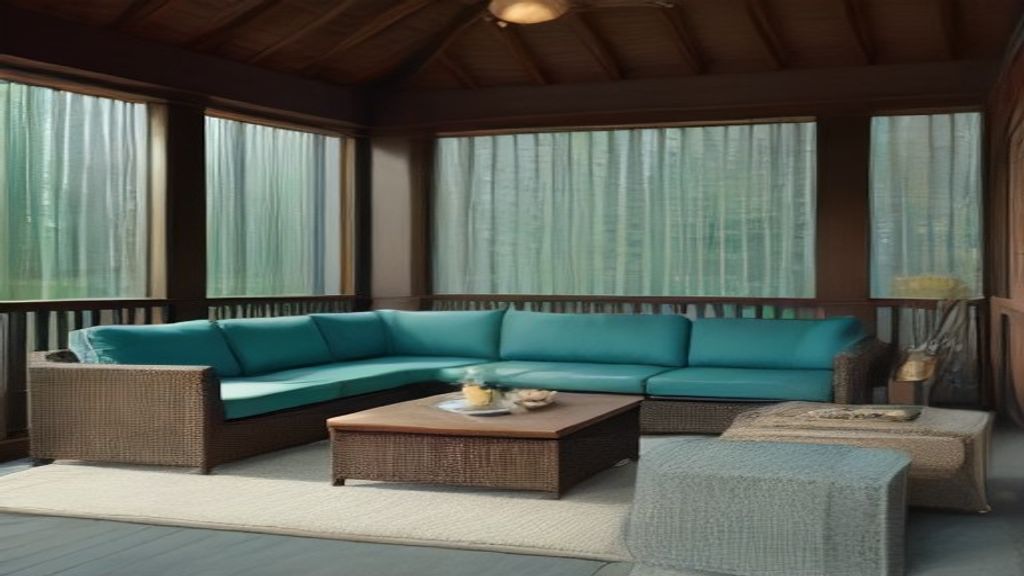
I bought a wicker sectional for my covered porch in March. By November, the frame had splintered in two places, the cushions were moldy despite the cover I'd bought, and my phone had a permanent smell of piña colada. That was six years ago. Let me tell you what I learned so you don't do the same.
First, the basics: wicker is not a material. It's a weave. The actual material is usually rattan, bamboo, or synthetic resin (like polyethylene). That difference changes everything. Natural wicker is great indoors, in a climate-controlled room. Outdoors, it will warp, rot, and crack within a season or two, even under a covered porch. The water gets into the weave, the fibers swell, and the whole thing gets brittle. My splintering was exactly that.
Synthetic wicker (often called resin wicker or PE wicker) is what you want for outdoor. That doesn't make it bulletproof — more on that in a minute. But it handles rain, sun, and humidity far better than natural. The frames inside also matter: aluminum is better than steel for rust, and steel that's just painted will start to show rust where the paint chips. That's a failure point, not a marketing detail.
The Cushion Problem
The cushions are where I really screwed up. The set came with polyester cushions that looked fine when I bought it. Within six weeks, they had streaks that wouldn't come out — I think it was just deck dust and rain. By next spring, they had this dull smell, like a towel left wet too long. Mildew is the word, and it happened because I stored them wrong and because the fabric wasn't meant for outdoor.
The fix: look for cushions made with Sunbrella or Olefin fabric. Sunbrella is used on boats; it's UV-stable, resists mold, and you can hose it down. Olefin is cheaper and also fine. The foam inside should be quick-dry foam or at least have drainage holes. And if the cushions aren't waterproof, store them in a dry spot when they're not in use. I now own a porch sofa that came with Sunbrella cushions, and after two rains without me covering them, they dried in a day and smell fine. That's the difference.
Frame and Weave Quality
Synthetic wicker can still crack if it's cheap. How can you tell before you buy? Look at the weave on the underside and by the armrests. Good wicker has a tight, even pattern with no gaps you can see through. Cheap wicker looks uniform from the front but has loose strands or raw edges where the pieces meet. I've seen sets where the wicker would start shedding fine pieces of plastic after a season, especially where people sit.
The frame is the skeleton. If you can find a cutaway or the spec sheet, look for the material: solid aluminum or powder-coated steel. Aluminum won't rust; steel might. Also, the legs — are they separate or integrated? Wobbly legs are the most common startup problem. When you sit down, the whole piece should not flex or twist under your weight.
Measurements and Delivery
This is where I get really specific, because the mistake I'm talking about isn't just the material. I bought a 7-foot wicker sectional. My door opening was 30 inches. The delivery guys stood it on end and gave a little push to get it through. That scratched the frame and loosened the weave at the corner. The manufacturer said the legs were removable, but the middle section didn't come apart without unbolting the seat anyway.
Before you order, measure your door, your hallway, your balcony, whatever it needs to pass through. Sectionals are notoriously big. It's not like a sofa you can just lift; wicker is bulky and fragile. I even wrote about measuring the hallway for a different sofa Wayfair Grey Sectional: Measure the Hallway Before You Fall in Love, and it applies here even more.
Also, check the seat height and depth. My first wicker sectional had a seat depth of 22 inches, which should be fine, but the back was only 18 inches tall. Anyone taller than 5'6" ends up with their shoulders hanging over because wicker backs are often low. That's a posture killer if you like to nap.
Price Reality
A good 6-7 foot synthetic wicker sectional with Sunbrella cushions will run $800 to $1,500. The cheap ones with natural rattan and poly cushions are $300 to $500. I've owned both. The cheap set delivered the first year, then the cushions got gross and the frame thinned in year two. The expensive set is now in its fourth cycle. If you divide the cost per year, the expensive one is exactly the same amount. And you don't spend half your summer looking up cushion replacement covers.
If the price is suspiciously low, then you're buying a set that looks okay in the showroom but won't survive a second season of afternoon sun. I gave up trying to find a find-a-fix for this; there is none.
The Storage Factor
Do you have a place to store the cushions from October to April? If not, you'll either leave them on and watch them get wrecked by frost, or you'll stack them in a closet and they'll reek of dust and mildew after a month. A better option is a waterproof storage box on the porch. That's an extra $80, but if you skip it, the cushions will pay the price with your wallet anyway.
I did not have that storage box in my first year. I brought the cushions inside and they didn't fit in the closet, so they sat in the garage leaning against a stack of boxes. By March, two of them were stained and one had a long scratch from metal shelving. I learned.
The One Decision
Every outdoor wicker purchase comes down to one thing: what do you value more, the look or the lifespan? If you want the beach-cottage vibe and you live somewhere dry and covered, cheap is fine. If you want something that you can hose off in June and sit on in September, then you have to pay for the material qualities.
My next step, and yours, should be to go to a showroom or a store that sells synthetic wicker. Run your hand over the arms, peel up a corner of the cushion, and write down the material names. Then go home and measure your door. That's more productive than scrolling a thousand reviews at 11 pm with a wine glass in your hand.
The worst part is, I fell in love with that first wicker sectional in April, bought it in May, and by August I was planning its replacement. I had thought I was getting a relaxed, coastal style, but I got a maintenance problem. So no, I didn't fix that sectional. I replaced it. Don't let yours be the same story.