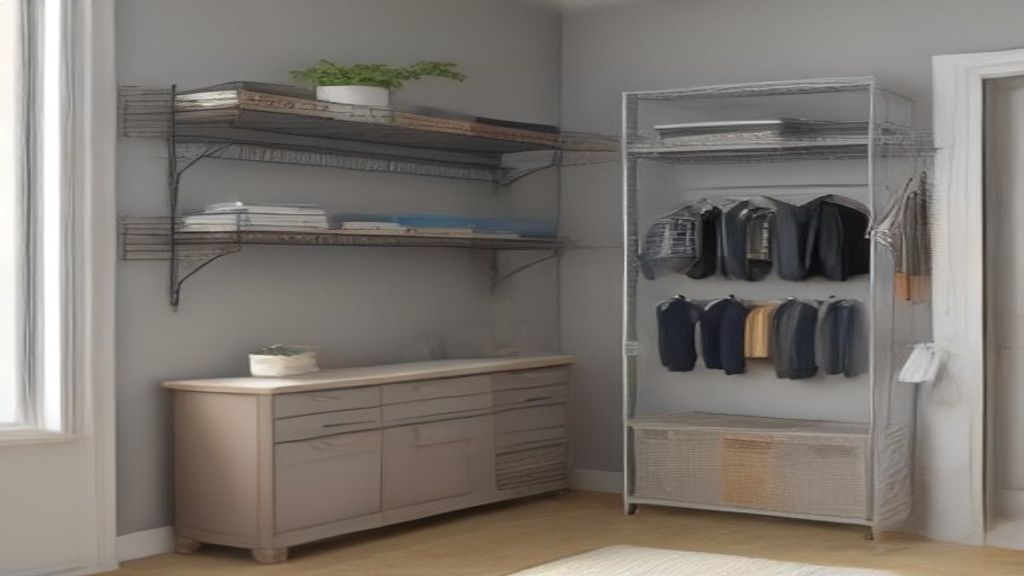
I bought a $40 four-shelf unit from a big-box store last spring. Assembly took 20 minutes, the plastic connectors clicked in fine, and it looked great in the garage. Five months later, the second shelf bowed under a load of paint cans and old files. No warning, just a slow tilt. The fix was a $90 replacement with welded steel beams — and that one has held steady since. But I still use the cheap one in the closet, holding nothing heavier than sweaters, and it's fine.
That's the heart of it: wire shelving is sold by count — how many shelves, how wide — but the real spec is what you can put on them. And that varies as much as the price.
What the size numbers ignore
The $40 unit said 350 lbs per shelf. So did the $90 unit. The difference? The cheap one used 0.5-inch diameter wire and plastic sleeves at the corners. The expensive one used 0.8-inch wire and full-length steel brackets underneath. After loading the center of each shelf, I finished with a 40 mph home test: I stood on both. The cheap one flexed a full inch under my 180 lbs. The pricey one felt like a floorboard.
Price doesn't buy weight capacity alone. It buys how that capacity behaves when you don't distribute the load perfectly. You'll never distribute perfectly. Bins get shifted, boxes get stacked on edge, and the center point takes the hit until it gives.
What rusts when you're not looking
I left a $60 "garage" unit in a damp basement corner for three winters. White spots appeared on the lower shelf by month nine, and light brown streaks by year two. That zinc plating wasn't meant for constant humidity. The $150 unit with epoxy-coated wire? Three years in the same spot — no spots, no rust.
If you're storing anything in a basement, garage, or anywhere that sees moisture, spend the extra $30–50 for a coated finish. Or put the cheap one in the pantry and keep the basement unit honest.
The wobble you'll feel at 2 a.m.
The cheap unit had casters that cost $12 extra. The metal was thin, the sleeves creaked when I rolled it. The pricey unit came with rigid legs, and I added locking casters afterward. That combo didn't sway at all when I pulled out a bin from the top shelf.
Casters are a thing you can't measure in a photo. The stem diameter they advertise matters less than the gauge of the steel sleeve it slips into. I saw a review that said "wobbly," but I didn't believe it until I parked a loaded unit next to my desk.
What I tell everyone now
Matching the shelf to the room does more than matching it to the price tag. A 30-inch-wide, 18-inch-deep deep closet unit can hold bins you can't lift. A shallow laundry unit for a small entry door? Don't load too deep.
For the garage, basement, or pantry, I suggest buying heavier-gauge steel with a coated finish, even if it costs $50 more. I know that's not sexy advice. But it's the difference between hauling a shelf to the dump because it leaned, you know?
The cheap wire set is still doing duty in my office closet, holding paper and printer ink. Honest work, at the right price.
If you're comparing options, I ran the numbers on a few plastic setups too — see I Measured 12 Plastic Shelf Sets So You Don't Have To. And if you're placing yours against a wall, I have notes on the Wayfair Shelves: The Weight Rating That Nobody Talks About.
More in my ongoing attempts at Small Closet Storage: I Measured My Shelves and It Changed Everything and I Spaced My Pantry Shelves 12 Inches Apart and Now I'm Flipping Cans.
And if you're eyeing the living room, the same logic carries: measure the room first. I bought a desk without checking my file cabinets — full story at I Bought a New Desk Without Measuring My Files — and I won't do that again.
That's it. Measure the depth, pick the gauge, and don't put paint cans on the top without checking the sleeve weld.