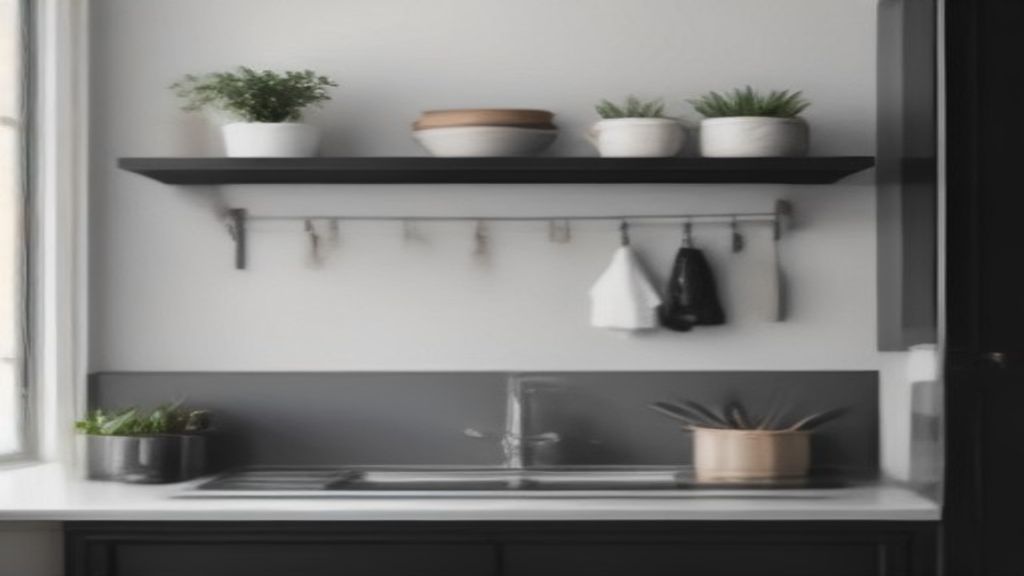
The box weighed about eleven pounds. I lifted it out of the delivery crate and the powder-coat finish felt smooth, not sticky like some cheap spray jobs. The instructions were a single sheet, two diagrams, and a warning not to over-tighten. That was the first hint that the real work wasn't assembling the shelf—it was deciding where to put it and what I'd actually load onto it.
I've had a few metal shelves over the years, and they all fail the same way: the screws strip, the brackets bend, or the whole unit tips because I overloaded one side. So when I brought home this 24-inch by 12-inch small metal shelf for the kitchen, I spent the first week just living with it before I committed to a permanent spot.
The One Decision That Decides Everything
After a lot of trial with shelves in my garage, my bathroom, and now my kitchen, I'm convinced the calculation that matters most is the weight capacity per shelf. Not the total, not the material thickness, not the color. The number per level.
This little shelf has four tiers, each rated for 35 pounds. That sounds fine until you actually stack a few boxes of pasta, a blender, and a stack of plates. The blender alone is 12 pounds. Add a cast-iron skillet and you're at 20. Now double it because you've got two rows on the shelf. You'll hit the limit fast, and the shelf will start to sag.
The fix is boring but real: know the weight of what you plan to put on every single tier before you buy. I pulled my kitchen scale out and weighed the actual items. When I did, I realized the top shelf would be fine at 8 pounds, but the second shelf needed 30 pounds of canned goods. So I rearranged—heavy stuff on the bottom two shelves, light stuff up top.
The Setup Week: Three Things I Did Before Touching a Screwdriver
1. Measured the wall studs. I took a stud finder to the spot where I wanted to mount it. If you're attaching to drywall, you absolutely need to hit a stud or use anchors rated for the weight. I didn't want to risk a 24-inch shelf full of dishes crashing down at 2 AM.
2. Checked the level. I placed the shelf on the floor first and used a small bubble level to check each tier. The metal frame had a slight twist—maybe an eighth of an inch over the width. I couldn't fix it completely, but I knew to put shims under one foot when I mounted it.
3. Tightened the screws slowly. Over-tightening strips the soft metal threaded holes, especially on inexpensive shelves. I used a hand screwdriver, not a drill, and stopped when I felt resistance. That's the difference between a shelf that holds and one that wobbles.
The Week of Living With It
I left the shelf on the floor for the first three days. I put stuff on it, walked past it, knocked into it once. It stayed stable. The coating didn't scratch when I slid a cast-iron pan across it. That was a good sign.
Then I moved it to the wall. I used the stud in the right place, so I only needed one anchor for the left side. The shelf went up in ten minutes. But I noticed something: the shelf was so close to the wall that the cabinet hinge brushed against the edge. I had to pull it out an inch. That's the kind of thing you only catch when you're actually living with it.
The metal has a slight industrial look that I didn't love at first, but after a week of having a can of olive oil and a stack of cutting boards on it, I stopped noticing.
The Downside Nobody Mentions
Metal shelves are loud. When you set down a ceramic bowl, it clinks. If you have a metal shelf in a quiet room, you'll hear every spoon. I fixed that by putting a thin felt liner on each tier. It took five minutes and cost a few dollars. That's the only real complaint.
Also, the finish will chip if you drop something heavy on it. I already have a tiny chip near the front edge. It's not visible unless you're looking for it, but it's there.
The One Factor That Decides the Buy
After a week of using this shelf, the one thing that decides whether it's worth buying is the weight capacity per shelf. If you know what you're going to put on it and you stay under the limit, it's a great shelf. If you're planning to use it for something heavy—like books or tools—you need a different shelf with a higher rating.
For me, this small metal shelf works because I use it for lightweight kitchen stuff: spices, bowls, cleaning supplies. It's not the prettiest piece, but it's sturdy, easy to clean, and it fits in a corner that was wasted before.
If you're considering a small metal shelf, take an hour to weigh your stuff and measure your wall. That's the difference between a shelf that sags and one that stays. I learned that the hard way with a wall-mounted bathroom shelf where I ignored the spacing rule—The 6-Inch Gap That Killed My Wall-Mounted Metal Bathroom Shelf taught me to check spacing before drilling. And if you're thinking about other shelving, check out More guides in Shelving for more real-world setup notes.