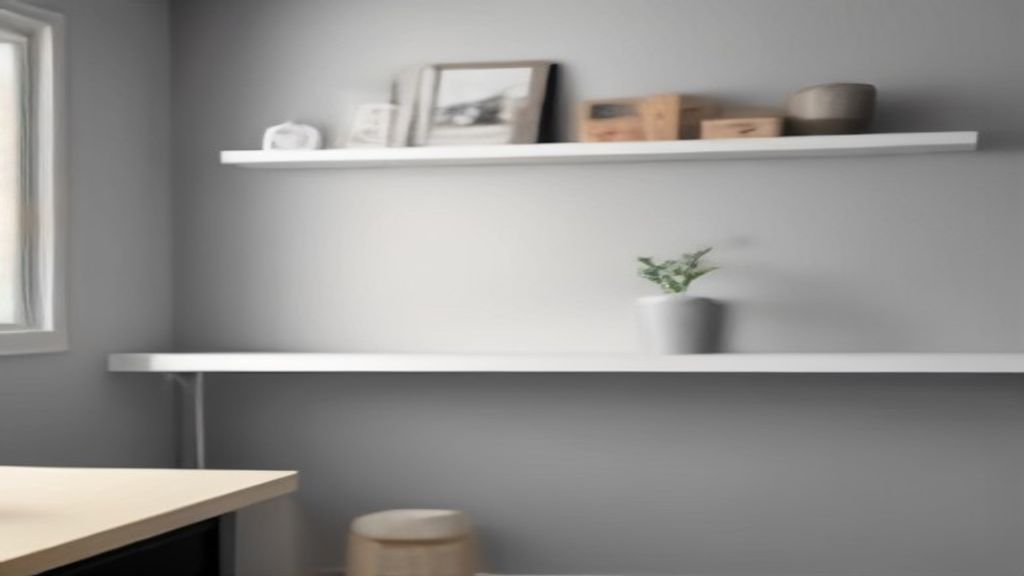
Seven inches. That's the depth of the IKEA LACK shelf. Not six, not eight — seven. And that one number decides more about whether this shelf works for you than anything else in the spec sheet. For a bookshelf, a TV stand, a wall unit, the depth of a shelf is what you feel every day when you put something down and it either fits or it doesn't.
Let's walk through the constraints.
Room first. The LACK comes in two lengths: 30 inches and 45 inches. I put a 45-inch one above my desk and a 30-inch one in the hallway. The 45 over the desk was absolutely the right call — it spans the width of my desk nearly perfectly, and it holds exactly what I need: a few books, a plant, that stack of mail I haven't sorted. The 30 in the hallway is fine, but it's small. Anything longer than a standard frame or a stack of three hardcovers looks cramped. So measure your wall first. The shelf itself is 7 inches deep, so it doesn't jut out much, but the length is what changes the visual weight.
Body next. I'm 5'11" and the wall anchor that came with it went into drywall no problem, but I've seen the LACK shelf fall — a friend had a 45-inch one come down at 2am when a cat jumped on it. Not because the shelf is weak, but because the included hardware is barely enough for a picture frame. The LACK is hollow — particleboard with a honeycomb paper core. That means any screw has to grip the wall, not the shelf. I used the included anchors but added a second set of drywall anchors, and it's been solid for nine months. If you're mounting into plaster or tile, forget it — you need different hardware and a stud finder.
Schedule. The LACK shelf takes ten minutes to mount if you're not a perfectionist. Level it, mark, drill, screw. The 30-inch one took me longer because I had to repaint the marks. But the real schedule constraint is the paint on the wall — if you're renting, you have to patch and repaint when you move it, so plan for that. Also, the shelf is white — glossy white. It shows fingerprints like crazy. I wipe it once a week, and it still needs it.
Now the product choice. You're looking at the LACK because it's cheap and ubiquitous. The 30-inch is $9.99, the 45-inch is $14.99 (prices vary, but that's ballpark). At that price, you get a shelf that's fine for light to medium loads. I've got maybe 12 pounds on the 45-inch — a few hardcover books, a ceramic bowl, a small snake plant. It handles that without sagging. But I wouldn't put a 20-pound fish tank on it. The core is honeycomb, so the top surface is just a thin skin. I've seen posts of people putting heavy equipment on LACK shelves and the top starts to bow.
What the depth means for storage: 7 inches is not deep enough for a standard paperback — those are 8 inches tall, but they'll hit the back if you push them. My paperbacks stick out half an inch, which drives me nuts. Magazines fit width-wise but they're too tall for the shelf height — wait, the LACK doesn't have side panels, it's just a slab, so height doesn't matter. But depth matters for anything wider than 7 inches. A laptop won't fit (my 15-inch MacBook is 9.5 inches deep). A stack of photo albums? Too wide. But a set of three small succulents? Perfect. A pair of picture frames? Yes, if they're 7 inches or less.
If you're using it as a bedside shelf, the depth is actually perfect — my phone, a glass of water, a book (if it's a small book) all fit without jutting into my sleep zone. I swapped my nightstand for a LACK shelf above the bed and it freed up floor space. But I had to make sure the wall mount was rock solid — if it falls while you're sleeping, that's a real hazard. So I over-anchored. Four drywall anchors, no regrets.
One more thing: the LACK shelf is the same as the LACK side table, just without legs. It's the same material, same dimensions. So if you have a LACK table, you already know the feel — it's light, it's hollow, it's not premium. But that's the point. It's a utilitarian shelf that does a job without fuss. You just have to respect the depth and the weight limits.
If you're torn between the LACK and something like a floating bedside shelf — that one's 12 inches deep and solved my cluttered nightstand problem — the decision comes down to what you're storing. The 7-inch LACK is great for small, light things. The 12-inch floating shelf holds more without looking bulky. For a desk, a 45-inch LACK is a classic. I've also used a desk shelf walnut in my office — that one's 8 inches deep and feels sturdier, but it costs ten times more.
So here's the bottom line: measure the stuff you actually want to put on it. If it's under 7 inches deep and under 15 pounds, the LACK will do you right. If not, you're going to be frustrated. The LACK is a great cheap shelf — as long as you respect its limits.