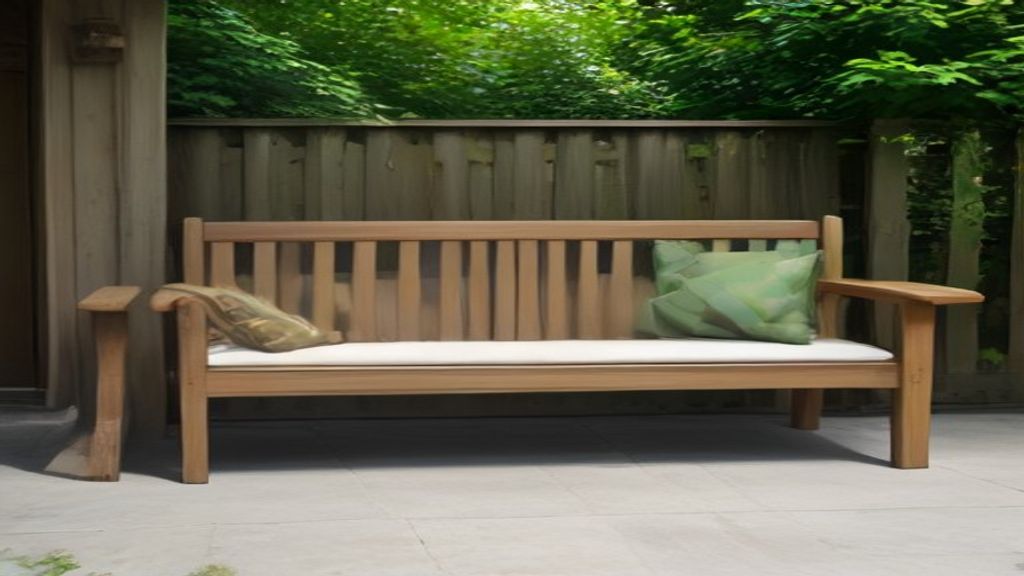
Last spring I ordered two 18x48 outdoor bench cushions because that's what the old ones said. They arrived and were half an inch too long at each end. Half an inch doesn't sound like much until you're trying to wedge the second one onto the seat and the fabric catches on the armrest. I sent them back, paid return shipping, and spent another weekend doing the thing I should have done first: measuring the actual frame.
The mistake was assuming the old cushion size was the frame size. It isn't. The old foam had compressed over two seasons, the cover had stretched, and what started as a 17x47 fit was now labeled something else. If you're replacing bench cushions for an outdoor bench, don't copy the old tag. Measure the bench seat.
Measure the seat, not the cushion
Take a steel tape measure — the fabric ones stretch — and measure the seat from the inside of the left armrest to the inside of the right armrest. Write that down. Then measure from the front edge of the seat to the backrest. That's your width and depth. For a bench with no back, measure the full depth of the seating area. Subtract an inch from each dimension to give yourself slack. A cushion that's exactly the same size as the frame will be a battle to get in and out, and it'll bulge against the arms until the seams pop.
I ended up ordering 17x47 for a frame that measured 18x48. The fit is snug but the cushion sits flat, and I can actually lift it out when it rains. The half-inch buffer on each side means the ties sit at the natural corners instead of being pulled sideways.
Thickness changes how it fits
Depth and width get the attention, but thickness is where people mess up. My old cushions were 3 inches thick. I replaced them with 4-inch ones because the listing said "extra plush." What it didn't say is that the ties are positioned for a 3-inch cushion. With the 4-inch, the ties sat at an angle and the cushion tilted forward when someone sat down. I ended up switching to a cushion with snap closures at the seam, not ties, and that solved it. If you're keeping ties, measure the cushion thickness and check that the tie placement matches your frame's anchor points.
The tie length issue
Ties are usually 8 to 12 inches long. That's fine for a bench with a wooden slat you can wrap around. On a metal frame, the ties might not reach or might have nothing to wrap around. I have two benches: one wood, one metal. The metal bench couldn't use tie-down cushions unless I tied them to the frame itself, which looked ugly. I used cushions with a non-slip bottom for the metal bench — that works, but only if the cushion has a grippy backing and the frame is completely dry. Wet frames make any cushion slide.
Delivery and return reality
Cushions are bulky. A 17x47 cushion in a box is roughly 50 inches long. Make sure you're home on delivery day or it sits in the rain. And if you order wrong, return shipping is on you. It's $25 to $40 depending on the seller. That's the real cost of not measuring. I've done it twice now — the first time with the size mistake, the second with the thickness. Third time I finally used a fabric marker to write the measurements on the underside of the bench frame. Now even when the cushion label fades, I know exactly what fits.
What I'd do differently
Before ordering, I'd take an old bedsheet, cut it to the measurements I wrote down, and lay it on the bench. It takes five minutes and shows you if the size is right in a way that a number on a screen doesn't. Then order. If you're replacing cushions for a bench that came with a set, look at the frame's spec sheet or measure the gap between the armrests — that's the width that matters.
One more thing: check the shape. Some bench seats taper toward the back. Mine didn't, but if yours does, a rectangular cushion will overhang the front. Measure the front and back widths separately and compare. If they differ by more than an inch, you might need a bench-specific cushion with a curved seam.
If you’ve got a round or curved bench, measuring gets trickier. Round Outdoor Cushions: Don't Buy the Wrong Size Again covers the arc measurements you'll need.
The next step
Grab a tape measure, go look at your bench, and write down the inside dimensions. Not the old cushion label. Inside armrest to inside armrest, front to back, with a one-inch deduction. Do that now, before you start browsing, and you’ll save yourself a return trip to the post office. If your bench cushions are okay but the bench itself is wobbly, check out Built-In Dining Bench: What I Learned After Installing One before you reinforce it — same measuring principle applies.