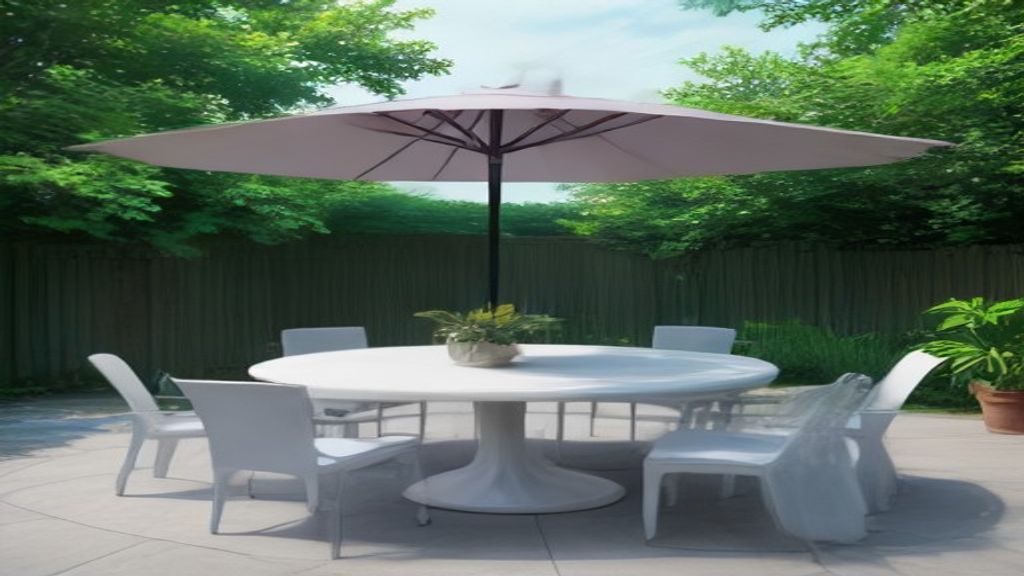
I bought a 9-foot umbrella and a 40-pound base. Looked great. First gust of wind, it took a dive and cracked a ceramic pot. My mistake? I ignored the base weight chart. The umbrella itself was fine, but without enough base weight, it's just a sail. Don't repeat that. Check the base weight before you even look at colors.
Umbrella size: bigger isn't better
Measure your table first. A 9-foot umbrella over a 48-inch round table looks comical and leaves half the table in sun. For a 48-inch table, go 6-7 feet. For a 60-inch table, 7.5-9 feet works. And the pole thickness matters — a 1.5-inch pole is flimsy. Look for 1.5 inches or thicker, aluminum or fiberglass. Steel is heavy but rusts if the coating chips.
Base weight: the boring spec that saves your patio
Here's the kicker: the heavier the base, the safer. For a 6-foot umbrella, you need at least 50 pounds. For a 9-10 foot model, go 75-100 pounds. If you live somewhere windy, don't skimp. And if you're using a cantilever, the base needs to be even bigger because the weight is offset. My 9-foot with a 50-pound base? Folded like a lawn chair in a gust.
Fabric: don't fall for the cheapest polyester
Polyester fades in one season. Look for solution-dyed acrylic or marine-grade canvas-like fabric. It costs more but holds color and stands up to UV. Also check the vent at the top — that little flap isn't decoration. It lets wind escape so the umbrella doesn't become a kite. And if you plan to leave it out in rain, get a UV-treated, water-resistant fabric. Trust me, you'll hate yourself scrubbing mildew off cheap polyester.
Wind: know your local gusts
If you get afternoon breezes, don't leave any umbrella up, no matter the base. Get a quick-release tilt or an umbrella with a wind sensor? Actually, those exist but cost $300+. Simpler: learn the angle. When a storm hits, drop it. My neighbor lost a $150 umbrella because he thought a 75-pound base was enough. It wasn't.
What to buy instead
Go with a 7.5-foot aluminum pole, 1.75-inch thickness, with a 75-pound resin base. Get solution-dyed acrylic fabric in a neutral color — you won't get bored with it. That's a solid setup that won't land in your neighbor's yard. If your table is bigger, scale up to 9 feet but add a 100-pound base.
One next step
Grab a measuring tape. Check your table diameter and the height from tabletop to where you'll sit. If you're under 6, it's too short. Then multiply that peak height by 1.5 — that's your umbrella radius. Do that before you search for colors. You'll skip the whole "my umbrella doesn't cover my table" mess. And when you do pick one, buy the base at the same time — don't cheap out.
If you're leaning toward a cantilever, read Outdoor Cantilever Umbrella: Match Size, Base, and Fabric first. And if you've been staring at those cheap patio umbrellas on Amazon, this might save you a headache: Patio Umbrellas on Amazon: What I Learned the Hard Way.