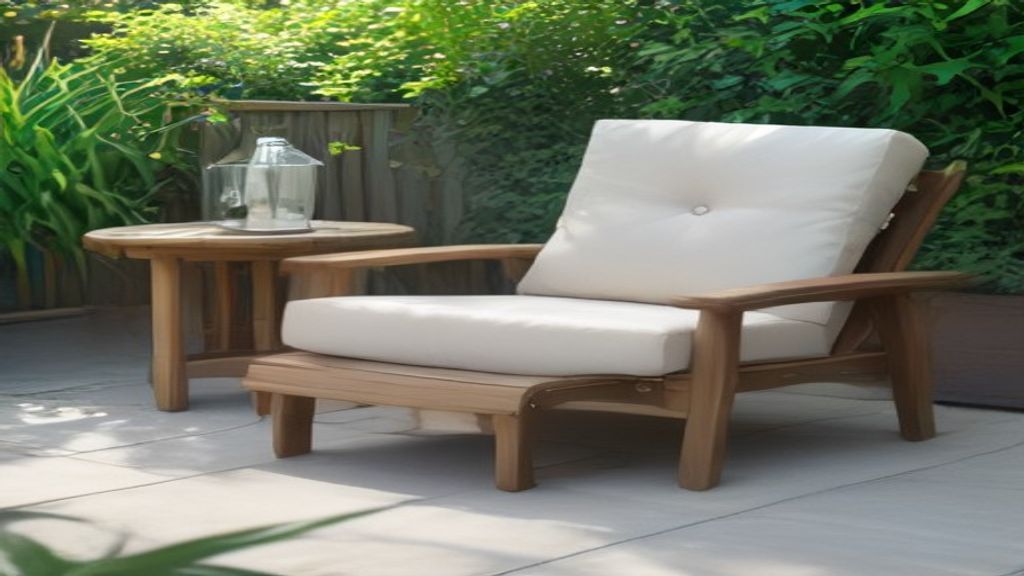
Eight weeks. That's how long I sat in a chair that looked gorgeous — deep teak, thick cushions, exactly what every catalog photo promises — before I admitted it was killing my back. The frame was solid, the fabric was nice, but the seat was too deep for my legs. My feet barely touched the ground, and after an hour my knees felt like they'd been in a yoga class I never signed up for. I'd measured the width, the clearance, the whole thing. I never sat in it for more than five minutes before buying.
The real mistake? Confusing "looks comfortable" with "is comfortable for your body." Comfort is not a feature you can see in a photo. It's about how the chair fits you, not how it fits the aesthetic of your patio.
So before you drop $200–$800 on a set that looks plush, here's what actually matters — and what I wish I'd known.
The Three Numbers That Matter More Than Looks
Every chair has three dimensions that determine whether you'll actually want to sit in it for a whole afternoon: seat height, seat depth, and back angle.
- Seat height: Ideally, your feet rest flat, and your knees are at about a 90-degree angle. I'm 5'9" and need around 17–18 inches. My fancy chair was 15.5, and I felt like a kid in a big chair. For most adults, 16–19 inches is the sweet spot. If you're shorter or taller, adjust.
- Seat depth: From the front of the seat to the back of the cushion. If you're of average height, 20–22 inches works. My chair was 24 inches deep — too deep. Your back should touch the backrest without you having to lean forward.
- Back angle: Slightly reclined is nice for lounging, but if you're dining or working outdoors, too much recline makes you hunch. Look for 10–15 degrees if you're upright.
Fabric and Weather: Where Cushions Go to Die
Cushions feel amazing in the store. In the rain, they can become a sponge. I bought a chair with quick-dry foam — I didn't check the fabric repellency. After two weeks of summer storms, the cushions smelled like the shady corner of a lake dock, and they stayed damp for days.
You don't need top-tier Sunbrella fabric, but at minimum get: water-repellent or outdoor-rated cushion covers, quick-drying foam, and UV-resistant fabric. Cheap fabric fades in a season; I've seen chairs turn pink-ish instead of red in one summer.
Also, check if the cushions are tied or Velcro'd on. If they're not secured, they'll end up on your lawn in the first windstorm. Learned that one too.
The Frame Is the Part You Can't See
Weatherproofing matters more than finish. Powder-coated aluminum is your best friend — it doesn't rust, it's light, and it lasts. Steel is heavier and can rust if the coating chips. Teak is gorgeous and lasts forever but needs oiling once a year, and honestly, that's not for everyone.
Check the welds and joints. If you can see rust or rough seams after a few weeks, that chair is not going to hold up. I read reviews before buying, but not for "long term durability." I focused on the first-week reviews, which are all about looks and initial feel.
It's Okay to Skip the Cushion Entirely
Some of the most comfy chairs don't have a cushion at all — they're curved and angled so your body sits naturally. I now own a zero-gravity mesh chair that's better than anything with a pillow. But those are a different beast — you're lying almost flat. If you want to sit upright and read or eat, that's not it.
The 20-Minute Test
When you're shopping — even online — do this: sit in it for at least 20 minutes. Not two minutes. Set a timer. If you're buying online, look at the depth and height, then measure your own chair at home to compare. My dining chair is 18 inches high and 21 deep — that's my baseline. If a listing says 20 deep, I know it'll be close.
Also, think about what you do on the chair. I mostly read and occasionally drink coffee. I needed a chair that supported my lower back and let me stay upright. That's different from someone who wants an afternoon nap.
What to Look For in the Specs
If you're shopping online, hunt for these specs:
- Seat height (floor to top of seat)
- Seat depth (front to back of seat)
- Back height
- Weight capacity (if over 250 lbs, be picky)
- Frame material and finish
- Cushion type (foam, fiber, quick-dry)
- Fabric weave (if mesh, check for stretch)
If a site doesn't list seat depth, email them. Good sellers will know.
The Chair I Should Have Bought
Instead of the teak deep-seat, I should have gone with a mid-back, aluminum-frame chair with a 21-inch depth, 17-inch height, and a 1-inch gap between the seat and back. That would've checked every box. I saved a photo of it on my phone now as a reminder.
If you're in the market, Outdoor Patio Chairs: The First Week and The One Decision That Matters talks about what to inspect in the first week after unboxing — I skimmed that article after my mistake, and it's spot on.
And if you're also shopping for an umbrella, Don't Buy a Patio Umbrella Before You Read This — because the chair and shade go together.
I've also seen some good deals in Luxury Patio Furniture: What the Price Tags Don't Tell You — but that article made me realize high price doesn't mean high comfort.
Who Should Skip This
If you're 6'2" or taller, ignore my seat height advice — you might want that extra depth. If you're buying chairs for little kids or for a dog, this whole guide is overkill. And if you only sit outside twice a year for a party, get whatever looks decent and costs less. But if you plan to have coffee out there every morning, spend the time finding something that fits. Your back will thank you after week two, and you'll forget the days when you had to shift every ten minutes just to find a spot that didn't feel like a wrestling match.
I didn't return my chair either. It was heavy, and the return shipping was $80. That's another lesson — don't buy until you're sure.
If you're just starting to look, read Rattan Dining Chairs Set of 4: First-Week Setup and the One Decision for a taste of what to expect when chairs arrive in a box. Not the same as patio, but the unboxing nightmare is universal.
Bottom line: don't trust the photo. Trust the numbers. And sit in it longer than you think you need to. That minute you spend measuring now saves you eight weeks of discomfort later.