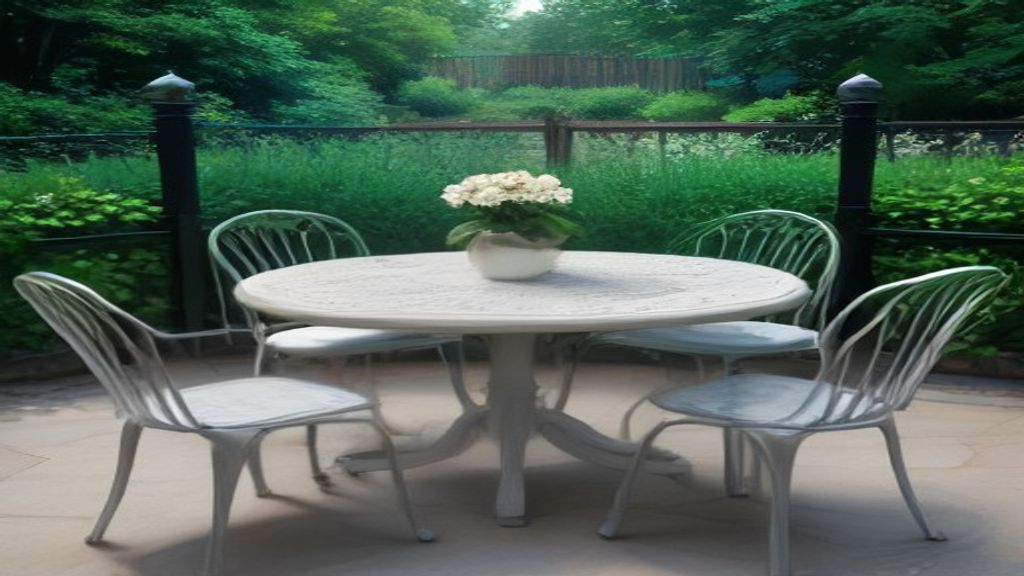
The table was 5 feet wide. My gate is 2 foot 9. I found this out at 7pm on a Thursday, with the delivery driver waiting and the neighbor’s hedge watching. That’s how I started my vintage garden furniture hobby: with a cast iron table wedged sideways between the fence and my car, scraped down one leg, and me sweating into a t-shirt that wasn’t designed for lifting furniture.
The seller’s photos showed it glowing in a sun-drenched lawn. The description said `patina` and `original paint`. Nobody mentioned the gate. So here’s my advice, learned with my back and my wallet: measure everything before you commit to vintage garden furniture.
What I measured after the fact
If I’d spent ten minutes with a tape measure, I’d have saved a lot of grunting. Here’s what actually matters:
- Gate and path width – including the hinges and the fence post. My gate narrowed by 4 inches on the hinge side. I measured the opening, not the actual gap.
- Door frames if you’re storing it inside – I planned to keep it in a shed. The shed door was 2 feet even. The table was never going to fit. I now store it under a tarp, which works, but it’s not what I planned.
- Turning radius – even if the piece fits widthwise, can you actually angle it around corners? My hallway is 3 feet wide, but the stair turn kills any long piece over 6 feet. So I now measure the diagonal height too.
- Weight – cast iron is heavy. I’m not breaking my back again. I now ask for the actual weight before buying. If it’s over 100 lbs, I plan a helper or a trolley.
What I’d check on the furniture itself
Vintage pieces come with their own surprises. Rust is obvious, but the sneaky stuff:
- Legs that are bolted on – most 1960s pieces have bolts. They can be tricky to remove if rusted. I now carry a socket set to any pickup. You don’t want to be separated by 2 inches at a staircase.
- Seat height – vintage benches are often lower than modern ones. Sit on it before you buy. A 16-inch seat is fine for a picnic table, but a 14-inch seat makes you feel like you’re kneeling.
- Table top overhang – many old tables have decorative edges that extend an extra 2–3 inches beyond the legs. That’s not a problem unless you’re measuring leg width for gate clearance. Measure the widest point, not the base.
The one thing I’d do differently
Bring a tape measure and a piece of chalk. Mark the outline of the furniture on the ground next to the gate. Then try to carry that imaginary footprint through. That’s what I do now for any piece I’m considering. It sounds silly, but it works.
If you can’t see it in person, ask the seller for detailed measurements, including the widest and tallest points. And always ask about overall condition: rust on the underside, wobble, previous repairs. I once bought a set that looked perfect in photos, but one leg was welded badly—it rocked on any uneven ground.
Related reads:
- I Bought Outsunny Garden Furniture and Got the Sizing Wrong
- I Bought Wooden Garden Furniture Without Checking the Timber and Paid
- IKEA Garden Table and Chairs: Why I Returned the First Set and What I
Who shouldn’t buy vintage garden furniture
If you have a tiny balcony, a narrow hallway, or you move a lot—skip vintage. The weight alone is a dealbreaker. I love the look, but I’m not moving that cast iron table again anytime soon. For small spaces, look for rattan or modern folding sets:
- Rattan Garden Furniture Near Me: What I Learned After Three Returns
- 2 Seater Garden Furniture: First Week Set Up and the One Decision
This isn’t a sales pitch for new stuff. Just be honest about what your space can take. I wish someone had told me that before I bought a table that never made it past the gate.