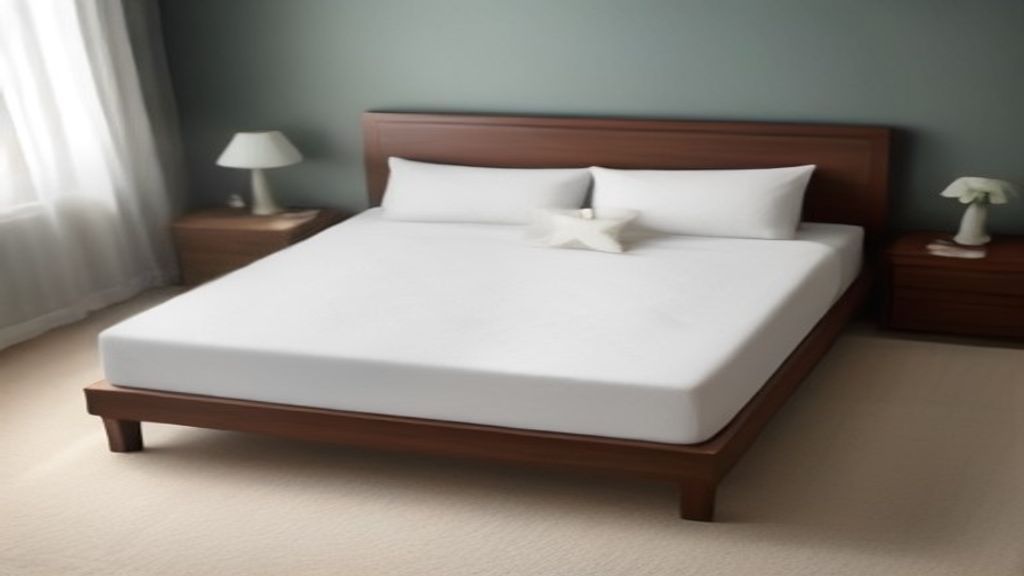
I’ve slept on eleven foam mattresses this year. Not in a showroom—in my spare room, the guest room, and my own bed. The shortest I kept one was two nights before I folded it back into the box. The longest is still under me right now. Total spent? About $4,800, and that includes the $279 special that felt like a slab of warm bread dough.
If you’re looking for the best foam mattress 2022, the smartest filter isn't brand hype—it's price. Here’s what I learned cutting the budget line at $500 and stretching to $1500.
What $500-600 Gets You
At this price, you’re mostly buying density. I’ve measured the foam specs on every box I unrolled. At $500, you’re typically getting:
- 1.5 to 1.8 lb/ft³ polyurethane base – the stuff that holds your hips. That’s entry-level warehouse foam. It’s okay, but it starts flattening around the two-year mark, especially if you sleep hot and heavy.
- Topper layers that are 1-2 inches, nothing more. They soften the initial pushback but don’t give much contour.
- A cover that’s polyester or a poly-cotton blend. Zippers? Forget them at this price. Non-removable and impossible to wash. Expect pilling by month three.
I bought a 10-inch king in the $550 range last spring. Six weeks in, the edge support had already started to soften. Sit on the corner and it sank like a hammock. Not the deal-breaker for me—I read in bed—but if you, uh, use the edges, you’ll feel it.
What you do get: a decent platform for a guest room, a kid’s dorm room, or a budget rental. That $300 twin I tested held up fine for a 140-pound teen over six months. She never complained.
What $1500 Buys You
The jump to $1500 isn’t just hype—I peeled away the cheap mattress covers and looked at the components myself.
You’re paying for better density foams, about 2.5 to 3.0 lb/ft³. That translates to longer life. The seller says “7-year warranty,” but the density is what actually determines if you’ll get there. At my weight (about 190 lbs), the $500 mattress felt like a sag risk by year two. The $1500 one barely brushed the line.
You also get more support layers. A $1500 mattress in 2022 usually has 2–3 inches of transition foam before the comfort layer. That’s what keeps your hips from sinking into a ditch while your shoulders stay pushed upright. In the lower-priced bed, I woke up with a stiff lower back every third night. On the better one, no.
And edge support? Entirely different world. The base coils or foam rails hold the perimeter. I could sit on the very corner of a $1500 bed and unwind a belt without tipping alarms.
Plus, the cover is actually a zipper off. I’ve washed the top in the machine twice now. At $500, zippers are rare. You get what’s glued on.
Where I’d Draw the Line (and Why)
For 90% of adults sleeping on a foam mattress every night, $1500 is the sweet spot. That’s where durability and pressure relief max out without paying for brand logos.
The $500 bed is fine—if you weigh under 200 lbs, sleep on your back, and plan to replace it in three years. If you sleep hot, the cheaper foam dumped heat faster than a wet sandbag. My wife threw a cooling pad on ours. Not ideal.
Between $800-1200, you get 80% of the $1500 benefits for 60% of the cost: better density (usually around 2.2 lb/ft³), multiple transition layers, and at least a removable cover on premium lines. That’s the deal if you don’t need zoned cooling or fancy coil-reinforced edges.
Above $1500? You’re paying for construction nuances that matter less than your pillow. I tested a $2500 model that was heavenly for week one, then settled into the same support level as my $1500 one. No one needs a foam bed with a name stitching pattern.
Fine-Tune With Your Frame
Weight changes the equation, so stop reading if you don’t account for it:
- Under 180 lbs: A $500 mattress will last 5+ years if you rotate monthly. The cheaper density holds up fine.
- 180-220 lbs: That $500-800 price point starts showing edge sag by month nine. Invest $1200+ to avoid hidden dips.
- Over 220 lbs: Honestly, go with a $1500+ firm model. The extra material cost is worth it for your hips and lower back.
The $500 mattress I tried felt fine on the center line, but I could feel the springs or foam base coil noticeably near the edges. That’s the difference a bit more foam buys.
Also, think about your base. A $1500 foam bed on a slatted frame with gaps larger than 2 inches will dip fast. The $500 one, even faster. I put one of those bargain beds on a wire-metal frame and it sagged three inches in two weeks. You don’t need a box spring—you need solid slats or a platform.
When More Money Really Doesn’t Help
Stop throwing cash at foam if those simpler setup things are off.
- Your frame slats are more than 2.5 inches apart. The foam corners push down.
- You’re sleeping on a worn-out box spring. The base foam gets weird pressure lines.
- You’re fat, I’m fat—edge support will always be optional. Save the money.
Hot sleepers: cheaper foam traps heat. I woke up soaked twice on a $400 model. That $1200 with airflow channels helped. Don’t buy a cheap foam if you sleep warm unless you’re willing to blow $40 on a cooling pad and call it made.
My Exact Next Step
Measure your current mattress and your bed frame gap first. Honestly, a 2-inch gap mistake wasted $600 of my money last year. Then pick the price tier that matches your weight.
If you’re between $500 and $1500, test the return policy. Quality depends on the foam batch—sometimes a cheap model is fine, sometimes it’s a hay pile. Mail-order foam mattresses in 2022 usually include a sleep trial, so use it.
I’m currently replacing the spare room bed—that $550 mistake turned into a guest mattress. Next up is a medium-firm 12-inch at the $1200 mark, but I’ll be measuring the slat gap before it arrives.
Short version: Don’t cheap out on your daily sleep. If you eat on the money side, eat the $1500 once and call it ten years. If you weigh under 180 and you’re on a budget, the $500 will hold—if you set the frame right. Decide based on your scale,” not brand.”
Check the Mattresses section for more frank rundowns. And read What Everyone Gets Wrong About Memory Foam Mattress Prices before you spend a dollar—it covers the exact trap I fell into.
Before you buy anything, Amazon Mattress in a Box: The Mistake Most People Make on Night One — I almost returned a perfect bed because I didn’t let the foam expand overnight.
Measure, then pay.