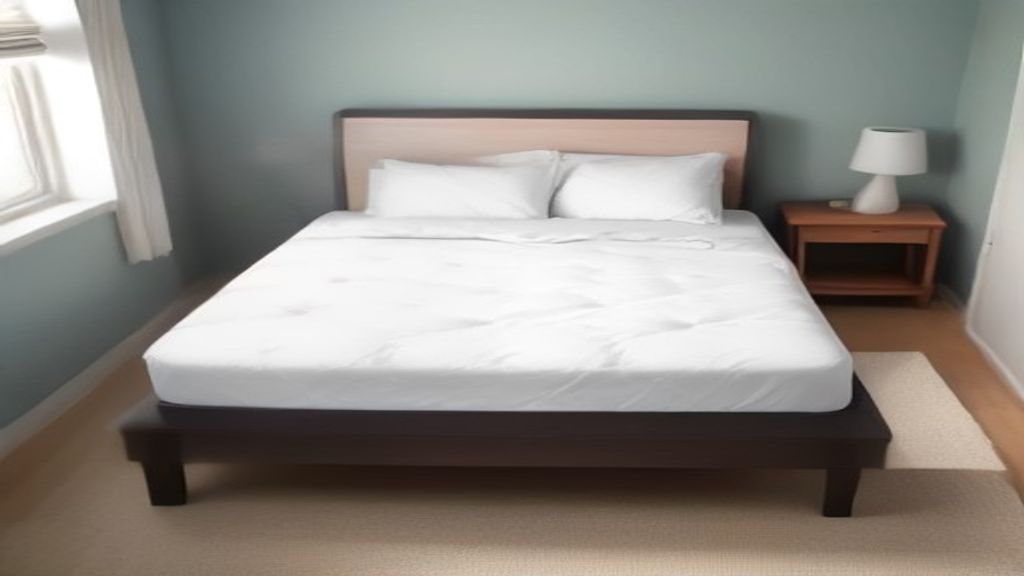
I bought a 6 inch twin mattress once because the price was right. Didn't measure anything. Turns out my son's bed frame had a 4-inch gap between the slats — the mattress bowed right through, and he woke up on plywood. That was a fun refund.
So before you click buy, here's the walk: what I learned measuring three or four cheap 6-inch twins, what fits what, and where the cheap ones fall apart.
Start with the sleeping surface
The mattress itself is almost always 38 inches wide and 74 or 75 long. That's the standard twin double. But the actual support surface of the frame underneath might be 36 or even 34 inches wide, especially on fold-outs or bunk beds.
Pull the tape measure across the slats or platform, not the frame rails. My mistake was measuring the outer frame width. The mattress needs to sit on the surface, not hang over rails. If the support surface is narrower than 37 inches, you need a board or a thinner mattress.
And the length? A 6 inch twin is 6 inches thick, but that doesn't mean it sits 6 inches above your frame. Some frames have a center support crossbar that eats into clear depth — a 5-inch mattress might barely clear it.
Thickness and base support
6 inches of foam is thick enough for a guest room or a kid's room under maybe 80 lbs. It's not built for week-in, week-out sleeping. The cheaper ones (under $100) use polyurethane foam with a very low density — you'll feel the frame within a month.
But even a good-quality 6-inch mattress needs proper base support. Bunk beds and trundles often have slats spaced 4 to 6 inches apart. Snug that slat gap to 3 inches or less, or put down a solid piece of plywood cut to the frame's inner dimensions. Nothing fun about a mattress that sags into the slats — and I've seen it.
If you're using a platform with a solid surface, fine. But most "captain's beds" have thin metal rails and particleboard. Measure the actual support width, and if it's less than 37 inches, you need a different mattress or a custom platform.
Room and door clearance
Twin mattresses are oddly easy to move — 6 inches thick means they squeeze through doors without bending. But folds? Fold-out couches and trundles usually take a mattress thickness of 5 inches max. A 6-inch might not fold flat. Check the clearance under the trundle or before you buy a fold-out mattress. I've broken a folding mechanism before; that's not fun.
Also, if your room has a narrow staircase or a low ceiling, a 6-inch twin may be floppier and easier to wiggle upstairs than a 12-inch. Good thing.
Where 6-inch twins work best
Honestly, a 6-inch twin mattress is best for a spare room or a quick guest setup, not for daily use. My son uses one on his loft bed — it's fine because he's small. My 155-lb friend slept on one for a week and complained about his back.
If you're buying for a child under 80 lbs or occasional guests, 6-inch is enough. For an adult sleeping every night, look for at least 8 inches or a mattress with a proper support layer — there are some in the twin mattress under $100 range that work temporarily.
And if you're putting it in a convertible or a fold-out, do yourself a favor: 5 inches is usually the max you can use there. 6 might be too thick — measure the clearance first, not after.
Check the warranty and return policy
Cheap mattresses often have vague warranties. Read the fine print about stains and sagging. Most require a 1-inch sag for a claim — which you'll likely hit within two years on daily use. Returns are easier if you buy online, but you still have to wrestle the vacuum bag back into the box.
Don't buy a 6-inch twin without measuring the base support surface and the clear space under your bed. That takes five minutes. Saves a lot of back pain and complaining.
Also worth checking: some budget 6-inch twins use minimal quilting, so the top fabric shifts and puffs after a few washes. Not a dealbreaker, but know what you're getting.
Where I landed
I ended up with a mid-grade 6-inch twin for the loft bed and a 2-inch foam topper for guests. It's not perfect, but it works. Measure the frame, measure the door, and check the warranty. Cheap mattresses are fine as long as they're in the right spot.
That's it.