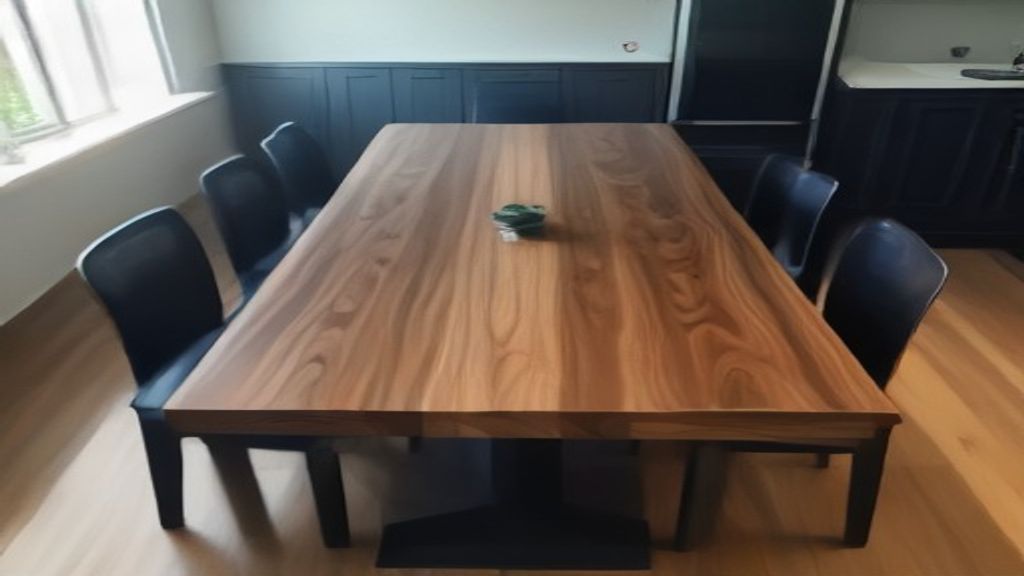
The first thing I noticed when the table arrived was the smell. Sweet, like syrup spilled on a hot garage floor. I thought it'd fade in a week. It did—mostly. Then I set a hot coffee mug down without a trivet. That's when epoxy taught me the difference between resin and the table at your aunt's house.
Epoxy kitchen tables look like art. A slab of walnut with a river of blue running through it? Sure. But it's a material with quirks. You don't just buy a table. You buy a maintenance routine.
The Heat Thing Makes It Real
Hot pan off the stove? Don't. Epoxy will soften. I dropped a cast iron skillet corner down (don't ask) and got a white ring that never went away. Not a burn—just a cloudy spot. The surface is not what the Instagram videos show. Those glossy videos are taken in low light with no kids.
One friend put a pizza box down from the oven. Domino's. Left a mark. You'll learn to keep trivets everywhere. I now have three by the stove, by the sink, on the table itself.
Scratches Look Way Worse Than They Should
Another thing: epoxy is soft. Like, fingernail soft. Keys in a pocket? A pen dragged across the surface? Every scratch adds up quick. My table looked pristine for a month. Then my daughter did homework with a ballpoint under a piece of paper. Now there's a gray line I can't get out.
There are resurfacing kits. I tried one. Instructions say to sand and recoat. That turned a $1,800 table into a weekend project. And the recoat didn't match the original gloss. The kit sat in the closet.
Sunlight Fades the Color Faster Than You'd Think
Epoxy yellows over time—especially if it's near a window. My neighbor's dining room gets morning sun. After a year, the clear pour has a yellowish tint. Not terrible, but noticeable when you pull the chairs away. And I noticed the blue swirl? It looks a little green now if the light hits it right.
UV stabilizers help—some brands don't use them. Ask the maker what's in the pour. Cheaper tables might skip that.
Dropping Bits of Furniture on It Isn't the Disaster You'd Expect
Small stuff—the vacuum hose bumping the leg, a chair rolling over the edge? The legs of epoxy tables dent. Like, soft wood dented by a chair leg at the dinner table. My roommate's coffee table is chipped where a phone hit the corner.
But here's the thing: if you're careful, it's a stunning piece. I use cutting boards on it now. I never eat directly on the surface. If I'm honest, I didn't want a worry plate—I wanted something my friends would say "wow" at. And half of them have.
What I'd Do Differently Next Time
If I bought again, I'd check three things:
- Ask for a topcoat with strong scratch resistance—there are epoxy coats designed for kitchen counters; some are harder.
- Look for UV-resistant or UV-stabilized formulas.
- Make sure the wood is real and thick enough to sand off and redo in ten years.
I've learned to live with the imperfections. My dining room is 12x14, with a Solid Wood Kitchen Table: The 4 Measurements That Kept Me From issue—but I didn't have that guide back then. The epoxy river runs that way; I see it every day.
Maybe I'm just complaining about an expensive decoration that holds mail and cereal bowls. But it's my money.
It could've been worse. At least I didn't buy a glass top.