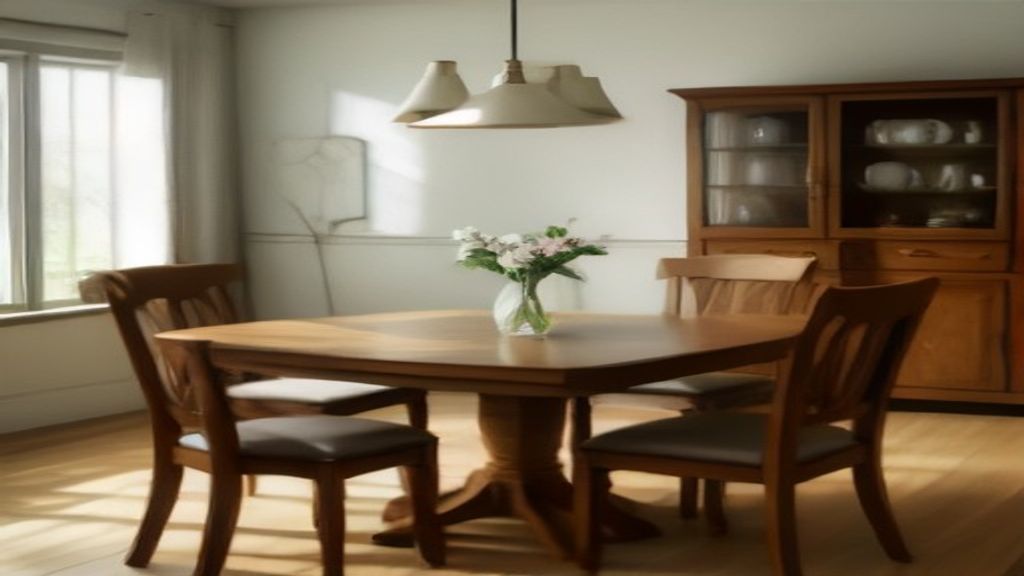
First side table I bought was gorgeous. Tall, slim, dark wood. Looked perfect in the store photo. Got it home, slid it against the wall — and the drawer hit the baseboard. Couldn't open it more than two inches. Then the second one was too low. Drinks next to the armchair looked weird, like the table was made for a toddler. Third one? Right height, right width — but I bought it without measuring the floor space next to the buffet, and it blocked the door swing.
Three returns later, I figured out the mistake: I was measuring the table, not the space around it. And I wasn't thinking about how the table actually gets used — not just for one drink, but for a stack of plates, a lamp, or a pile of mail that lands there in the evening.
So here's the fix.
The one number that matters (and nobody measures)
It's not height, not width, not depth. It's the clearance between the table and whatever's next to it. A side table needs at least 18 inches of open floor on the side you'll stand while reaching for something. Less than that, and you're doing that weird sideways shuffle to grab the salt.
Also measure the distance from the table's top to the bottom of any shelf or window sill above it. If you want a lamp, you need headroom — about 14 inches above the tabletop for a typical lamp base.
And check the base. A flared base adds footprint even if the top is slim. I bought a table with an 18-inch top but the legs spread to 22 at the floor. It looked the same in the photo. It wasn't.
First, think about what's already in the room
I have a Natural Wood Round Dining Table: Measure the Circle Before You Fall in the middle of my dining area, and the side table sits against the wall next to the window. The round table takes up more visual space than a rectangle, so I needed a side table that didn't go past the window sill line. Missed that on attempt number two.
If you've got a similar setup, grab a tape measure and map the whole wall. Mark where the window starts, where the door swings, where the radiator juts out. Then you'll know the maximum footprint you can work with.
Height is a balance, not a rule
General guidance says the side table top should be within two inches of the armrest height of the sofa or chair it serves. That's fine, but it doesn't account for what you'll actually put on it. I use mine for a drink and a small plant, so I wanted it slightly lower than arm height — easier to reach without lifting the glass too high. If you're placing it between two seats, split the difference.
And don't forget the outlet. If you want a lamp, make sure there's a plug within reach. I had to buy an extension cord for my first table because I ignored that. Not the end of the world, but a cord snaking across the floor is annoying.
A table that does more than hold a glass
One side table that's just a circle or square is fine, but if your dining room doubles as a workspace or a spot for homework, think about a piece with a drawer or a lower shelf. A friend has a small table with two shelves and it catches all the charging cables and kid's homework. The extra storage means the dining table gets cleared faster.
But drawer space costs you. A drawer adds depth, and that depth eats into the clearance you measured earlier. So decide first: is this a place to put a glass, or a place to put stuff?
Real dimensions that worked for me
For a spot next to a 38-inch-wide buffet, I finally landed on a table that's 24 inches high, 16 inches wide, 14 inches deep. It leaves 20 inches of floor clearance on the left, and the top sits perfectly below the window sill. Cost me $80, assembly took twenty minutes, and it doesn't wobble.
That's the other thing — wobbling. A side table that shakes when you put a glass down is a dealbreaker. Press one corner on the showroom floor (or on the box, if it arrives flat). If it tilts, skip it.
Before you click buy
Measure the space as a box. Write down: floor footprint, distance to the next piece of furniture, height to anything above, and the door swing. Then measure your armchair or sofa arm height. Then, and only then, look at tables.
Same approach applies to bigger pieces. If you're eyeing a Dining Table Set for 8: Measure the Room, Not Just the Table, the principle is identical — it's about the room, not the furniture.
Honestly, the third attempt worked because I finally wrote down numbers in my phone before I even started browsing. Took fifteen minutes. Saved me another week of returns.
So go measure your wall right now. That's the move.